Over the years, the businesses of Xylem Analytics have made it a point to address customer needs. And a perfect example of that is the implementation of an OI Analytical photometric detector during the processing of spearmint oils to help address the volatility of sulfur compounds.
During the development of spearmint and other essential oils, analytical labs are challenged by volatile sulfur compounds, as they impart undesirable odors to essential oils and have extremely low olfactory thresholds. So the detecting, quantifying, and eliminating of sulfur compounds is an important aspect of flavor and fragrance quality control work. Two species of spearmint is cultivated in the United States every year, with 1.09 million kilograms of spearmint oil produced in the U.S. in 2008....
Sygnature Discovery (Nottingham, UK) has been using an Asynt DrySyn SnowStorm system to perform low temperature reactions which have traditionally been difficult to undertake reproducibly on a small to medium scale.
The Asynt DrySyn SnowStorm offers an attractive solution to laboratories undertaking low temperature reaction chemistries. Available in a choice of configurations, the DrySyn SnowStorm system provides controlled cooling and heating for sub-ambient parallel chemistry without the need for jacketed reaction vessels, or ice baths. Operating with a suitable chiller / circulator, a DrySyn SnowStorm system provides accurate, stable temperature control down to -50 °C and up to +150 °C....
Across the 53 countries of the WHO European Region, an estimated 353 000 patients fell sick with tuberculosis (TB) in 2012, according to new data published by the European Centre for Disease
Prevention and Control and the WHO Regional Office for Europe (1). The data show an average annual 5% decline in TB incidence across the Region over the last decade. The countries of the European Union and European Economic Area (EU/EEA) observed a 6% decrease in TB cases with 68 000 reported cases in 2012. Overall, the EU/EEA countries met their target of an average five-year decline. However, Europe has not yet met the set targets for successful treatment of multidrug-resistant TB....
Are tiny microbes outwitting us to steal our food?
It’s long been know that microbes are to blame for food going off and becoming rotten but in the late 1970’s, Dan Janzen of the University of Pennsylvania, and a winner of ecology’s version of the Nobel Prize, suggested that making something rotten may be to the advantage of the microbes living in our food. Now, Liverpool John Moores University....
The Cubis Lab Balance from Sartorius Helps to Improve Quality Control at Contract Manufacturer hameln pharma
The Customer. For more than 60 years hameln pharma has specialized on the contract manufacturing of parenteral solutions and suspensions. With more than 400 employees, hameln pharma produces liquid medicines that – aseptically produced or terminally sterilized – are filled into ampoules or vials for national and international pharmaceutical companies. hameln pharma has extensive expertise and a log track record, especially in the production of highly demanding pharmaceutical products such as anesthetics, flammable liquids, and cold chain products....
Established influenza medicine misrepresented by inexperienced analysis, undermining global public health consensus
Roche fundamentally disagrees with the overall conclusions of the Cochrane Acute Respiratory Infections Group’s (ARI) report on Tamiflu. We firmly stand by the quality and integrity of our data, reflected in decisions reached by 100 medicines regulators across the world and subsequent real-world evidence demonstrating that Tamiflu is an effective medicine in the treatment and prevention of influenza....
Read MoreSensitive and Simple Determination of Monochloroacetic Acid in CarbocisteineApr 10, 2014
Thermo Fisher Scientific has developed a reproducible and accurate ion chromatography (IC) method for determining monochloroacetic acid (MCAA) in carbocisteine drug substance and two monochloroacetic acid drug products, thus enabling efficient quality control of the carbocmanufacturing processisteine.
Application Note 1076: Determination of Monochloroacetic Acid in Carbocisteine demonstrates that this IC method is easily executed using a reagent-free IC system controlled by data management software. The analyst simply adds water and samples to separate and accurately determine MCAA using a hydroxide-selective anion-exchange column (Thermo Scientific™ Dionex™ IonPac™ AS11-HC column)...
The project will be funded EUR 900K (USD 1.25 M) in total by the Belgian Walloon region and the Massachusetts Life Sciences Center (MLSC)
Promethera(R) Biosciences, a company that develops innovative therapies for the treatment of liver diseases, today announces a collaboration with EMD Millipore to develop an improved ready-to-use microfluidic perfusion liver assay. This new product is designed to perform more robust studies in pre-clinical toxicity and drug metabolism. Early availability of reliable human liver-based assays is critical to the pharmaceutical industry when deciding to bring a lead compound in clinical phase development....
In response to the superbug red alert warning raised by England's main public health body, a UK firm has detailed a range of support measures that are effective against CPE.
Carbapenemase-producing enterobacteriaceae (or CPE) has outgrown the term ‘superbug’ due to the highly limited treatment options available. Such is the level of concern that the pathogen has been called “a national health threat” by NHS officials. To combat this threat Public Health England (PHE) has issued a toolkit to help NHS trusts combat CPE. And the UK's leading experts in tackling the superbug menace have now developed a range of solutions to support the implementation of two key areas of this toolkit: environmental decontamination and patient isolation...
Promising results for the maintenance of motor function in spinal muscular atrophy (SMA) - a rare, serious and debilitating pediatric-onset neurodegenerative disease
Trophos today announces that top-line results from a pivotal clinical trial of its lead product candidate olesoxime in spinal muscular atrophy (SMA) show a beneficial effect on the maintenance of motor function in SMA patients. If approved, olesoxime could be the first treatment specifically developed for SMA patients. SMA is an autosomal recessive genetic disease that affects the motor neurons of the voluntary muscles used for activities such as crawling, walking, head and neck control and swallowing....
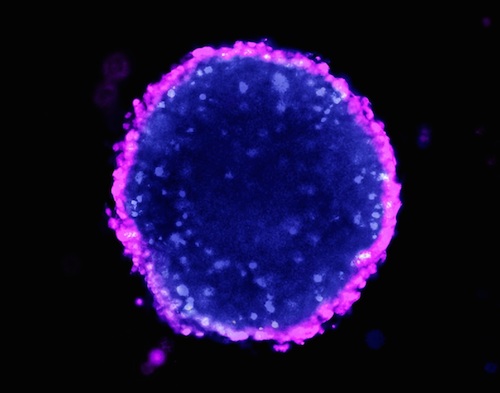
AMSBIO Lipidure®-Coat low adhesion plates and dishes are shown in cited research to be one of the most effective tools for state-of-the-art 3D spheroid cell culture. These new plates and dishes are available in 384-well format optimised for drug screening or other high throughput applications.
Spheroid cell culture is based on the spontaneous formation of an aggregation of cells in an environment where the interactions between cells are superior to the interactions between cells and substrate. This can be achieved by using low-adhesion cell culture conditions. Lipidure®-Coat surfaces use MPC (2-methacryloyloxtethyl phosphorylcholine), a biocompatible synthetic polymer with the same structure as the phosphorylcholine polar bases that form cell membranes. As a consequence of the high biocompatibility of this coating, cells will not adhere to the surface of Lipidure®-Coat plates or dishes...
Exeter Analytical Inc. has announced how their Model 440 CHN Elemental Analyzer is being widely used to determine the suitability of a waste material for use as a fuel in waste to energy plants.
Key to assessing the value of a waste material as a potential fuel feedstock is in determining its Carbon (C) and Hydrogen (H) content. The Carbon concentration when measured in conjunction with calorific value gives a measure of the energy content and therefore the usefulness of the waste sample as a renewable energy source. The Hydrogen concentration is another key parameter to be measured and is used to calculate the samples net calorific value....
Read MoreNewApr 7, 2014
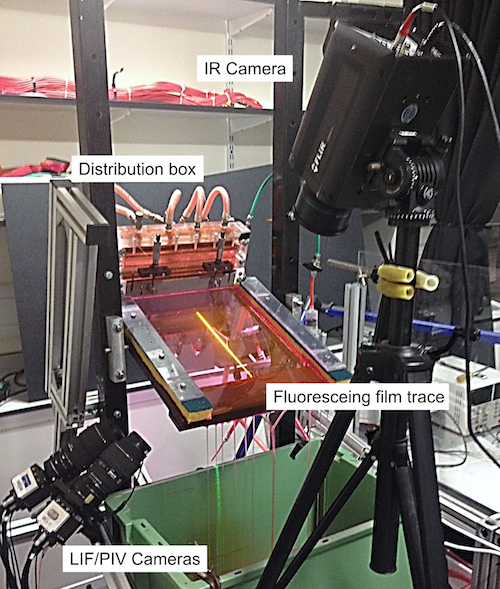
The Department of Chemical Engineering at Imperial College London (UK) has elected to use a FLIR Systems X6540sc thermal imaging camera to conduct innovative heat transfer experiments on thin-film flows.
Research within the Clean Energy Processes group at the Chemical Engineering Department of Imperial College London is aimed at the development and employment of new imaging techniques for conducting simultaneous spatiotemporal measurements of thickness, velocity, temperature and heat flux in thin-film flows. Apart from the purely theoretical interest, the high surface-to-volume ratio and small heat and mass transfer resistances of thin films at relatively small flow rates renders them instrumental in the development of efficient means of heat and mass transfer...
Read MoreBespoke Camera Systems for the Nuclear IndustryApr 7, 2014
Resolve Optics Ltd. reports that it has supplied a number of non-browning zoom lens to Custom Cameras Ltd (Wells, UK) to enable the company to supply fully integrated radiation tolerant camera systems for monitoring applications in the Nuclear industry.
In highly radioactive environments where camera servicing or replacement is not an option - Custom Cameras sought a proven supplier of high performance, radiation tolerant zoom lenses. Tony Moon, Sales Director of Custom Cameras commented “Over the last 10 years we have purchased non-browning 3x and 6x zoom lens from Resolve Optics enabling us to provide optimised remote camera systems for applications including inspection of nuclear fuels rods for oxidation, deterioration or damage ; checking the integrity of nuclear fuel chambers and monitoring low level radioactive storage containers”...
Read MoreJPK reports on the use of the ForceRobot system to study the dynamics of biomacromolecules at Nanjing UniversityApr 7, 2014
JPK Instruments reports on the study of how force regulates the structures and conformational dynamics of biomacromolecules using AFM-based single molecule force spectroscopy.
JPK Instruments, a world-leading manufacturer of nanoanalytic instrumentation for research in life sciences and soft matter, reports on the study of how force regulates the structures and conformational dynamics of biomacromolecules using AFM-based single molecule force spectroscopy, a project of Professor Yi Cao of Nanjing University. Professor Yi Cao is a member of the Institute of Biophysics located in the Physics Department of Nanjing University....
New class of drug could curb antibiotic resistance, study suggests
A new type of drug could help to combat growing antibiotic resistance, a study finds. Medicines that stop bacteria from harming their hosts, rather than kill them, could prevent bugs from evolving resistance to drug treatments, a review of research in the field suggests. Scientists have found that anti-virulence (AV) drugs - which work in a different way to antibiotics - could help curb bacteria's growing resistance to antibiotic treatments. Current treatments for infections aim to kill bacteria or stop them from growing, but this can drastically alter how the bugs evolve, and aid the survival of resistant strains...
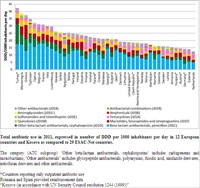
A new report published in The Lancet Infectious Diseases on 20 March 2014, is the first to release data on total antibiotic consumption for countries outside the European Union (EU).
The data (from 2011) indicate an almost fourfold difference between the lowest and the highest antibiotic users among 42 countries and regions in the WHO European Region (within and outside the EU), and provide a clear picture of the use of different groups of antibiotics. “Antibiotic overuse and misuse are the most important factors in creating resistance. That is why mapping consumption is the first step in identifying and tackling this growing public health problem,” says Ms Zsuzsanna Jakab, WHO Regional Director for Europe. “As antibiotic resistance respects no borders, the work we are doing in the non-EU part of the Region adds enormous value to existing EU data and action...
Porvair Sciences reports on positive commentary by researchers in published papers citing how using the fast, sensitive ChromaTrap™ Chromatin Immunoprecipitation (ChIP) technology has benefited their research.
In a paper by C.R Williams et al (Am J Physiol Cell Physiol 303: C213–C223, 2012) - Chromatrap was used to assess the occupation of NFkB p65 onto the Nox4 promoter in human aortic endothelial cells which had been treated with normal and high glucose. ChIP data using Chromatrap pro A spin columns demonstrated that in high glucose concentrations NfkB binding to the Nox4 promoter was increased when compared to normal glucose concentrations and rosiglitazone attenuated NfkB binding to the promoter. Their findings illustrated that NFkB/p65-Nox4 axis as an important target of rosigliatzone in vascular endothelial cells following hyperglycemia...
Early May provides two opportunities to meet with the Freeman Technology team and learn how the latest advances in powder testing can help solve processing and handling problems.
Freeman Technology’s US team will be showcasing the capabilities of the FT4 Powder Rheometer® at the PTXi/Powder & Bulk Solids show in Rosemont IL, from 6-8 May 2014. At the same time Operations Director Jamie Clayton is an invited speaker on the ‘Analytical Methods for Powder Handling and Processing’ course organised by Powder Info News in Copenhagen on 6 May....
Read MoreAdvancing CRISPR Research with gBlocks Gene FragmentsApr 2, 2014
Sequence and application flexibility allow for the exploration of CRISPR and Cas9 function
Integrated DNA Technologies (IDT), the world leader in oligonucleotide synthesis, advances CRISPR research with the use of its gBlocks Gene Fragments. Detailed online in the latest issue of DECODED, CRISPRs can be used in conjunction with CRISPR associated (Cas) proteins, for example Cas9 has been well documented, to recognize and cleave complementary DNA. This mechanism, which is found naturally within bacteria and archaea to protect cells from foreign sequence, has been harnessed for use in genome editing.
The Clinical and Laboratory Standards Institute (CLSI) has released an updated edition of Nucleic Acid Sequencing Methods in Diagnostic Laboratory Medicine.
Approved Guideline—Second Edition (MM09-A2) and published a new document entitled Microarrays for Diagnosis and Monitoring of Infectious Diseases; Approved Guideline (MM22-A). MM09-A2 addresses diagnostic sequencing using both automated capillary-based sequencers and massively parallel sequencing instruments. Topics in this guideline include specimen collection and handling; isolation and extraction of nucleic acid; template preparation; sequence generation, alignment, and assembly; validation and verification; ongoing quality assurance; and reporting results...
Anasys Instruments is pleased to announce that the inventor of the AFM-IR technique, Professor Alexandre Dazzi from the Université Paris-Sud, is to receive the Ernst Abbe Memorial Award.
The award is given by the New York Microscopy Society and will be presented at the 2014 Eastern Analytical Symposium and Exhibition being held November 17-19, Somerset, New Jersey, USA. Professor Alexandre Dazzi, from the Laboratoire de Chimie Physique at the Université Paris-Sud has been selected to receive the New York Microscopy Society’s Ernst Abbe Award. Since its inception in 1973, 24 scientists have been recognized including innovators such as Albert V. Crewe (inventor of Scanning Electron Transmission Microscopy), Edwin H. Land (inventor of Polaroid photography), Gerd Binning & Heinrich Rohrer (inventors of AFM)...


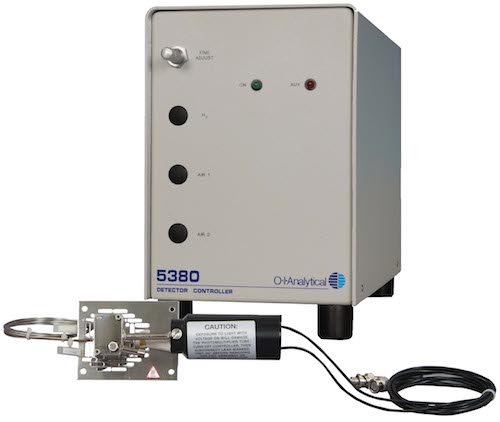 During the development of spearmint and other essential oils, analytical labs are challenged by volatile sulfur compounds, as they impart undesirable odors to essential oils and have extremely low olfactory thresholds. So the detecting, quantifying, and eliminating of sulfur compounds is an important aspect of flavor and fragrance quality control work. Two species of spearmint is cultivated in the United States every year, with 1.09 million kilograms of spearmint oil produced in the U.S. in 2008....
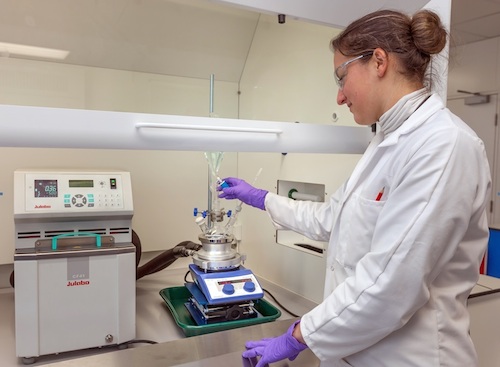 The Asynt DrySyn SnowStorm offers an attractive solution to laboratories undertaking low temperature reaction chemistries. Available in a choice of configurations, the DrySyn SnowStorm system provides controlled cooling and heating for sub-ambient parallel chemistry without the need for jacketed reaction vessels, or ice baths. Operating with a suitable chiller / circulator, a DrySyn SnowStorm system provides accurate, stable temperature control down to -50 °C and up to +150 °C....
 It’s long been know that microbes are to blame for food going off and becoming rotten but in the late 1970’s, Dan Janzen of the University of Pennsylvania, and a winner of ecology’s version of the Nobel Prize, suggested that making something rotten may be to the advantage of the microbes living in our food. Now, Liverpool John Moores University....
 The Customer. For more than 60 years hameln pharma has specialized on the contract manufacturing of parenteral solutions and suspensions. With more than 400 employees, hameln pharma produces liquid medicines that – aseptically produced or terminally sterilized – are filled into ampoules or vials for national and international pharmaceutical companies. hameln pharma has extensive expertise and a log track record, especially in the production of highly demanding pharmaceutical products such as anesthetics, flammable liquids, and cold chain products....
 Roche fundamentally disagrees with the overall conclusions of the Cochrane Acute Respiratory Infections Group’s (ARI) report on Tamiflu. We firmly stand by the quality and integrity of our data, reflected in decisions reached by 100 medicines regulators across the world and subsequent real-world evidence demonstrating that Tamiflu is an effective medicine in the treatment and prevention of influenza....
 Application Note 1076: Determination of Monochloroacetic Acid in Carbocisteine demonstrates that this IC method is easily executed using a reagent-free IC system controlled by data management software. The analyst simply adds water and samples to separate and accurately determine MCAA using a hydroxide-selective anion-exchange column (Thermo Scientific™ Dionex™ IonPac™ AS11-HC column)...


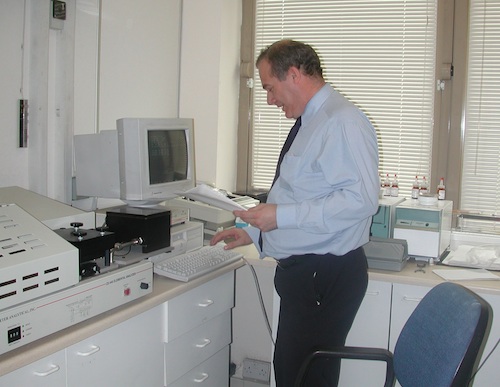 Key to assessing the value of a waste material as a potential fuel feedstock is in determining its Carbon (C) and Hydrogen (H) content. The Carbon concentration when measured in conjunction with calorific value gives a measure of the energy content and therefore the usefulness of the waste sample as a renewable energy source. The Hydrogen concentration is another key parameter to be measured and is used to calculate the samples net calorific value....
 In highly radioactive environments where camera servicing or replacement is not an option - Custom Cameras sought a proven supplier of high performance, radiation tolerant zoom lenses. Tony Moon, Sales Director of Custom Cameras commented “Over the last 10 years we have purchased non-browning 3x and 6x zoom lens from Resolve Optics enabling us to provide optimised remote camera systems for applications including inspection of nuclear fuels rods for oxidation, deterioration or damage ; checking the integrity of nuclear fuel chambers and monitoring low level radioactive storage containers”...

 In a paper by C.R Williams et al (Am J Physiol Cell Physiol 303: C213–C223, 2012) - Chromatrap was used to assess the occupation of NFkB p65 onto the Nox4 promoter in human aortic endothelial cells which had been treated with normal and high glucose. ChIP data using Chromatrap pro A spin columns demonstrated that in high glucose concentrations NfkB binding to the Nox4 promoter was increased when compared to normal glucose concentrations and rosiglitazone attenuated NfkB binding to the promoter. Their findings illustrated that NFkB/p65-Nox4 axis as an important target of rosigliatzone in vascular endothelial cells following hyperglycemia...
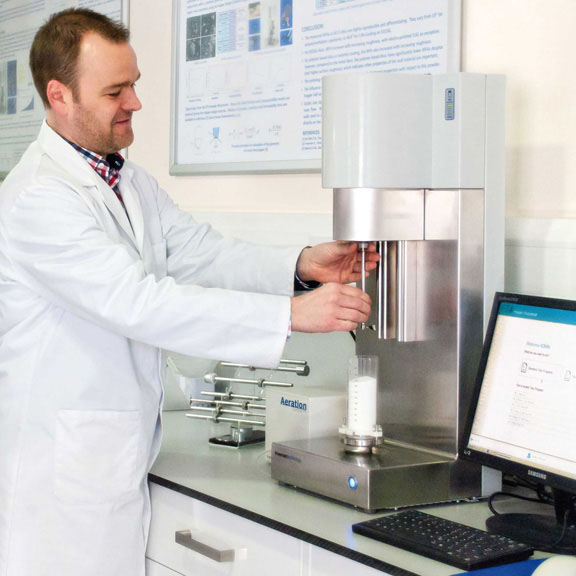 Freeman Technology’s US team will be showcasing the capabilities of the FT4 Powder Rheometer® at the PTXi/Powder & Bulk Solids show in Rosemont IL, from 6-8 May 2014. At the same time Operations Director Jamie Clayton is an invited speaker on the ‘Analytical Methods for Powder Handling and Processing’ course organised by Powder Info News in Copenhagen on 6 May....


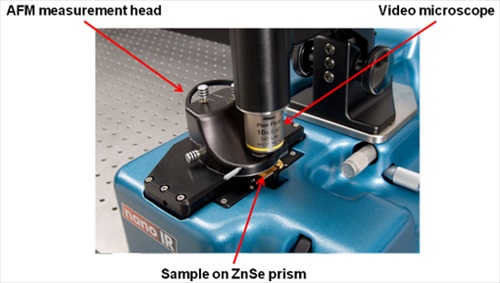 The award is given by the New York Microscopy Society and will be presented at the 2014 Eastern Analytical Symposium and Exhibition being held November 17-19, Somerset, New Jersey, USA. Professor Alexandre Dazzi, from the Laboratoire de Chimie Physique at the Université Paris-Sud has been selected to receive the New York Microscopy Society’s Ernst Abbe Award. Since its inception in 1973, 24 scientists have been recognized including innovators such as Albert V. Crewe (inventor of Scanning Electron Transmission Microscopy), Edwin H. Land (inventor of Polaroid photography), Gerd Binning & Heinrich Rohrer (inventors of AFM)...