Web-based library developed in collaboration between Thermo Fisher and HighChem
Scientists conducting research in metabolomics, environmental, forensics and food safety can now turn to a globally accessible, web-based fragmentation library for identification of unknown compounds with high-quality, high resolution accurate mass (HRAM) data. Developed through a collaboration between Thermo Fisher Scientific and HighChem, Inc., mzCloud is a novel, searchable library of HRAM mass spectra, constructed from high-quality...
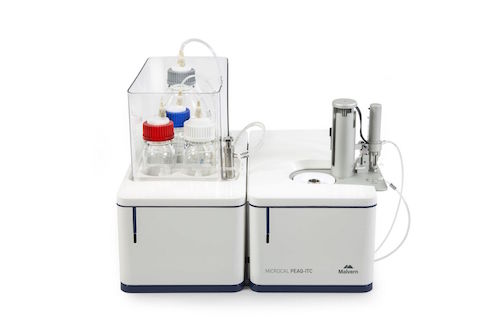
At the 29th Annual Symposium of The Protein Society (22-25th July, Barcelona, Spain) Natalia Markova, Principal Scientist- MicroCal, Malvern Instruments, will be presenting a workshop on how to enable high resolution protein interaction analysis using the latest MicroCal PEAQ-ITC system.
Studies of biomolecular interactions are fundamentally important in all areas of the life sciences since such interactions drive and regulate all biological processes. To register for the workshop which will include a complimentary lunch please go to: http://www.malvern.com/protein2015. The workshop will address current challenges scientists face in interaction analysis through a Q&A panel session with calorimetry experts. A subsequent...
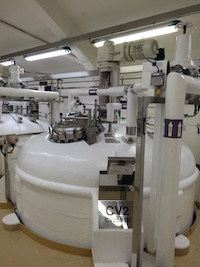
Manchester and Redcar-based process engineering design consultants, Haden Freeman Ltd, have announced a three year alliance with Bio Products Laboratory (BPL) Ltd, the Elstree-based producer of human plasma products, for engineering consultancy services.
Haden Freeman’s services which will include project management, FEED studies and full EPC contracts on new infrastructure projects to complement their current software support, DSEAR studies, HAZOPs and process studies. The projects will also include taking the role of Principal Designer for implementation of the recently revised CDM regulations. Wayne Baxter, Managing Director of Haden Freeman Ltd, commented, “We’ve enjoyed a very good long term relationship with BPL...
The expanded collaboration will focus on developing immuno-oncology mouse models and other disease-specific experimental models supporting translational medical research.
Crown Bioscience, Inc., a leading global drug discovery and development service company with its R&D centers across the globe has announced that a new partnership agreement has been reached with the National Resource Center for Mutant Mice (NRCMM) and its commercial branch Nanjing Biotech Innovation Corporation (NBIC), in Nanjing, Jiangsu Province, China.The newly expanded strategic partnership will focus on the development of new immune-oncology experimental cancer models, along with other models, including diabetes and inflammation diseases, to advance immune-oncology...
New collaborative research carried out by Freeman Technology (Tewkesbury, UK) and Gericke AG (Zurich, Switzerland) demonstrates how to achieve faster, more reliable equipment selection in the powder processing industries.
Through experimental study, experts from the two companies have identified easily measurable powder properties that can be used to predict screw feeder performance for any given powder. The resulting correlations support optimised feeder selection for a new powder on the basis of testing a small quantity of powder. “For Gericke AG, selecting the best screw feeder for a given powder is an essential aspect of our business, and something our customers...
To date, the only definitive treatment for heart failure – an organ transplant – is hampered by both the limited number of organ donors and the potential for the patient’s body to reject the new heart.
However, findings of a study published in STEM CELLS Translational Medicine demonstrate the promise in regenerating cardiac tissue using engineered patches made up of a mixture of fibrin and mesenchymal stem cells (MSCs) derived from human umbilical cord blood. Previous studies show the potential of MSCs to repair damage left by a heart attack, but in these instances, the cells were delivered through injections or intravenously...
Chromatrap®, a business unit of Porvair Sciences, has announced a new web page that brings together protocols developed using their proprietary solid state chromatin immunoprecipitation (ChIP) technology.
The new web page provides scientists with optimised ChIP methodologies for qPCR, high throughput qPCR, sequencing, high throughput sequencing and enzymatic chromatin shearing using Chromatrap® kits. Chromatrap® is a ground breaking technology that offers a quicker, easier and more efficient way of undertaking ChIP assays. Chromatrap® kits for qPCR use revolutionary Chromatrap®Protein-A or Protein-G spin columns which contain...
Cherwell aids additional training opportunities for cleanroom biodecontamination
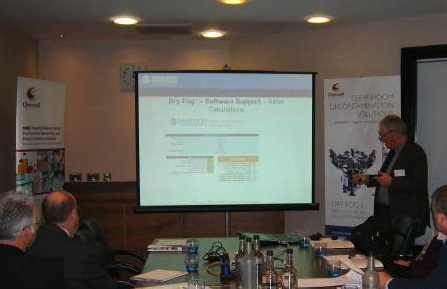
Cherwell Laboratories, specialist providers of products for process validation and environmental monitoring, have highlighted their ongoing support for the education and training of staff in aseptic production facilities – particularly given current focus on reducing risk from bacterial endospores in aseptic preparation. Summer 2015 will provide several opportunities for the discussion of new MHRA guidelines for Specials Manufacturers [1], regarding the...
Agalimmune Ltd, a biopharmaceutical company focused on the development of a pipeline of innovative immunotherapies for the personalised treatment of cancer, announced today it has licensed KODE Biotech’s Function-Spacer-Lipid (FSL) cell surface membrane modification technology (KODE™ Technology).
The proprietary technology will be incorporated by Agalimmune into its novel cancer immunotherapy molecules. Under the terms of the agreement, KODE may receive up to $31 million USD (£21 million GBP) in development and sales milestones, plus royalties on net sales. Agalimmune has exclusive rights to the use of the technology in the field of intratumoral injection for cancer treatment, and specifically relating to the clinical candidate molecule...
Full range of Bruker systems installed in new pre-clinical imagining laboratory to drive fundamental research and support healthcare research
Researchers, clinicians, health educators and policy makers all gathered on May 4th in Sao Paulo, Brazil, as the new Multidisciplinary Centre for Research into Obesity and Related Comorbidities (Cepid-OCRC) was opened at da Universidade Estadual de Campinas (UNICAMP). At the heart of the new facility is a 3D imaging laboratory with a Bruker PET/SPECT/CT imaging system. Funds for the purchase of the laboratory systems were...
The Program Committee is pleased to announce the call for papers for the Pittcon 2016 Technical Program.
Abstracts are currently being accepted for contributed oral and poster presentations in all areas such as, but not limited to, analytical chemistry, applied spectroscopy, life science, bioanalysis, food science, nanotechnology, environmental science and pharmaceutical. Additional details are available at www.pittcon.org. Pittcon 2016 will continue to strive to feature a comprehensive coverage of all aspects of analytical science and instrumental analysis. In addition to requesting papers in the...
Haydale, a leader in the development of enhanced graphene and nanoparticulate materials, has signed a supply agreement with the UK’s Centre for Process and Innovation (CPI).
CPI is a UK-based technology innovation centre and part of the High Value Manufacturing Catapult. CPI has recently committed £14 million to create the UK’s Graphene Applications Innovation Centre. The new centre will build on existing capabilities at CPI and will provide facilities and expertise to help companies to develop, prove, prototype and scale up graphene based products and processes. Haydale successfully tendered for the supply agreement under a rigorous and lengthy open tender process...
JPK Instruments, a world-leading manufacturer of nanoanalytic instrumentation for research in life sciences and soft matter, reports on the use of their NanoWizard® 3 AFM system at the Université catholique de Louvain where it is used by the nanobio team to look at the nanoscopy of living cells.
Dr Yves Dufrêne is a senior research fellow who is leading the Nanobio Team at UCL, Université catholique de Louvain. His research is at the cross-roads of nanotechnology and microbiology where the goal is to gain insight into the nanometer-scale surface architecture and molecular interactions of microbes. Two main topics are: understanding the spatial organization of the cell wall and deciphering the molecular mechanisms of cell adhesion...
Renishaw, a world leader in metrology and spectroscopy technologies, reports on how its Raman microscope assists in the conservation work of the Rijksmuseum in Amsterdam, the Netherlands.
The Rijksmuseum is the iconic museum of the Netherlands and in 2013, following extensive renovation and restoration, it re-opened its doors to the public. At the museum, art and history takes on a new meaning for a broad-based, contemporary national and international audience. As a national institute, the Rijksmuseum offers a representative overview of Dutch art and history-from the Middle Ages to the 20th century-and of major aspects of...
Micronic has published a technical note that describes a study in which the protein binding properties of commercially available sample storage tubes was tested.
Driven by the rapid growth in proteomics and protein research applications the need for storage tubes where interaction between the sample and the tube surface is minimised has grown exponentially. The need for storage tubes that exhibit ultra-low binding properties is critical to these research fields due to the low concentrations of proteins typically found in samples. In the study – protein binding measurement tests were performed on Micronic...
Available in Chinese, English, French, German, Japanese and Russian - FLIR Systems has published an informative technical note 'Cooled versus Uncooled Thermal Imaging'.
The new technical note addresses the commonly posed question "There is plenty of choice of thermal imaging cameras for R&D and scientific applications, for which applications should I use a cooled or an uncooled system?” For many years, thermal imaging cameras have been used by scientists, researchers and R&D specialists for a wide range of applications, including industrial R&D, academic research, non-destructive and materials...
The grant is targeted towards developing new technological approaches enabling academics, biotech and pharmaceutical companies to discover novel treatments for a range of disorders.
A major outcome of the grant has been published recently in Nature Methods (Stoddart et al., 2015). The paper entitled “Application of BRET to monitor ligand binding to GPCRs” demonstrates for the first time the principle of real time ligand binding to G Protein-Coupled Receptors (GPCRs), the single most important family of drug targets, using Bioluminescence Resonance Energy Transfer (BRET). In effect, the BRET technique has been shown to be...
Kimberly-Clark Professional publishes mini-guides to aid employee engagement
Leading provider of hygiene, safety and productivity solutions, the KIMBERLY-CLARK PROFESSIONAL* Scientific business has published the second in an ongoing series of health and safety focused mini-guides. Offering bite-sized learning on health, safety and personal protection in the laboratory, these mini-guides are designed to present complex information in a more handy, easy-to-absorb and engaging format. To download free copies...
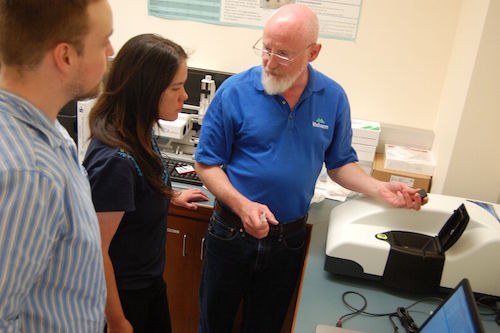
Seattle’s Hub for Industry-Driven Nanotechnology Education (Seattle, USA), an imaginative educational body with a flexible and highly productive model for nanotechnician training, has identified dynamic light scattering particle sizing as an essential analytical technique, investing in a Zetasizer Nano from Malvern Instruments.
“At SHINE we train the next generation of technicians to directly meet the needs of the nanotechnology industries in the Pacific North West,” said Peter Kazarinoff, Managing Director of SHINE. “A vital part of this is giving our students access to the analytical techniques and systems that they will use when employed. The simplest reason we chose a Zetasizer Nano is that it is the instrument most widely used for nanoparticle and protein size...
New study shows that many tree species are at serious risk of extinction
Scientists have uncovered unnerving results revealing that many tree species are at serious risk of extinction. Published in the journal Proceedings of the National Academy of Sciences (PNAS), the study, which involved Liverpool John Moores University’s Professor Serge Wich showed that most tropical tree species are extremely rare, meaning that they may be under serious risk of extinction at current deforestation rates. Given the importance of trees as...
New research published by the British Medical Journal this week has the potential to revolutionise global multi-billion pound research activity into the delivery of health services.
The research was conducted by Dr Richard Hooper, Queen Mary University of London, and Dr Liam Bourke, Sheffield Hallam University. Their work outlines a novel approach to research design which can drastically reduce the number of people involved in some clinical trials, therefore making these trials cheaper and easier to run. The new technique could be particularly beneficial to trails that involve health interventions at an organisational or...
Specialised Imaging has produced a presentation that delivers an informative and unbiased review of the historical development of ultra high-speed imaging technology.
The first practical application of high-speed imaging was Eadweard Muybridge’s 1878 photographic investigation into whether a horses' feet were actually all off the ground at once during a gallop. The first photograph of a supersonic flying bullet was taken by the Austrian physicist Peter Salcher in 1886, a technique that was later used by Ernst Mach in his studies of supersonic motion. German weapons scientists later applied these high speed imaging...

 Scientists conducting research in metabolomics, environmental, forensics and food safety can now turn to a globally accessible, web-based fragmentation library for identification of unknown compounds with high-quality, high resolution accurate mass (HRAM) data. Developed through a collaboration between Thermo Fisher Scientific and HighChem, Inc., mzCloud is a novel, searchable library of HRAM mass spectra, constructed from high-quality...
 Studies of biomolecular interactions are fundamentally important in all areas of the life sciences since such interactions drive and regulate all biological processes. To register for the workshop which will include a complimentary lunch please go to: http://www.malvern.com/protein2015. The workshop will address current challenges scientists face in interaction analysis through a Q&A panel session with calorimetry experts. A subsequent...
 Haden Freeman’s services which will include project management, FEED studies and full EPC contracts on new infrastructure projects to complement their current software support, DSEAR studies, HAZOPs and process studies. The projects will also include taking the role of Principal Designer for implementation of the recently revised CDM regulations. Wayne Baxter, Managing Director of Haden Freeman Ltd, commented, “We’ve enjoyed a very good long term relationship with BPL...
 Crown Bioscience, Inc., a leading global drug discovery and development service company with its R&D centers across the globe has announced that a new partnership agreement has been reached with the National Resource Center for Mutant Mice (NRCMM) and its commercial branch Nanjing Biotech Innovation Corporation (NBIC), in Nanjing, Jiangsu Province, China. The newly expanded strategic partnership will focus on the development of new immune-oncology experimental cancer models, along with other models, including diabetes and inflammation diseases, to advance immune-oncology...
 Through experimental study, experts from the two companies have identified easily measurable powder properties that can be used to predict screw feeder performance for any given powder. The resulting correlations support optimised feeder selection for a new powder on the basis of testing a small quantity of powder. “For Gericke AG, selecting the best screw feeder for a given powder is an essential aspect of our business, and something our customers...
 However, findings of a study published in STEM CELLS Translational Medicine demonstrate the promise in regenerating cardiac tissue using engineered patches made up of a mixture of fibrin and mesenchymal stem cells (MSCs) derived from human umbilical cord blood. Previous studies show the potential of MSCs to repair damage left by a heart attack, but in these instances, the cells were delivered through injections or intravenously...
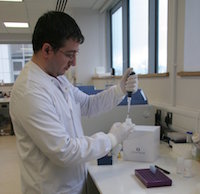 The new web page provides scientists with optimised ChIP methodologies for qPCR, high throughput qPCR, sequencing, high throughput sequencing and enzymatic chromatin shearing using Chromatrap® kits. Chromatrap® is a ground breaking technology that offers a quicker, easier and more efficient way of undertaking ChIP assays. Chromatrap® kits for qPCR use revolutionary Chromatrap®Protein-A or Protein-G spin columns which contain...
 Cherwell Laboratories
 The proprietary technology will be incorporated by Agalimmune into its novel cancer immunotherapy molecules. Under the terms of the agreement, KODE may receive up to $31 million USD (£21 million GBP) in development and sales milestones, plus royalties on net sales. Agalimmune has exclusive rights to the use of the technology in the field of intratumoral injection for cancer treatment, and specifically relating to the clinical candidate molecule...
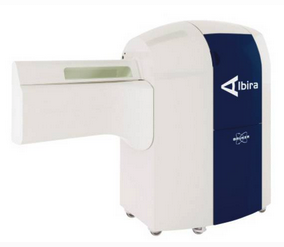 Researchers, clinicians, health educators and policy makers all gathered on May 4th in Sao Paulo, Brazil, as the new Multidisciplinary Centre for Research into Obesity and Related Comorbidities (Cepid-OCRC) was opened at da Universidade Estadual de Campinas (UNICAMP). At the heart of the new facility is a 3D imaging laboratory with a Bruker PET/SPECT/CT imaging system. Funds for the purchase of the laboratory systems were...
 Abstracts are currently being accepted for contributed oral and poster presentations in all areas such as, but not limited to, analytical chemistry, applied spectroscopy, life science, bioanalysis, food science, nanotechnology, environmental science and pharmaceutical. Additional details are available at www.pittcon.org. Pittcon 2016 will continue to strive to feature a comprehensive coverage of all aspects of analytical science and instrumental analysis. In addition to requesting papers in the...
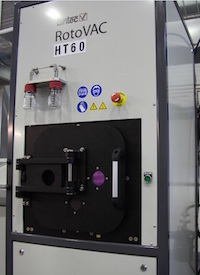 CPI is a UK-based technology innovation centre and part of the High Value Manufacturing Catapult. CPI has recently committed £14 million to create the UK’s Graphene Applications Innovation Centre. The new centre will build on existing capabilities at CPI and will provide facilities and expertise to help companies to develop, prove, prototype and scale up graphene based products and processes. Haydale successfully tendered for the supply agreement under a rigorous and lengthy open tender process...
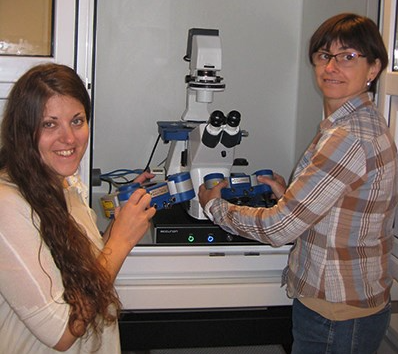 Dr Yves Dufrêne is a senior research fellow who is leading the Nanobio Team at UCL, Université catholique de Louvain. His research is at the cross-roads of nanotechnology and microbiology where the goal is to gain insight into the nanometer-scale surface architecture and molecular interactions of microbes. Two main topics are: understanding the spatial organization of the cell wall and deciphering the molecular mechanisms of cell adhesion...
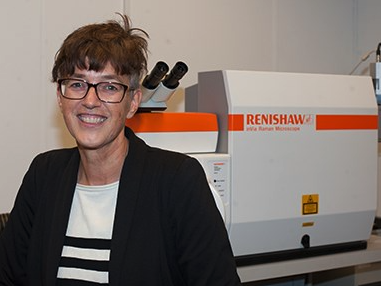 The Rijksmuseum is the iconic museum of the Netherlands and in 2013, following extensive renovation and restoration, it re-opened its doors to the public. At the museum, art and history takes on a new meaning for a broad-based, contemporary national and international audience. As a national institute, the Rijksmuseum offers a representative overview of Dutch art and history-from the Middle Ages to the 20th century-and of major aspects of...
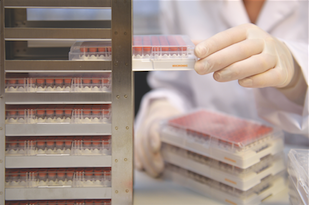 Driven by the rapid growth in proteomics and protein research applications the need for storage tubes where interaction between the sample and the tube surface is minimised has grown exponentially. The need for storage tubes that exhibit ultra-low binding properties is critical to these research fields due to the low concentrations of proteins typically found in samples. In the study – protein binding measurement tests were performed on Micronic...
 The new technical note addresses the commonly posed question "There is plenty of choice of thermal imaging cameras for R&D and scientific applications, for which applications should I use a cooled or an uncooled system?” For many years, thermal imaging cameras have been used by scientists, researchers and R&D specialists for a wide range of applications, including industrial R&D, academic research, non-destructive and materials...
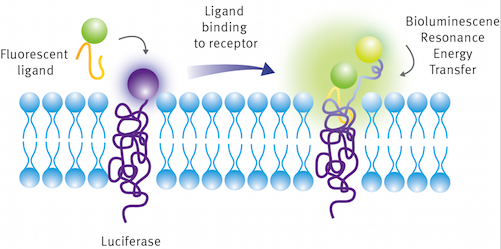 A major outcome of the grant has been published recently in Nature Methods (Stoddart et al., 2015). The paper entitled “Application of BRET to monitor ligand binding to GPCRs” demonstrates for the first time the principle of real time ligand binding to G Protein-Coupled Receptors (GPCRs), the single most important family of drug targets, using Bioluminescence Resonance Energy Transfer (BRET). In effect, the BRET technique has been shown to be...
 Leading provider of hygiene, safety and productivity solutions, the KIMBERLY-CLARK PROFESSIONAL* Scientific business has published the second in an ongoing series of health and safety focused mini-guides. Offering bite-sized learning on health, safety and personal protection in the laboratory, these mini-guides are designed to present complex information in a more handy, easy-to-absorb and engaging format. To download free copies...
 “At SHINE we train the next generation of technicians to directly meet the needs of the nanotechnology industries in the Pacific North West,” said Peter Kazarinoff, Managing Director of SHINE. “A vital part of this is giving our students access to the analytical techniques and systems that they will use when employed. The simplest reason we chose a Zetasizer Nano is that it is the instrument most widely used for nanoparticle and protein size...
 Scientists have uncovered unnerving results revealing that many tree species are at serious risk of extinction. Published in the journal Proceedings of the National Academy of Sciences (PNAS), the study, which involved Liverpool John Moores University’s Professor Serge Wich showed that most tropical tree species are extremely rare, meaning that they may be under serious risk of extinction at current deforestation rates. Given the importance of trees as...
 The research was conducted by Dr Richard Hooper, Queen Mary University of London, and Dr Liam Bourke, Sheffield Hallam University. Their work outlines a novel approach to research design which can drastically reduce the number of people involved in some clinical trials, therefore making these trials cheaper and easier to run. The new technique could be particularly beneficial to trails that involve health interventions at an organisational or...
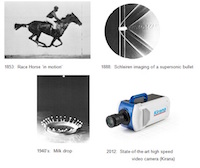 The first practical application of high-speed imaging was Eadweard Muybridge’s 1878 photographic investigation into whether a horses' feet were actually all off the ground at once during a gallop. The first photograph of a supersonic flying bullet was taken by the Austrian physicist Peter Salcher in 1886, a technique that was later used by Ernst Mach in his studies of supersonic motion. German weapons scientists later applied these high speed imaging...