Ingenza is pleased to announce it has successfully applied for EU H2020 SME Instrument funding of €50,000 for Phase 1 of its innovative SYNBIOMAN project, allowing the company to forge ahead with the development of this novel synthetic biology-driven biomanufacturing platform.
Successful completion of the Phase 1 study could open the door to additional funding for Phase 2, valued at €2.5 million.
SYNBIOMAN will build on Ingenza’s proprietary industrial synthetic and systems biology tools, helping small and medium-sized biotechnology enterprises to close the gap from lab to market by developing GMP biomanufacturing capabilities that target the production of therapeutic proteins....
Read MoreJohn Rex to Give Exclusive Talk on the Crisis of Antimicrobial Resistance this FallAug 31, 2016
Industry expert Dr John Rex will be presenting a special keynote address on the global crisis of antibiotic resistance at SMi’s Superbugs & Superdrugs congress this fall.
The industry meeting set to take place on Nov 14th and 15th in Iselin, New Jersey, will gather a global audience of scientific leaders, funding bodies and drug development specialists, providing a focal point to discuss funding opportunities and clinical advancements in drug discovery....
Dolomite microfluidic chips are helping researchers from the Biodesign Institute at Arizona State University (ASU) to develop novel enzymes capable of polymerising synthetic nucleotides.
Using these chips, the team has created a droplet-based optical polymerase sorting (DrOPS) technique allowing rapid screening for novel polymerase activities in uniform water-in-oil microcompartments. The team’s leader, Professor John C. Chaput – formerly at ASU and currently at the University of California, Irvine – explained: “The creation of synthetic nucleic acids is of great interest to synthetic biologists...
New research, led by the University of Glasgow, has identified how cells protect themselves against ‘protein clumps’ known to be the cause of neurodegenerative diseases including Alzheimer’s, Parkinson’s and Huntington’s disease.
The study, which is published today in Cell and was conducted in collaboration with the MRC Protein Phosphorylation and Ubiquitylation Unit at the University of Dundee, offers an insight into the role of a gene called UBQLN2 and how it helps to remove toxic protein clumps from the body and protect it from disease. Using biochemistry, cell biology and sophisticated mouse models, the researchers discovered that...
A new consultancy has been established to assist analytical chemists with complex or demanding applications using gas chromatography (GC).
SepSolve Analytical Ltd (Peterborough, UK), a company of the Schauenburg International Group (Mülheim-Ruhr, Germany), provides a unique combination of expert advice, equipment from numerous suppliers, and applications support to the global analytical chemistry sector for the characterisation of complex mixtures by GC-based technologies....
JPK Instruments, a world-leading manufacturer of nanoanalytic instrumentation for research in life sciences and soft matter, reports on the use of their NanoWizard® AFM system at the University of South Australia, Adelaide.
AFM is being applied to many areas including smart wound healing, plant toxicology and novel methods of nanoparticle characterization. Dr Gordon McPhee is head of production for NextCell Pty in Adelaide, Australia. Situated on the Mawson Lakes Campus, he is located next to the University of South Australia (UniSA), Australia's leading university for interdisciplinary research, where he has access to their...
The human cell culture specialists join experts in ion channel research to study human iPSC-derived cardiomyocytes for drug discovery applications
Axol Bioscience, a biotechnology company specialising in the supply of human induced pluripotent stem cell (iPSC)-derived cells, and Metrion Biosciences, a specialist ion channel drug discovery business, have signed a collaboration agreement to improve, standardise and more accurately predict the risk of human clinical pro-arrhythmias....
Metrohm USA is pleased to announce a series of seminars dedicated to Karl Fischer (KF) analysis hosted in 16 cities across the US and Canada.
Part of Metrohm’s commitment to ongoing education and practical training, these half-day seminars are designed for anyone from a laboratory measuring moisture or water content or for those who are currently using other techniques for moisture analysis and would like to learn about KF techniques....
Chromatrap, a business unit of Porvair Sciences, has published a new technical article that discusses and describes methodologies to increase Chromatin Immunoprecipitation (ChIP) efficiency by making sure chromatin in your samples is sheared to the correct size range.
The authors describe how for every chromatin preparation it is essential to check the chromatin is sheared to fragments between 100-500 bp. They emphasise using a microfluidics platform is the most accurate measure of quantifying DNA. Problems associated with over or under sheared Chromatin fragments are discussed....
INTEGRA has prepared an explanatory application guide that demonstrates the benefits of its electronic adjustable tip spacing VOYAGER II pipette range in transferring liquid samples between different labware formats.
Many laboratory applications require liquid transfers between various labware formats. Due to varying requirements in their sample processing, different labware vessels are typically used for sample storage, processing and analysis tasks. Traditional multichannel pipettes were not designed to accommodate the wide variety of labware formats used today because their tip to tip spacing is optimized for use with standard 96-well microplates....
The Wistar Institute has granted Horizon Discovery an exclusive license to 153 of its Melanoma Patient-Derived Xenograft models
Horizon Discovery Group plc, the world leader in the application of gene editing technologies including in vivo and Patient-Derived Xenograft (PDX) models, and The Wistar Institute (“Wistar”), an international biomedical research leader in cancer, immunology and infectious diseases, announce that Horizon has taken an exclusive license to 153 of Wistar’s melanoma PDX models....
Small-Spot Capabilities of JVX7300LSI System Enable Development of Advanced Technology Nodes
Bruker has announced that multiple leading logic and foundry manufacturers have selected Bruker’s JVX7300LSI X-ray metrology system to support their ramp and development for 10 nanometer (nm) and 7/5 nm technology nodes. The JVX7300LSI tool is equipped with both large and small spot measurement capabilities for in-line production process monitoring of the most advanced logic devices...
Read MoreIndependent Scientific Reports Evaluate Air Versus Water CondensersAug 22, 2016
New scientific evaluations from the Department of Chemistry, University of Uppsala (Sweden) and the Australian National University (Canberra) report on their testing of the performance of the Asynt CondenSyn air condenser versus traditional water-driven condensers and an alternative commercial air condenser in “real-world” laboratory conditions.
Synthesis labs are aware that water-driven condensers use a large amount of water which is wasteful / expensive and offer the possibility of leaks from the condenser which can result in flooding thus are keen to find an alternative. In the two independent reports the Asynt CondenSyn air condenser displayed comparable performance to even the most efficient water-driven condensers and outperformed...
Initial €50,000 Phase 1 grant will fund full feasibility study
Symcel, the company behind the revolutionary cell-based assay tool for real-time cellular bioenergetic measurements, calScreener™, has secured Horizon 2020 Phase I funding to prepare the company for the planned commercialisation of its groundbreaking technology....
Quorum Technologies, market and technology leaders in electron microscopy coating and cryogenic preparation products, report on the use of their PP3010T cryo SEM preparation system which is being used to understand the formation of ice crystals in high altitude clouds.
Dr Nate Magee is an associate Professor of Physics at The College of New Jersey (TCNJ) where he leads a team working to advance the understanding of the physical role of ice crystals in processes with high altitude clouds. Cirrus clouds are primarily composed of ice crystals that interact with solar radiation and IR radiation from the ground, and they play a significant, but still poorly understood role in Earth's climate...
Project will help to develop novel medicines to treat aggressive forms of blood cancer
A collaboration between the University of Leicester and global pharmaceutical company GlaxoSmithKline (GSK) has been established to discover and develop novel medicines to treat aggressive forms of blood cancer. High grade non-Hodgkin’s lymphoma is one of the most common forms of blood cancer, with more than 5,000 new cases reported each year in the UK. Professor Simon Wagner...
The Michael Smith Laboratories at the University of British Columbia, Canada, is leading the way in the use of Raman spectroscopy as a tool for monitoring biochemical changes and inter-donor variability in stored red blood cell (RBC) units1,2.
The research group of Professors Michael Blades and Robin Turner recently published this work in the Analyst. For this work the group collaborated with the Canadian Blood Services, using Raman microspectroscopy (RMS) to investigate the chemical changes that occur in red blood cells (RBC's), during storage in bags, which could eventually be used as a quality check prior to transfusion....
Chromatrap, a business unit of Porvair Sciences, has published a new technical article that discusses and describes methodologies to increase Chromatin Immunoprecipitation (ChIP) efficiency by making sure chromatin in your samples is sheared to the correct size range.
The authors describe how for every chromatin preparation it is essential to check the chromatin is sheared to fragments between 100-500 bp. They emphasise using a microfluidics platform is the most accurate measure of quantifying DNA. Problems associated with over or under sheared Chromatin fragments are discussed and a protocol for optimised enzymatic shearing described.....
INTEGRA has prepared an explanatory application guide that demonstrates the benefits of its electronic adjustable tip spacing VOYAGER II pipette range in transferring liquid samples between different labware formats.
Many laboratory applications require liquid transfers between various labware formats. Due to varying requirements in their sample processing, different labware vessels are typically used for sample storage, processing and analysis tasks. Traditional multichannel pipettes were not designed to accommodate the wide variety of labware formats used today because their tip to tip spacing is optimized for use with standard 96-well microplates....
Cambridge Consultants works with WaveGuide on world’s first portable NMR scanner
Product design and development firm Cambridge Consultants is working with medical device start-up WaveGuide Corporation on a world first to tackle the global problem of tuberculosis (TB), as well as other diseases. The two companies are developing a unique portable nuclear magnetic resonance (NMR) scanner to provide fast, low-cost, point-of-care (POC) testing for disease in developing countries...
OGT workshop at ESHG highlighted the impact of exon-level CNV analysis on accurate detection of genetic disorders
Oxford Gene Technology (OGT), The Molecular Genetics Company, held an exclusive workshop exploring the power of exon-focused microarrays in enhancing genetic syndrome research at the recent European Human Genetics Conference (ESHG). Three expert clinical researchers from across the globe shared their knowledge of enhanced CNV detection with OGT’s CytoSure™ Constitutional v3 array, helping viewers...
John McAslan + Partners has won an international competition to design the new GeoSciences Building for the University of Edinburgh.
The University’s School is ranked in the top 16 such faculties worldwide and is the largest community of GeoScientists in the UK, home to 400 academics and research students. A reinterpretation of the typical laboratory layout will achieve transparency throughout the building, visually connecting write-up areas, laboratories, group rooms and offices...

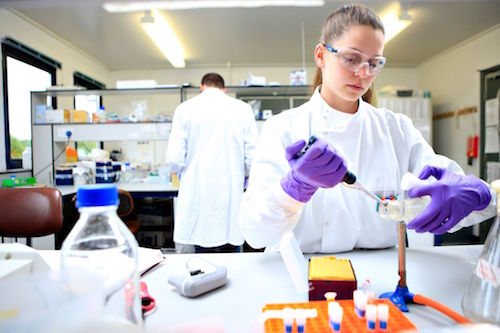

 Using these chips, the team has created a droplet-based optical polymerase sorting (DrOPS) technique allowing rapid screening for novel polymerase activities in uniform water-in-oil microcompartments. The team’s leader, Professor John C. Chaput – formerly at ASU and currently at the University of California, Irvine – explained: “The creation of synthetic nucleic acids is of great interest to synthetic biologists...
 The study, which is published today in Cell and was conducted in collaboration with the MRC Protein Phosphorylation and Ubiquitylation Unit at the University of Dundee, offers an insight into the role of a gene called UBQLN2 and how it helps to remove toxic protein clumps from the body and protect it from disease. Using biochemistry, cell biology and sophisticated mouse models, the researchers discovered that...
 SepSolve Analytical Ltd (Peterborough, UK), a company of the Schauenburg International Group (Mülheim-Ruhr, Germany), provides a unique combination of expert advice, equipment from numerous suppliers, and applications support to the global analytical chemistry sector for the characterisation of complex mixtures by GC-based technologies....
 AFM is being applied to many areas including smart wound healing, plant toxicology and novel methods of nanoparticle characterization. Dr Gordon McPhee is head of production for NextCell Pty in Adelaide, Australia. Situated on the Mawson Lakes Campus, he is located next to the University of South Australia (UniSA), Australia's leading university for interdisciplinary research, where he has access to their...
 Axol Bioscience, a biotechnology company specialising in the supply of human induced pluripotent stem cell (iPSC)-derived cells, and Metrion Biosciences, a specialist ion channel drug discovery business, have signed a collaboration agreement to improve, standardise and more accurately predict the risk of human clinical pro-arrhythmias....
 Part of Metrohm’s commitment to ongoing education and practical training, these half-day seminars are designed for anyone from a laboratory measuring moisture or water content or for those who are currently using other techniques for moisture analysis and would like to learn about KF techniques....
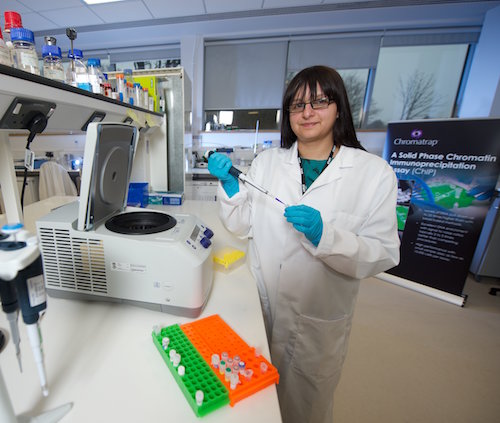 The authors describe how for every chromatin preparation it is essential to check the chromatin is sheared to fragments between 100-500 bp. They emphasise using a microfluidics platform is the most accurate measure of quantifying DNA. Problems associated with over or under sheared Chromatin fragments are discussed....
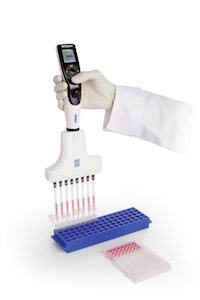 Many laboratory applications require liquid transfers between various labware formats. Due to varying requirements in their sample processing, different labware vessels are typically used for sample storage, processing and analysis tasks. Traditional multichannel pipettes were not designed to accommodate the wide variety of labware formats used today because their tip to tip spacing is optimized for use with standard 96-well microplates....
 Horizon Discovery Group plc, the world leader in the application of gene editing technologies including in vivo and Patient-Derived Xenograft (PDX) models, and The Wistar Institute (“Wistar”), an international biomedical research leader in cancer, immunology and infectious diseases, announce that Horizon has taken an exclusive license to 153 of Wistar’s melanoma PDX models....
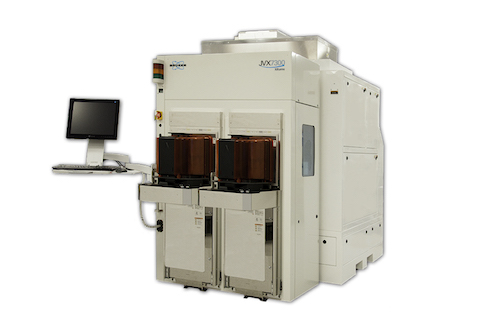 Bruker has announced that multiple leading logic and foundry manufacturers have selected Bruker’s JVX7300LSI X-ray metrology system to support their ramp and development for 10 nanometer (nm) and 7/5 nm technology nodes. The JVX7300LSI tool is equipped with both large and small spot measurement capabilities for in-line production process monitoring of the most advanced logic devices...
 Synthesis labs are aware that water-driven condensers use a large amount of water which is wasteful / expensive and offer the possibility of leaks from the condenser which can result in flooding thus are keen to find an alternative. In the two independent reports the Asynt CondenSyn air condenser displayed comparable performance to even the most efficient water-driven condensers and outperformed...
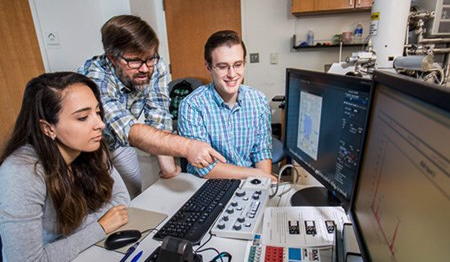 Dr Nate Magee is an associate Professor of Physics at The College of New Jersey (TCNJ) where he leads a team working to advance the understanding of the physical role of ice crystals in processes with high altitude clouds. Cirrus clouds are primarily composed of ice crystals that interact with solar radiation and IR radiation from the ground, and they play a significant, but still poorly understood role in Earth's climate...
 A collaboration between the University of Leicester and global pharmaceutical company GlaxoSmithKline (GSK) has been established to discover and develop novel medicines to treat aggressive forms of blood cancer. High grade non-Hodgkin’s lymphoma is one of the most common forms of blood cancer, with more than 5,000 new cases reported each year in the UK. Professor Simon Wagner...
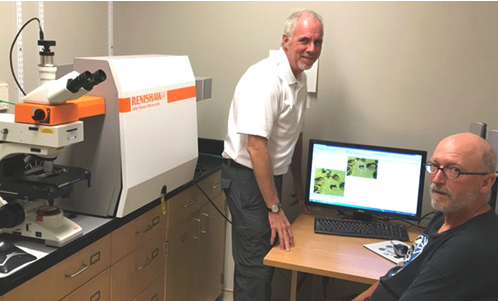 The research group of Professors Michael Blades and Robin Turner recently published this work in the Analyst. For this work the group collaborated with the Canadian Blood Services, using Raman microspectroscopy (RMS) to investigate the chemical changes that occur in red blood cells (RBC's), during storage in bags, which could eventually be used as a quality check prior to transfusion....
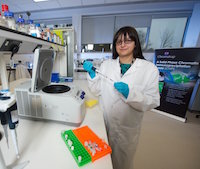 The authors describe how for every chromatin preparation it is essential to check the chromatin is sheared to fragments between 100-500 bp. They emphasise using a microfluidics platform is the most accurate measure of quantifying DNA. Problems associated with over or under sheared Chromatin fragments are discussed and a protocol for optimised enzymatic shearing described.....
 Product design and development firm Cambridge Consultants is working with medical device start-up WaveGuide Corporation on a world first to tackle the global problem of tuberculosis (TB), as well as other diseases. The two companies are developing a unique portable nuclear magnetic resonance (NMR) scanner to provide fast, low-cost, point-of-care (POC) testing for disease in developing countries...
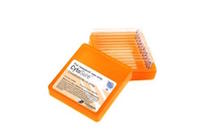 Oxford Gene Technology (OGT), The Molecular Genetics Company, held an exclusive workshop exploring the power of exon-focused microarrays in enhancing genetic syndrome research at the recent European Human Genetics Conference (ESHG). Three expert clinical researchers from across the globe shared their knowledge of enhanced CNV detection with OGT’s CytoSure™ Constitutional v3 array, helping viewers...
 The University’s School is ranked in the top 16 such faculties worldwide and is the largest community of GeoScientists in the UK, home to 400 academics and research students. A reinterpretation of the typical laboratory layout will achieve transparency throughout the building, visually connecting write-up areas, laboratories, group rooms and offices...