Leading research and advisory firm, BioInformatics LLC, today announced that 50 companies have met the criteria for nomination as a potential recipient of the prestigious Life Science Industry Awards®.
Over 1,000 scientific customers named more than 400 individual life science companies as “best-in-class” in 30 different award categories. Only 50, however, met the criteria for inclusion as a nominee on the ballot ballot now being completed by thousands of scientists around the world. Their votes will determine the Winners to be named at a gala ceremony to be held at the Grand Hyatt in Washington, DC on November 18, 2014...
Advanced Cell Diagnostics, Inc. (ACD), a global technology and market leader in in situ nucleic acid detection for life science research and clinical diagnostics, has been awarded a two-year, $1.4 million grant from National Cancer Institute (NCI) under its SBIR Phase II Program.
ACD and its academic partner Cleveland Clinic will use the grant to develop and validate a diagnostic test based on ACD’s proprietary RNAscope® technology for discriminating various B-cell non-Hodgkin lymphomas (NHLs) from benign lymphoproliferative diseases. “This award is a further validation of the clinical utility of RNAscope technology. We are very pleased that NCI has recognized the diagnostic potential of...
Thermo Fisher Scientific has developed an ion chromatography (IC)-based method to simultaneously determine lithium, sodium, and calcium in lithium carbonate without handling hazardous reagents.
Application Note 1090: IC Assay for Lithium, Sodium, and Calcium in Lithium Carbonatedemonstrates accurate determinations of these three analytes by separation on a cation-exchange column and detection by suppressed conductivity. This approach offers a fast (25 minutes), simple, accurate, and robust alternative to the time-consuming assays for these three analytes in the current United States Pharmacopeia (USP) monograph...
Cleaver Scientific reports that its horizontal electrophoresis equipment is being used on the frontline of the UK fight against Ebola
The Cleaver Scientific MultiSUB electrophoresis system features in a recent ITV report on UK Government plans to step up Ebola screening of passengers arriving from West Africa at Heathrow and Gatwick airports as well as major rail terminus. At the Porton Down research centre in Wiltshire, UK - scientists are working on detecting and minimising the risk of the Ebola virus appearing in the UK. Currently researchers are analysing 10-15 blood samples / week taken from National Health Service (NHS) patients, all to date have proved negative for Ebola....
Read MoreMerck and TAP Biosystems Chosen as Finalists for Oct 27, 2014
TAP Biosystems, a leading supplier of innovative cell culture and fermentation systems for life science applications, is delighted to announce that TAP Biosystems and Merck have been nominated as co-finalists for two awards at the prestigious 2014 BioProcess International (BPI) Awards.
The nominations recognise that the ambr250™ System, developed as a result of the collaboration, is a major advance in bioprocessing technology. At the BioProcess International Awards, TAP Biosystems and Merck have been selected as finalists in the ‘Best Collaboration Award’ and the ‘Best Technology Application — Upstream Award’ categories from amongst numerous outstanding industrial collaborations for their partnership to develop the...
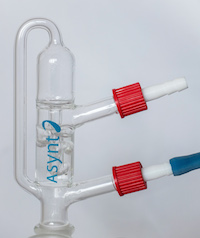
Asynt has introduced a new range of Gas Bubblers that enable chemists to visibly confirm that their reaction system is being flushed with an inert gas such as nitrogen.
A gas bubbler is a piece of laboratory glassware which consists of a glass bulb filled with a small amount of fluid such as mineral or silicone oil. For use with reactions the inlet to the bulb is connected to a ground glass joint, while the outlet is vented to the air. Gas bubblers are used to exclude air from a reaction or can help with purging systems such as a Schlenk line. Used in the former case, the gas bubbler is often fitted on the condenser of the reaction set-up. In the latter case...
Introducing the New Q Exactive Focus benchtop LC-MS/MS
Laboratories performing food and environmental testing, clinical research, forensic toxicology, pharmaceutical/biopharmaceutical measurements, and other applied analyses can now benefit from the performance of high-resolution accurate-mass (HRAM) Orbitrap mass spectrometry using a new instrument designed for cost-per-sample-sensitive workflows. The new Thermo Scientific Q Exactive Focus LC-MS/MS is...
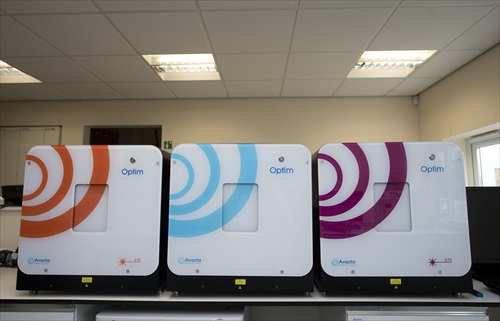
Avacta’s Optim® 2 platform is an innovative analytical instrument designed to probe multiple protein stability indicating parameters at high speed using ultra-low sample volumes.
Developed to reduce the time and cost of therapeutic protein preformulation studies, the functionality of this compact instrument family has now been further enhanced with the addition of two new models. The Optim 375 is intended for the investigation of complex mixtures of membrane proteins, using an additional 375 nm laser source to provide a novel stability screen based on the chemical reactivity of cysteine residues....
The ASpect CS software package version 2.0 for High-Resolution Continuum Source (HR-CS) AAS with the contrAA® series provides innovative new features significantly increasing productivity, flexibility and operation comfort.
The main new features include simultaneous multi-element analysis of any number of analytical wavelengths within the spectrum window. Integration ranges for each line can be selected freely, for increased sensitivity. A new background correction method and an improved spectral correction of interferences allow simple and automatic correction of complex structured spectral background and overlapping matrix lines. ASpect CS is operated...
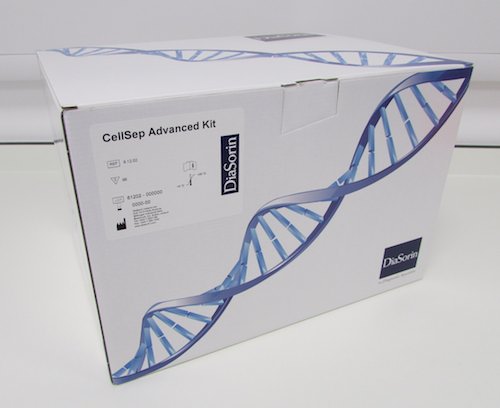
The recently launched CellSep Advanced kit, for use in combination with the Arrow™ Instrument for the automated isolation of up to three cell types directly from whole blood or buffy coat1, was among the new developments revealed to distributors at the Annual DiaSorin Molecular Distributor Meeting held in Bandol, South of France.
As demand for more automated methods for molecular diagnostics and research increases, DiaSorin aims to ensure that its distributors are equipped to meet the evolving needs of customers. The distributors received a range of support materials to help inform and train scientists interested in using CellSep Advanced, including animated films on the use of the Arrow™ Instrument, product literature, and an Application Note from the...
Simple operation – fully automatic measurement, analysis and cleaning!
So simple, but also very flexible! With the FRITSCH Laser Particle Sizers ANALYSETTE 22 MicroTec plus (0.08 – 2000 µm) and NanoTec plus (0.01 – 2000 µm) particle measurement becomes a simple matter, for professionals as well as for any employee – in production and quality control or in research and development. No prior knowledge is required. Just start the programme, select a SOP and add the sample – the rest takes place completely automatic. Fast. Reliable. Efficient...
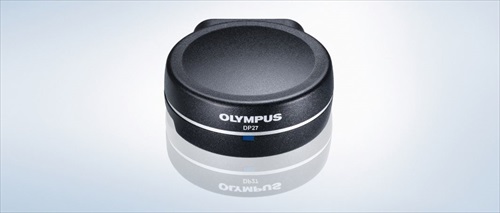
Introducing the 5 megapixel DP27 and 3 megapixel DP22, Olympus presents its next generation of digital cameras for microscopy. Individual needs are met with multi-mode functionality, delivering Full-HD live images of unprecedented quality directly to the monitor.
Life-like digital microscopy is now a reality with the DP27 and DP22 digital cameras from Olympus. Both cameras deliver fluid imaging at Full-HD resolution via a USB 3.0 interface, and enable easy optimisation for each and every application with three distinct modes. With the next generation of Olympus digital microscopy camera, researchers can enjoy visualisation on a monitor that is virtually identical to that of the oculars....
New technique that identifies rare stem cells from bone marrow will give clinicians a fillip in stem-cell treatment of joint, bone and muscle repair.
The research will be published in the journal Proceedings of the National Academy of Sciences this week. A team of scientists and engineers at the Singapore-MIT Alliance for Research and Technology (SMART) have invented a new technique to identify populations of rare stem cells from bone marrow based on their different combinations of biophysical characteristics such as cell size, cell stiffness and nucleus deformation...
The Clinical and Laboratory Standards Institute (CLSI) has released an updated version of its feature-rich method evaluation software, StatisPro 3.0.
StatisPro software guides users through protocols to establish and verify test method performance characteristics. The protocols faithfully follow CLSI standards, so users can be confident that their analyses meet regulatory and accreditation requirements. This new version, StatisPro 3.0, includes an implementation of CLSI document EP09-A3—Measurement Procedure Comparison and Bias Estimation Using Patient Samples; Approved Guideline...
The QCS 150 Pass-Through autoclave is the latest and smallest double-door autoclave to be introduced by Priorclave and is purpose designed to enable laboratories maintain a secure sterile path for media and waste as it passes in and out of a sealed laboratory.
The uncompromising level of safety on this 150 litre front loading autoclave is achieved by way of a design that incorporates the highest level of door interlock settings, preventing doors on either end of the chamber to be simultaneously opened.....
Meet world’s first Mobile SEM - the Phenom desktop SEM. A fully integrated and accredited scanning electron microscope (SEM) with EDX to be used on every location for fast and accurate investigations and analysis.
The Phenom ProX is the ultimate all-in-one imaging and X-ray analysis system (EDX). With the Phenom ProX desktop SEM, sample structures can be physically examined and their elemental composition determined. Besides point analysis, the optional Elemental Mapping and Line Scan software allows further analysis of the distribution of elements....
The F series by JULABO offers space-saving and eco-friendly recirculating coolers for simple cooling applications from -10 °C to +40 °C.
The F series of Compact-Recirculating coolers by JULABO are ideal for simple cooling tasks in laboratories and industry. The smallest recirculating cooler of this new family – the F250 – was technically up-graded to provide a wider temperature range from -10 °C to +40 °C. The new recirculating coolers F500 and F1000 feature even higher cooling capacities and stronger integrated pumps. The pump of the F500 delivers 24 l/min at 0.5 bar, the stronger pump of the F1000 delivers 23 l/min at 1.0 bar....
RAININ's New LR Low Retention Pipette Tips Can Help
Now available from Anachem the new LR Low Retention pipette tips improve pipetting accuracy by minimising residual volume. These tips prevent samples from interacting with the polypropylene surface of the tip, making them especially useful when transferring complex sample liquids, viscous liquids and those with reduced surface tension due to the presence of detergents and other organic constituents....
The fight against cancer could be aided by new technical advances in filtration and separation technology.
Porvair Filtration Group believes that the evolution of its range of sintered porous plastics can help molecular biologists and clinicians better understand the mechanisms underlying cancer and other diseases. Scientists at the Wrexham division have developed BioVyon™ porous plastic materials which can now be used in a wide variety of medical and pharmaceutical applications to offer better healthcare, improve medical knowledge and help with the diagnosis and treatment of diseases....
TAP Biosystems will be co-presenting a new bioprocess webinar with major US contract manufacturing organisation (CMO) Gallus BioPharmaceuticals, on Thursday November 6th 2014 at 4pm GMT /5pm CEST / 8am PST / 11am EST.
The live event will detail how Gallus is using the ambr15™ automated microbioreactor system as a tool for implementing DoE (Design of Experiments) to accelerate biosimilar process development. Bioprocessing experts, Dr. Matt Zustiak, Principal Scientist at Gallus BioPharmaceuticals and Dr. Joanne Swihart, ambr15 Product Specialist at TAP Biosystems, will present data on how the ambr15 micro bioreactor system mimics large-scale cell culture to...
GENALICE and Knome, Inc. jointly announced that the Swiss Foundation for People with Rare Diseases has chosen to use their solutions in tandem to improve the Foundation’s processing and analysis of their Next-Generation Sequencing (NGS) data.
GENALICE MAP is an ultra-fast and highly accurate NGS data preprocessing solution and will be connected to Knome’s informatics and genomics interpretation system, the knoSYS® platform. “In the era of high volume NGS data production, a streamlined and affordable pipeline for data processing and analysis is key,” explains Gabor Matyas from the Foundation. “The combination of the solutions of GENALICE and Knome allows our work to...

 Over 1,000 scientific customers named more than 400 individual life science companies as “best-in-class” in 30 different award categories. Only 50, however, met the criteria for inclusion as a nominee on the ballot ballot now being completed by thousands of scientists around the world. Their votes will determine the Winners to be named at a gala ceremony to be held at the Grand Hyatt in Washington, DC on November 18, 2014...
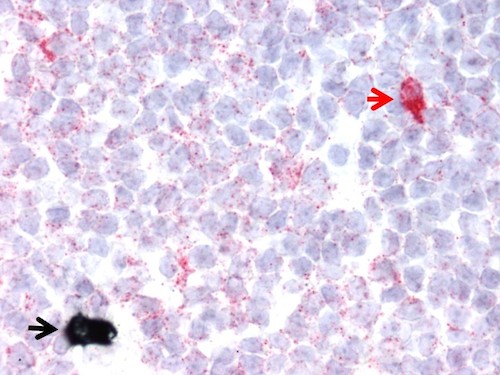 ACD and its academic partner Cleveland Clinic will use the grant to develop and validate a diagnostic test based on ACD’s proprietary RNAscope® technology for discriminating various B-cell non-Hodgkin lymphomas (NHLs) from benign lymphoproliferative diseases. “This award is a further validation of the clinical utility of RNAscope technology. We are very pleased that NCI has recognized the diagnostic potential of...
 Application Note 1090: IC Assay for Lithium, Sodium, and Calcium in Lithium Carbonatedemonstrates accurate determinations of these three analytes by separation on a cation-exchange column and detection by suppressed conductivity. This approach offers a fast (25 minutes), simple, accurate, and robust alternative to the time-consuming assays for these three analytes in the current United States Pharmacopeia (USP) monograph...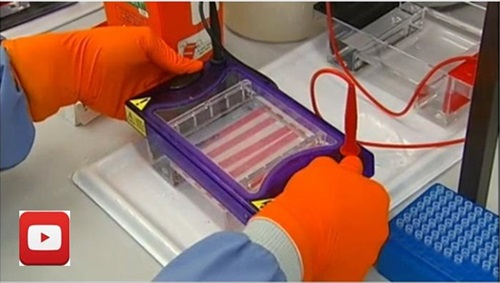
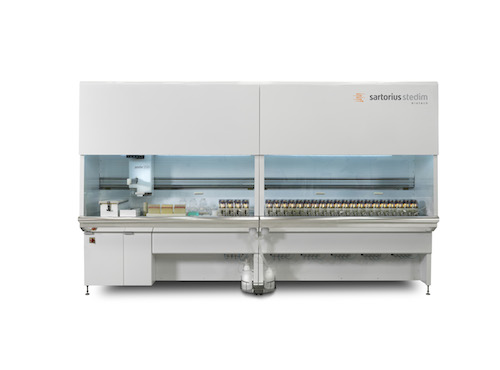 The nominations recognise that the ambr250™ System, developed as a result of the collaboration, is a major advance in bioprocessing technology. At the BioProcess International Awards, TAP Biosystems and Merck have been selected as finalists in the ‘Best Collaboration Award’ and the ‘Best Technology Application — Upstream Award’ categories from amongst numerous outstanding industrial collaborations for their partnership to develop the...
 A gas bubbler is a piece of laboratory glassware which consists of a glass bulb filled with a small amount of fluid such as mineral or silicone oil. For use with reactions the inlet to the bulb is connected to a ground glass joint, while the outlet is vented to the air. Gas bubblers are used to exclude air from a reaction or can help with purging systems such as a Schlenk line. Used in the former case, the gas bubbler is often fitted on the condenser of the reaction set-up. In the latter case...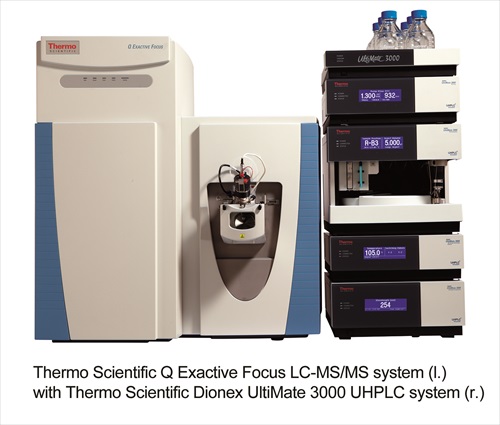
 The main new features include simultaneous multi-element analysis of any number of analytical wavelengths within the spectrum window. Integration ranges for each line can be selected freely, for increased sensitivity. A new background correction method and an improved spectral correction of interferences allow simple and automatic correction of complex structured spectral background and overlapping matrix lines. ASpect CS is operated...
 As demand for more automated methods for molecular diagnostics and research increases, DiaSorin aims to ensure that its distributors are equipped to meet the evolving needs of customers. The distributors received a range of support materials to help inform and train scientists interested in using CellSep Advanced, including animated films on the use of the Arrow™ Instrument, product literature, and an Application Note from the...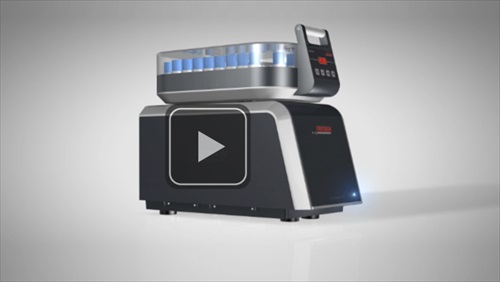
 The research will be published in the journal Proceedings of the National Academy of Sciences this week. A team of scientists and engineers at the Singapore-MIT Alliance for Research and Technology (SMART) have invented a new technique to identify populations of rare stem cells from bone marrow based on their different combinations of biophysical characteristics such as cell size, cell stiffness and nucleus deformation...
 StatisPro software guides users through protocols to establish and verify test method performance characteristics. The protocols faithfully follow CLSI standards, so users can be confident that their analyses meet regulatory and accreditation requirements. This new version, StatisPro 3.0, includes an implementation of CLSI document EP09-A3—Measurement Procedure Comparison and Bias Estimation Using Patient Samples; Approved Guideline...
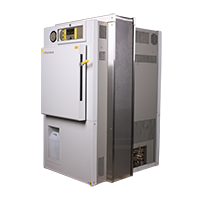 The uncompromising level of safety on this 150 litre front loading autoclave is achieved by way of a design that incorporates the highest level of door interlock settings, preventing doors on either end of the chamber to be simultaneously opened.....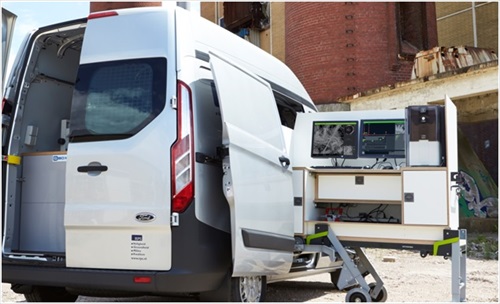
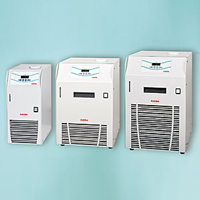 The F series of Compact-Recirculating coolers by JULABO are ideal for simple cooling tasks in laboratories and industry. The smallest recirculating cooler of this new family – the F250 – was technically up-graded to provide a wider temperature range from -10 °C to +40 °C. The new recirculating coolers F500 and F1000 feature even higher cooling capacities and stronger integrated pumps. The pump of the F500 delivers 24 l/min at 0.5 bar, the stronger pump of the F1000 delivers 23 l/min at 1.0 bar....
 Porvair Filtration Group believes that the evolution of its range of sintered porous plastics can help molecular biologists and clinicians better understand the mechanisms underlying cancer and other diseases. Scientists at the Wrexham division have developed BioVyon™ porous plastic materials which can now be used in a wide variety of medical and pharmaceutical applications to offer better healthcare, improve medical knowledge and help with the diagnosis and treatment of diseases....
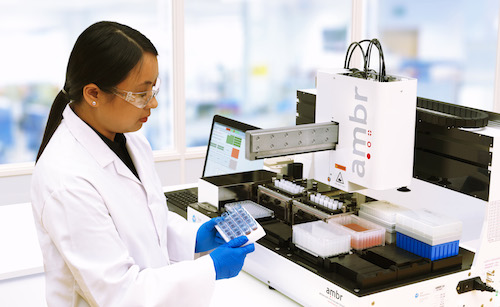 The live event will detail how Gallus is using the ambr15™ automated microbioreactor system as a tool for implementing DoE (Design of Experiments) to accelerate biosimilar process development. Bioprocessing experts, Dr. Matt Zustiak, Principal Scientist at Gallus BioPharmaceuticals and Dr. Joanne Swihart, ambr15 Product Specialist at TAP Biosystems, will present data on how the ambr15 micro bioreactor system mimics large-scale cell culture to...
 GENALICE MAP is an ultra-fast and highly accurate NGS data preprocessing solution and will be connected to Knome’s informatics and genomics interpretation system, the knoSYS® platform. “In the era of high volume NGS data production, a streamlined and affordable pipeline for data processing and analysis is key,” explains Gabor Matyas from the Foundation. “The combination of the solutions of GENALICE and Knome allows our work to...