Market leaders in temperature controlled microscopy, Linkam Scientific Instruments, have developed a stage for cryo-correlative light/electron microscopy (cryo-CLEM), a breakthrough in the imaging of cells at cryo temperatures
Linkam are pleased to announce the development and launch of a stage for cryo-correlative light/electron microscopy (cryo-CLEM). It was designed in collaboration with scientists at the Leiden University Medical Centre (LUMC) led by Bram Koster and Erik Bos. Cryo-CLEM is the correlation of images captured with a cryostage on a fluorescent light microscope and images of the same sample observed with Transmission Electron Microscopy (TEM)...
Read MoreLGC acquires leading bioanalytical sciences business from Quotient BioresearchJan 7, 2013
LGC and Quotient Bioresearch are pleased to announce that they have reached agreement on the sale by Quotient of its Bioanalytical Sciences division to LGC
Quotient Bioanalytical Sciences is a leading provider of bioanalytical services across the fields of small molecules, biomarkers, biopharmaceuticals and microbiological testing to customers in the pharmaceutical and biotechnology sectors. It is based at Fordham, Cambridgeshire...
Read MoreBioCity Scotland celebrate their first anniversary Jan 7, 2013
BioCity Scotland, the centre for life science businesses in Newhouse, Lanarkshire will celebrate the first anniversary of its formation on 5 January 2013
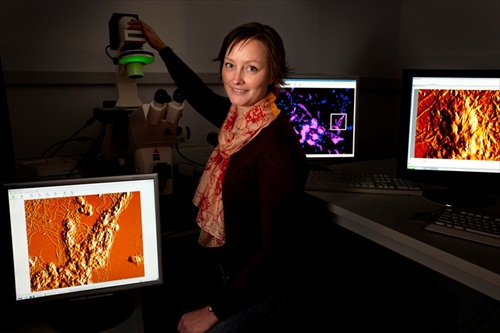
JPK Instruments, a world-leading manufacturer of nanoanalytic instrumentation for research in life sciences and soft matter, reports on the research studies of Dr Rikke Meyer who is looking into biofilm formation from bacteria using atomic force microscopy, AFM, and single-cell force spectroscopy
Techne is introducing software updates and new documentation for its PrimeQ instrument range, designed to help researchers use their qPCR system in the most efficient and effective way possible
Now freely available online is the upgraded version of PrimeQ’s Quansoft software as well as new PCR certificates and declaration of conformity certificates. A selection of useful new technical and application notes can also be downloaded, covering topics ranging from the principle of Absolute Quantification Analysis and High Resolution Melting through to minimising sample volumes and an analysis of different manufacturers’ consumable kits....
Read MoreLink Technologies Reveals Latest Trends in Nucleotide InnovationJan 3, 2013
As a certified specialist in the provision of phosphoramidites and reagents for oligo synthesis, both direct to research groups and to oligo manufacturers, Link Technologies Ltd has observed a significant increase in requests for vitamin-modified oligo precursors, following on from the increasing use of vitamin-modified oligonucleotides in life science research
The growing interest in such compounds is reflective of the current buzz that surrounds research into the enhanced targeting and delivery of nucleotide-based treatments. Such research is vital for the therapeutic industry, wherein accurate targeting and effective uptake of pharmaceutical compounds is essential, not only for positive medicinal value but also to avoid undesirable, potentially dangerous side effects....
Read MoreNew technique to deliver stem cell therapy may help damaged eyes regain their sightJan 3, 2013
Engineers at the University of Sheffield have developed a new technique for delivering stem cell therapy to the eye which they hope will help the natural repair of eyes damaged by accident or disease. This could help millions of people across the world retain – or even regain - their sight
In research published in the journal Acta Biomaterialia, the team describe a new method for producing membranes to help in the grafting of stem cells onto the eye, mimicking structural features of the eye itself. The technology has been designed to treat damage to the cornea, the transparent layer on the front of the eye, which is one of the major causes of blindness in the world....
Read MoreDenmarkJan 2, 2013
Thermo Fisher Scientific Inc., the world leader in serving science, today announced that The National Food Institute, Technical University of Denmark (DTU), has adopted a Thermo Scientific iCAP Q inductively-coupled plasma mass spectrometer (ICP-MS) for research supporting EU Commission development of standards for arsenic and nanomaterials in food
Dr. Erik Huusfeldt Larsen, senior researcher at The National Food Institute,(DTU) and his Metals, Minerals & Nano Group at DTU are using the iCAP Q ICP-MS system to determine the species of arsenic found in food samples. EU Commission researchers have found that it is no longer adequate to measure total arsenic in food because small amounts of inorganic arsenic can be associated with diseases such as cancers of the skin and bladder, while organic arsenic is much less toxic. Larsen notes that until recently, arsenic contamination was associated mainly with fish and other marine products; but in recent years, arsenic found in drinking water, rice and wheat have also attracted public attention...
Molecular technology will play a vital role in safeguarding the health and productivity of food animals in the future. That was the message from expert speakers at a recent meeting in Brussels entitled Advances in Diagnostics
“Technology is taking over,” said Dr Willie Loeffen, President of the European Association of Veterinary Laboratory Diagnosticians (EAVLD). “Laboratory diagnosis used to be 99% labour and 1% technology, nowadays the emphasis is the other way around. Technology is now an integral and indispensable part of veterinary laboratories.” Dr Loeffen used the investigation of PRRSV infection in pigs and the more recent appearance of Schmallenberg virus in Europe to highlight how modern molecular techniques could help to characterise new disease threats rapidly...
Read MoreThe foods that could cause you a Christmas crisis - and how R-Biopharm RhDec 24, 2012
Christmas is nearly upon us once again and larders across the UK are being stocked with a cornucopia of foodie goodies and delicious drinks to help the nation's party people to celebrate in sumptuous style
But unbeknownst to most folk who will relax onto a post-prandial sofa after a traditional lunch to watch the Queen's broadcast, there are dangers lurking in many of the most popular ingredients of the festive feast. Nuts, figs, raisins - even the flour in a mince pie or the almonds in the marzipan icing of the Christmas cake could contain potentially lethal toxins which could, if not detected, cause irreversible damage...
Read MoreWorld leading Scientist joins Glasgow Science Centre GroupDec 24, 2012
One of the world’s leading forensic scientists has joined Glasgow Science Centre’s Advisory Group for its new BodyWorks exhibition
Professor Sue Black OBE, an expert in human anatomy and star of the BBC series ‘History Cold Case’, has joined other experts from academia and industry to provide advice, guidance and direction for the new exhibition. The BodyWorks exhibition, funded through two main grants from The Wellcome Trust and GlaxoSmithKline, will focus on the wonder of the human body and will demonstrate the latest in cutting edge research and innovation in the health and well-being sector...
Mass Spectrometry Research by Professor David Clemmer Has Paved the Way for New Discoveries in Proteomics and Protein Characterization
At a ceremony at Indiana University’s Bloomington campus, Waters Corporation (NYSE:WAT) welcomed the Laboratory of Biological Mass Spectrometry and Professor David Clemmer, the Robert and Marjorie Mann Chair of Chemistry and the Associate Dean of Sciences in the College of Arts and Sciences into its Centers of Innovation Program. Waters honored Professor Clemmer’s contributions to ion mobility mass spectrometry that have given researchers everywhere new routes to discovery in the areas of protein characterization and the emerging field of proteomics...
Read MoreAutomation Will Represent the Next Big Step for Biobanks, Says Frost & SullivanDec 20, 2012
Exponential growth in sample volumes pushes biobanks toward automation
Every year, nearly 100 million samples are added to biobanks worldwide. Over 1500 bio repositories exist today and efforts are underway to automate the various sample handling and compound storage processes involved in biobanking. The increased focus on preservation of sample integrity and biobanking efficiency is creating considerable growth opportunities for automated solutions...
Read MoreOlympusDec 19, 2012
Game-changing multiphoton optics for deeper tissue imaging
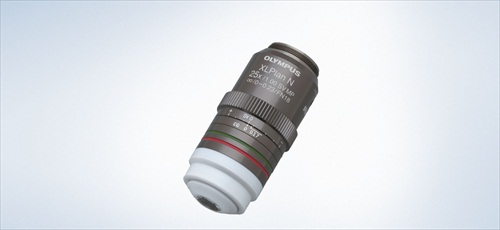
The new line of Olympus SCALEVIEW multiphoton microscope objectives, which allow researchers to see far deeper into tissue than was ever possible before, has earned three prestigious life science product awards. The 25x Olympus 4mm (NA 1.0) and 8mm (NA 0.9) SCALEVIEW microscope objectives allow researchers to create highly accurate 3D structural representations of tissue from intact specimens by offering detailed, crisp images over super-long working distances. The prizes include the prestigious 2012 R&D 100 Award and the Gold Edison Award in the Science/Medical category...
Read MoreJPK reports on the use of Tip Assisted Optics to characterize biomolecular hydrogels at CIC biomaGUNE in San Sebastian, SpainDec 19, 2012
JPK Instruments, a world-leading manufacturer of nanoanalytic instrumentation for research in life sciences and soft matter, reports on the use of their Tip Assisted Optics module by Dr Ralf Richter at the CIC biomaGUNE, Biosurfaces Unit in San Sebastian, Spain
CIC biomaGUNE is a non-profit research organization created in 2006 to promote scientific research and technological innovation at the highest levels in the Basque Country. Dr Ralf Richter leads Laboratory 3 in the Biosurfaces Research Unit applying a number of techniques for surface nanostructure characterization and biofunctionalization to guide the assembly of molecules down to the nanometer-scale. For this characterization, his group has developed a toolbox of biophysical in-situ techniques including a quartz crystal microbalance with dissipation monitoring (QCM-D), atomic force microscopy (AFM), reflection interference contrast microscopy (RICM), ellipsometry and fluorescence methods...
Read MoreHandsome investment for The North West Fund for BiomedicalDec 19, 2012
The North West Fund for Biomedical, managed by SPARK Impact, has invested £250,000 in medical devices manufacturer Handsome Ltd
Handsome Ltd, which is based at Manchester Business Park in South Manchester, is currently developing a range of products to provide spinal pain relief. The investment will be used to complete product development and clinical user studies, as well as implementing relevant ISO accreditations and commercialising products to bring them to market. The North West Fund for Biomedical is part of The North West Fund, a £155million evergreen fund that is jointly financed by the European Regional Development Fund and the European Investment Bank...
Read MoreShare a snowman with OGT to win an Amazon Kindle Fire tabletDec 18, 2012
Build and dress a snowman with OGT’s interactive Share-a-Snowman Game
Oxford Gene Technology (OGT), provider of innovative clinical genetics and diagnostic solutions to advance molecular medicine, invites you to get into the spirit of sharing this holiday season with its interactive Share-a-Snowman Game. In true festive style, OGT has once again decided to send an electronic Christmas card and will be making a donation to a number of charities in lieu of sending paper cards. The e-card will feature the snowman builder game; create your own snowman and send it to your friends and colleagues...
Read MoreCurie-Cancer funds its first selection of five late-stage projects ??Dec 18, 2012
Funding of these first five projects enables Institut Curie’s discoveries to progress more rapidly to the industrial stage, making innovation available to patients more quickly
Curie-Cancer, the body responsible for developing Institut Curie’s industry partnership activities, announces today that it has provided funding for its first five late-stage internal research projects. This funding will enable Curie’s scientists to gather more evidence and progress with the selected projects, making their research more attractive to industrial companies...
Read MoreSynTech Research announces acquisition of major Ecotoxicology and Analytical capability in the USADec 17, 2012
SynTech Research is acquiring Bayer CropScience's state-of-the-art US Ecotoxicology capability at the Bayer Research Park near Stilwell, Kansas
The unit’s activities include both short and long-term avian (acute and reproduction) and aquatic (fish, plants, invertebrates and amphibia) studies. Thirteen of the current Bayer CropScience Ecotoxicology staff at the Stilwell site will transfer to SynTech Research, and will continue to perform studies for Bayer CropScience. Following the acquisition, SynTech intends to add further staff to increase the unit's capacity, particularly in Regulatory/Risk Assessment...
Read MoreUK Life Science start up trends show focus for growthDec 14, 2012
Findings of the 2012 UK Life Science Start up report ‘Realignment’
An optimistic picture of the UK life sciences sector emerges from today’s publication of the annual UK Life Sciences start-up report. The 291 new firms launched in the study period represent the next generation of growth-focussed firms, born at the dawn of a new era for the bioscience and life science sector...
Researchers at the University of Connecticut have been using the LP920 flash photolysis spectrometer from Edinburgh Instruments as part of their research into plant light harvesting complexes
A paper has been published (2) with collaborators at Kwansei Gakuin University examining the efficiency of variants of the Peridinin-Chlorophyll a-Protein (PCP) complex in providing photoprotection from singlet oxygen formation. PCP’s highly effective protective capacity against these photodynamic reactions is extremely important since singlet oxygen can directly provoke cellular damage in plants by rapidly oxidizing cellular components...
Read MoreUnder-The-Tongue Spray could cut child malaria deathsDec 13, 2012
Norwich Research Park company expands into Innovation Centre as trials progress
Malaria kills an African child every 30 seconds, many of whom die because they were unable to reach a hospital in time. A new under-the-tongue spray developed by Norwich Research Park company LondonPharma could help cut deaths by helping children recover sufficiently to survive the journey to hospital. LondonPharma, recently voted ‘Best Emerging Biotech of the Year’, is expanding its business as its new product completes Phase 3 trials. As a result of this progression, the company is moving from the Norwich BioIncubator to the Norwich Research Park Innovation Centre...
Read More

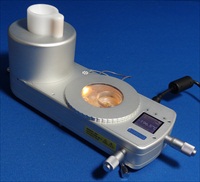 Linkam are pleased to announce the development and launch of a stage for cryo-correlative light/electron microscopy (cryo-CLEM). It was designed in collaboration with scientists at the Leiden University Medical Centre (LUMC) led by Bram Koster and Erik Bos. Cryo-CLEM is the correlation of images captured with a cryostage on a fluorescent light microscope and images of the same sample observed with Transmission Electron Microscopy (TEM)...
 Quotient Bioanalytical Sciences is a leading provider of bioanalytical services across the fields of small molecules, biomarkers, biopharmaceuticals and microbiological testing to customers in the pharmaceutical and biotechnology sectors. It is based at Fordham, Cambridgeshire...
 Twelve months ago, the 18 acre site was officially handed to the new company by global pharmaceutical company MSD for the creation of a bioscience business incubator to support new and growing life science ventures. At the time, BioCity made a commitment to bring the facility to life again, and within weeks the first companies were moving onto the site...
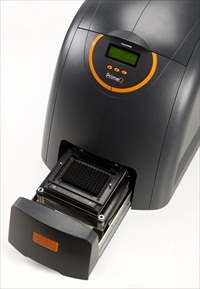 Now freely available online is the upgraded version of PrimeQ’s Quansoft software as well as new PCR certificates and declaration of conformity certificates. A selection of useful new technical and application notes can also be downloaded, covering topics ranging from the principle of Absolute Quantification Analysis and High Resolution Melting through to minimising sample volumes and an analysis of different manufacturers’ consumable kits....
 The growing interest in such compounds is reflective of the current buzz that surrounds research into the enhanced targeting and delivery of nucleotide-based treatments. Such research is vital for the therapeutic industry, wherein accurate targeting and effective uptake of pharmaceutical compounds is essential, not only for positive medicinal value but also to avoid undesirable, potentially dangerous side effects....
 In research published in the journal Acta Biomaterialia, the team describe a new method for producing membranes to help in the grafting of stem cells onto the eye, mimicking structural features of the eye itself. The technology has been designed to treat damage to the cornea, the transparent layer on the front of the eye, which is one of the major causes of blindness in the world....
 “Technology is taking over,” said Dr Willie Loeffen, President of the European Association of Veterinary Laboratory Diagnosticians (EAVLD). “Laboratory diagnosis used to be 99% labour and 1% technology, nowadays the emphasis is the other way around. Technology is now an integral and indispensable part of veterinary laboratories.” Dr Loeffen used the investigation of PRRSV infection in pigs and the more recent appearance of Schmallenberg virus in Europe to highlight how modern molecular techniques could help to characterise new disease threats rapidly...
 But unbeknownst to most folk who will relax onto a post-prandial sofa after a traditional lunch to watch the Queen's broadcast, there are dangers lurking in many of the most popular ingredients of the festive feast. Nuts, figs, raisins - even the flour in a mince pie or the almonds in the marzipan icing of the Christmas cake could contain potentially lethal toxins which could, if not detected, cause irreversible damage...
 Professor Sue Black OBE, an expert in human anatomy and star of the BBC series ‘History Cold Case’, has joined other experts from academia and industry to provide advice, guidance and direction for the new exhibition. The BodyWorks exhibition, funded through two main grants from The Wellcome Trust and GlaxoSmithKline, will focus on the wonder of the human body and will demonstrate the latest in cutting edge research and innovation in the health and well-being sector...
 At a ceremony at Indiana University’s Bloomington campus, Waters Corporation (NYSE:WAT) welcomed the Laboratory of Biological Mass Spectrometry and Professor David Clemmer, the Robert and Marjorie Mann Chair of Chemistry and the Associate Dean of Sciences in the College of Arts and Sciences into its Centers of Innovation Program. Waters honored Professor Clemmer’s contributions to ion mobility mass spectrometry that have given researchers everywhere new routes to discovery in the areas of protein characterization and the emerging field of proteomics...

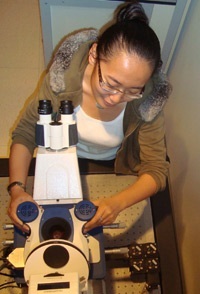 CIC biomaGUNE is a non-profit research organization created in 2006 to promote scientific research and technological innovation at the highest levels in the Basque Country. Dr Ralf Richter leads Laboratory 3 in the Biosurfaces Research Unit applying a number of techniques for surface nanostructure characterization and biofunctionalization to guide the assembly of molecules down to the nanometer-scale. For this characterization, his group has developed a toolbox of biophysical in-situ techniques including a quartz crystal microbalance with dissipation monitoring (QCM-D), atomic force microscopy (AFM), reflection interference contrast microscopy (RICM), ellipsometry and fluorescence methods...
 Handsome Ltd, which is based at Manchester Business Park in South Manchester, is currently developing a range of products to provide spinal pain relief. The investment will be used to complete product development and clinical user studies, as well as implementing relevant ISO accreditations and commercialising products to bring them to market. The North West Fund for Biomedical is part of The North West Fund, a £155million evergreen fund that is jointly financed by the European Regional Development Fund and the European Investment Bank...

 Curie-Cancer, the body responsible for developing Institut Curie’s industry partnership activities, announces today that it has provided funding for its first five late-stage internal research projects. This funding will enable Curie’s scientists to gather more evidence and progress with the selected projects, making their research more attractive to industrial companies...

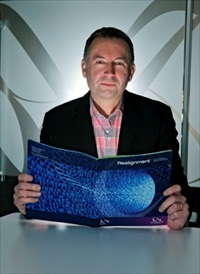 An optimistic picture of the UK life sciences sector emerges from today’s publication of the annual UK Life Sciences start-up report. The 291 new firms launched in the study period represent the next generation of growth-focussed firms, born at the dawn of a new era for the bioscience and life science sector...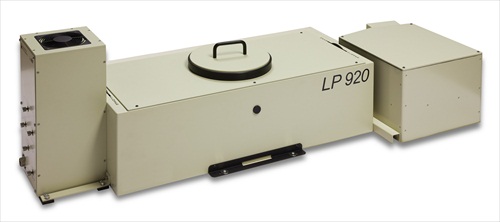
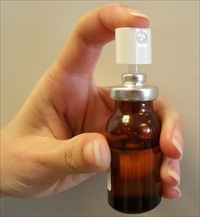 Malaria kills an African child every 30 seconds, many of whom die because they were unable to reach a hospital in time. A new under-the-tongue spray developed by Norwich Research Park company LondonPharma could help cut deaths by helping children recover sufficiently to survive the journey to hospital. LondonPharma, recently voted ‘Best Emerging Biotech of the Year’, is expanding its business as its new product completes Phase 3 trials. As a result of this progression, the company is moving from the Norwich BioIncubator to the Norwich Research Park Innovation Centre...