Experts from Malvern Instruments, a company renowned for its light scattering technology, will present a one-day course entitled ‘Fundamentals of Particle Size Analysis with an Emphasis on Light Scattering Techniques’ at Pittcon 2013
The course will be delivered by Dr Alan Rawle, Applications Manager and Dr Ulf Nobbmann, GPC/SEC Product Manager – Americas, on 19 March 2013 at 8.30am. This valuable short course will introduce the basics of particle size analysis to those new to the field. The emphasis will be on the essentials of laser diffraction and dynamic light scattering (DLS) but other techniques such as sieving, sedimentation and electrozone counting will also be covered...
Eppendorf and the journal Science are now accepting applications for the 2013 Eppendorf & Science Prize for Neurobiology - an annual international research prize of US$25,000. The prize is awarded to one young scientist for his or her outstanding contributions to neurobiology research. Researchers who are 35 years of age or younger are invited to apply by June 15, 2013. The prize winner is selected by a committee of independent experts in the field, chaired by Science’s Senior Editor, Dr. Peter Stern...
Using a SP Scientific LyoStar Freeze Drying System, leading pharmaceutical process development experts - GILYOS GmbH (Wuerzburg, Germany) will participate in a research program called "FORMOsA" which was recently funded with about two million euros by the German Bavarian Research Foundation. The project focuses on age-related muscle atrophy (sarcopenia)
In this project, GILYOS will be actively involved in the formulation development and freeze drying process design and optimization of follistatin for subcutaneous application. Follistatin is a messenger substance which is present in almost all types of tissue. The protein effectively inhibits myostatin which, in turn, plays a key role in skeletal muscle atrophy. Follistatin might therefore be a promising substance for treating sarcopenia...
Read MoreXEI Scientific reports on the patent awarded recently on their TEM Wand for plasma cleaningMar 14, 2013
XEI Scientific Inc, maker of the popular EVACTRON® De-Contaminator™ Plasma Cleaning System for electron microscopes and other vacuum chambers, reports on the recent announcement that the company has been awarded a patent for its innovative TEM Wand™ technology
January 8th, 2013, was an important day in the history of XEI Scientific. The date marked the release of US Patent number 8,349,125 B2 entitled a "Cleaning Device for Transmission Electron Microscopes." The device described here is the XEI TEM Wand. It is being used to remove hydrocarbon contamination from the sample introduction and pole piece regions of TEMs. The Wand consists of a plasma cleaning device mounted on a hollow rod that replaces the specimen holder and is inserted into the instrument just as if a sample is being exchanged...
Read More4th International Definiens Symposium to Feature More Than 20 Expert PresentersMar 11, 2013
Speakers will discuss trends and opportunities in image and data analysis for digital pathology at Harvard Medical School in Boston
Definiens, the global leader of image and data analysis solutions for quantitative digital pathology, today announced it will host more than 20 distinguished speakers at the 4th International Definiens Symposium, featuring discussions on image and data analysis in digital pathology. The symposium will be held at the Joseph B. Martin Conference Center on Harvard Medical School campus in Boston, MA on May 13-15, 2013...
When it comes to super-sensitivity and super-resolution, there’s no getting around the Leica TCS SP8 STED
The Seoul National University Hospital Biomedical Research Institute (SNUH) in Korea offers super-sensitive and super-resolution imaging with the advanced high-end imaging system Leica TCS SP8 STED to its more than 400 researchers. For the wide range of applications from simple cell biology to reperfusion live experiments, the institute’s confocal microscopy core facility requires a high-performing system featuring the best possible sensitivity and super-resolution. The decision for the Leica TCS SP8 STED was made after a thorough comparison of various confocal systems in terms of technical design and imaging results...
Market leaders in temperature controlled microscopy, Linkam Scientific Instruments report on the use of their popular FDCS196 and DSC600 stages for cell microencapsulation and immunoisolation research at the University of South Carolina, USA
A group of scientists from the University of South Carolina (USC) and Shanghai Jiao Tong University are working on a jointly funded doctorial training programme, based at USC, investigating ways of using cell microencapsulation to protect cells from the undesired immune response known as immunoisolation. For this work, they have used Linkam's temperature stages, the FDCS196 and DSC600.
Read MoreFirst European Laboratory Obtains Accreditation for New Tissue-Typing Method for Stem Cell TransplantsMar 8, 2013
Tests based on next-generation sequencing with Roche’s GS Junior System
The Red Cross Blood Transfusion Service of Upper Austria has become the first laboratory in Europe to receive accreditation from the European Federation for Immunogenetics (EFI) for the use of human leukocyte antigen (HLA) tests based on next-generation sequencing with Roche’s GS Junior System. This new method will allow more precise and much more rapid tissue-typing and donor selection for stem cell transplants than has been possible to date. In addition, the HLA testing method previously only used for research will now also be available as a standard routine diagnostic procedure...
Researchers at the European Molecular Biology Laboratory (EMBL) in Hamburg, Germany, have incorporated a multi-detector array size exclusion chromatography (SEC) system from Malvern Instruments (Viscotek TDA –Triple Detector Array) at the laboratory’s powerful small angle X-ray scattering (SAXS) beamline to improve the productivity and quality of detailed protein characterization work
Use of the Viscotek TDA triple detector array system prior to analysis provides complementary biophysical data and simultaneously purifies samples for measurement. This results in more information and better quality data from each experiment. This innovative set-up is not only limited to the institute itself, but is widely accessible to structural biology researchers via BioStructX, a European Commission initiative that creates a single gateway to Europe’s leading synchrotron facilities...
New application laboratories, sales and service offices and customer facilities
The UK manufacturing and sales divisions of Carl Zeiss have cemented their roots in Cambridge with an expansion of their existing production site and the construction of new application laboratories, sales and service offices and customer facilities. Coldhams Lane in Cambridge has been home to Carl Zeiss Microscopy Ltd for some years. Due to the sustained growth in international orders, the business has acquired neighbouring premises in order to increase production of their scanning electron microscopes, including EVO, ∑IGMA and process specific tools...
Read MoreMerck Millipore Publishes White Paper: Effective In Vitro Bioanalytical Assays for Comparing Pharmacodynamics of Biosimilar Monoclonal AntibodiesMar 1, 2013
Merck Millipore, the Life Science division of Merck, today announced the publication of a white paper, "Effective In Vitro Bioanalytical Assays for Comparing Pharmacodynamics of Biosimilar Monoclonal Antibodies", which describes both regulatory and technical aspects of comparability studies for the development of biosimilars
Describes novel ligand-binding assays developed to streamline evaluation of biosimilars
Details use of flow cytometry and surface plasmon resonance to quantify binding of therapeutic monoclonal antibodies to molecules mediating cytotoxicity
Assays provide valuable preclinical data about drug properties and their physiological interactions without the need for animal experiments
High quality long-read sequencing technology is providing new insights into previously unsequenced regions of the Human Reference Genome
Roche announced today that a consortium consisting of researchers from Penn State University, the National Center for Biotechnology Information, Children’s Hospital Oakland Research Institute and Roche 454 Life Sciences is working on a new comprehensive de novo assembly of a human genome to augment and supplement the current human reference genome sequence. The team has presented the latest results today at the Advances in Genome Biology and Technology (AGBT) congress in Marco Island, Florida
Read MoreNew Protein Engineering Service PortalFeb 28, 2013
With years of advancement and accumulation, Creative BioMart has become a new protein engineering service “portal”. Creative Biomart has strong expertise in de novo gene synthesis that allows us to synthesize complex protein libraries without any dramatic increase in cost
Protein engineering is a new approach. Currently it has been widely used by researchers for the studies, such as protein structure, creation of new material, finding target, function mechanism, combination of new protein with preset features and others. In the future, more detailed knowledge of protein structure and function, as well as advancements in high-throughput technology, may greatly expand the capabilities of protein engineering. Eventually, even unnatural amino acids may be incorporated thanks to the new method that allows the inclusion of novel amino acids in the genetic code.
At Powtech 2013 (23-25 April, Nürnberg, Germany), the team from Freeman Technology, the powder characterisation specialists, will present new research on the impact of humidity on powders, a topic of significant interest to many powder processors
The presentation, entitled ‘The influence of ambient moisture on powder flow’, will be the first opportunity to learn about the company’s latest study highlighting how the FT4 Powder Rheometer® can be used to quantify the impact of humidity in a process relevant way. The team will also present two posters entitled “Investigation of the influence of atomic layer deposition coatings on powder rheology” and “Quantifying the effect of caking by powder rheometry”...
A newly developed prion seeding assay called Real-Time Quaking Induced Conversion assay (RT-QuIC) now permits researchers to measure prion seeding at lower levels and in less than a few days in standard 96 well microplates
In contrast, animal bioassays, though they are sensitive enough, are more expensive and much slower—they can take years to complete. RT-QuIC is a sensitive, fast, and high throughput improvement on the previously employed methods of quaking-induced conversion (QuIC) (Atarashi 2008) and amyloid seeding assay (ASA) (Colby 2007)...
With issues of food integrity and safety currently in the spotlight, and demand for testing continuing to rise, only the highest standards are acceptable
As an established supplier to the industry, Bibby Scientific offers proven products from the Techne, Electrothermal, Stuart and Jenway brands that provide laboratories with a choice of instrumentation and equipment to support rapid testing and the delivery of consistent, reliable results. Techne Prime thermal cyclers, Stuart homogenisers and microcentrifuges, and Jenway pH probes and meters are all popular choices in the food testing environment...
New Derek™ module for StarDrop™ facilitates the efficient design and selection of safe, efficacious compounds in early drug discovery
Optibrium and Lhasa Limited, providers of software for compound design, selection and property prediction,today announce a technology collaboration agreement. Lhasa’s Derek Nexus™ platform for knowledge-based prediction of compound toxicity will be integratedas an optional plug-in module for Optibrium’s StarDrop software, that guides the design and selection of high quality compounds in drug discovery...
Read MoreBioCellChallenge launches the first universal delivery system for transporting antibodies into live cellsFeb 25, 2013
This new technology means thousands of existing antibodies can now be used as research tools, with or without additives. It also provides the pharmaceutical industry with an unprecedented tool for determining the therapeutic potential of their antibodies
BioCellChallenge SAS, a biotechnology firm specialized in the creation and development of delivery systems for introducing active principles into live cells, today announces the launch of a new delivery system, ImmunoCellin, which is designed to transport antibodies into live cells even in the presence of additives. The company has recently filed a patent for this pioneering technology...
Read MoreSygnature Discovery selected as an SME Partner in Feb 22, 2013
Major pharmaceutical companies, small and medium-sized enterprises (SMEs) and academia join forces in an IMI-supported Public Private Partnership (PPP) to accelerate early drug discovery and so address the ever-increasing need for innovative therapeutics to tackle unmet medical needs
The European Lead Factory, a novel platform for innovative drug discovery, was launched today by an international consortium of 30 partners. This partnership, the first of its kind, is supported by the Innovative Medicines Initiative (IMI) and creates unprecedented opportunities for the discovery of new medicines by providing public partners with an ‘industry-like’ discovery platform to translate cutting-edge academic research into high-quality drug lead molecules on a scale and speed that was not possible previously...
Read MoreCarnoCheck DNA test identifies eight animal species in foodstuffs quickly and reliablyFeb 21, 2013
With horsemeat in lasagnes and pork in kebabs, the meat scandal is escalating day by day. Consumer protection groups and politicians are now calling for Europe-wide DNA testing for a whole range of foodstuffs
Using the CarnoCheck DNA test, hundreds of samples are currently being tested at various European laboratories as part of efforts to find answers in the horsemeat labelling fraud. Greiner Bio-One has been offering the CarnoCheck DNA test kit since 2004, enabling eight animal species to be detected in foodstuffs quickly and reliably. As well as horses, the kit covers pigs, donkeys, sheep, cattle, chickens, turkeys and goats...
Read MoreAnalytik reports the use of a Schmidt + Haensch polarimeter for research at the University of Leeds, School of ChemistryFeb 20, 2013
Analytik, leading suppliers of innovative analytical instrumentation to the UK and Ireland, partner with German company, Schmidt + Haensch, for the supply of market leading polarimeters and refractometers, is pleased to report on the use of Schmidt + Haensch Polartronic H532 Polarimeter at the University of Leeds, School of Chemistry
Professor Andrew J Wilson is Professor of Organic Chemistry in The School of Chemistry at the University of Leeds and current Deputy Director of the Astbury Centre for Structural Molecular Biology. His interests include the application of synthetic chemistry to problems in chemical biology and nanotechnology...
Wyatt Technology Corporation, the world leader in absolute macromolecular characterization instrumentation and software, today announces that it will be showcasing its innovative new RI detector, the Optilab UT-rEX, at PITTCON 2013
The Optilab UT-rEX is the first RI detector of its kind, specifically designed for use with UHPLC systems using columns packed with small beads. Wyatt Technology will exhibit the Optilab UT-rEX on booth #2133 at PITTCON 2013, Philadelphia, PA, March 17- 21, 2013...

 The course will be delivered by Dr Alan Rawle, Applications Manager and Dr Ulf Nobbmann, GPC/SEC Product Manager – Americas, on 19 March 2013 at 8.30am. This valuable short course will introduce the basics of particle size analysis to those new to the field. The emphasis will be on the essentials of laser diffraction and dynamic light scattering (DLS) but other techniques such as sieving, sedimentation and electrozone counting will also be covered...
 Eppendorf and the journal Science are now accepting applications for the 2013 Eppendorf & Science Prize for Neurobiology - an annual international research prize of US$25,000. The prize is awarded to one young scientist for his or her outstanding contributions to neurobiology research. Researchers who are 35 years of age or younger are invited to apply by June 15, 2013. The prize winner is selected by a committee of independent experts in the field, chaired by Science’s Senior Editor, Dr. Peter Stern...
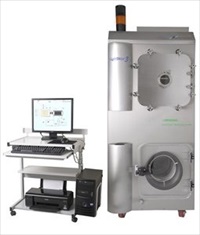 In this project, GILYOS will be actively involved in the formulation development and freeze drying process design and optimization of follistatin for subcutaneous application. Follistatin is a messenger substance which is present in almost all types of tissue. The protein effectively inhibits myostatin which, in turn, plays a key role in skeletal muscle atrophy. Follistatin might therefore be a promising substance for treating sarcopenia...
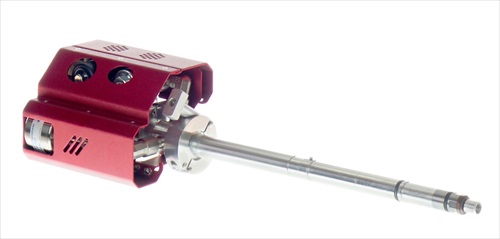 January 8th, 2013, was an important day in the history of XEI Scientific. The date marked the release of US Patent number 8,349,125 B2 entitled a "Cleaning Device for Transmission Electron Microscopes." The device described here is the XEI TEM Wand. It is being used to remove hydrocarbon contamination from the sample introduction and pole piece regions of TEMs. The Wand consists of a plasma cleaning device mounted on a hollow rod that replaces the specimen holder and is inserted into the instrument just as if a sample is being exchanged...
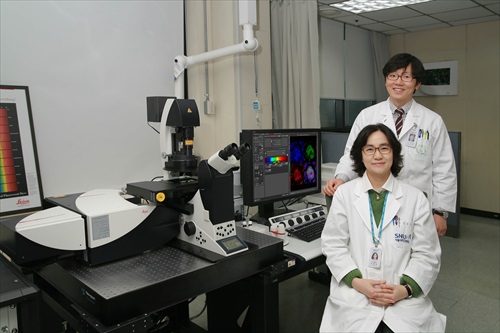 The Seoul National University Hospital Biomedical Research Institute (SNUH) in Korea offers super-sensitive and super-resolution imaging with the advanced high-end imaging system Leica TCS SP8 STED to its more than 400 researchers. For the wide range of applications from simple cell biology to reperfusion live experiments, the institute’s confocal microscopy core facility requires a high-performing system featuring the best possible sensitivity and super-resolution. The decision for the Leica TCS SP8 STED was made after a thorough comparison of various confocal systems in terms of technical design and imaging results...
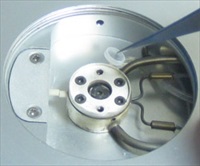 A group of scientists from the University of South Carolina (USC) and Shanghai Jiao Tong University are working on a jointly funded doctorial training programme, based at USC, investigating ways of using cell microencapsulation to protect cells from the undesired immune response known as immunoisolation. For this work, they have used Linkam's temperature stages, the FDCS196 and DSC600.
 The Red Cross Blood Transfusion Service of Upper Austria has become the first laboratory in Europe to receive accreditation from the European Federation for Immunogenetics (EFI) for the use of human leukocyte antigen (HLA) tests based on next-generation sequencing with Roche’s GS Junior System. This new method will allow more precise and much more rapid tissue-typing and donor selection for stem cell transplants than has been possible to date. In addition, the HLA testing method previously only used for research will now also be available as a standard routine diagnostic procedure...
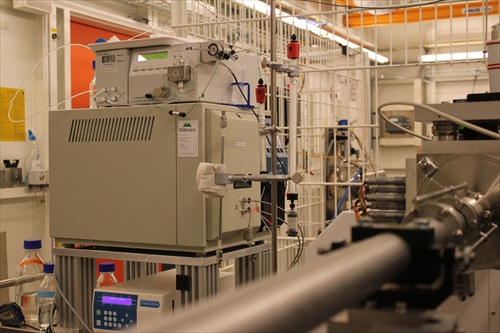 Use of the Viscotek TDA triple detector array system prior to analysis provides complementary biophysical data and simultaneously purifies samples for measurement. This results in more information and better quality data from each experiment. This innovative set-up is not only limited to the institute itself, but is widely accessible to structural biology researchers via BioStructX, a European Commission initiative that creates a single gateway to Europe’s leading synchrotron facilities...
 The UK manufacturing and sales divisions of Carl Zeiss have cemented their roots in Cambridge with an expansion of their existing production site and the construction of new application laboratories, sales and service offices and customer facilities. Coldhams Lane in Cambridge has been home to Carl Zeiss Microscopy Ltd for some years. Due to the sustained growth in international orders, the business has acquired neighbouring premises in order to increase production of their scanning electron microscopes, including EVO, ∑IGMA and process specific tools...
 Describes novel ligand-binding assays developed to streamline evaluation of biosimilars
 Roche announced today that a consortium consisting of researchers from Penn State University, the National Center for Biotechnology Information, Children’s Hospital Oakland Research Institute and Roche 454 Life Sciences is working on a new comprehensive de novo assembly of a human genome to augment and supplement the current human reference genome sequence. The team has presented the latest results today at the Advances in Genome Biology and Technology (AGBT) congress in Marco Island, Florida
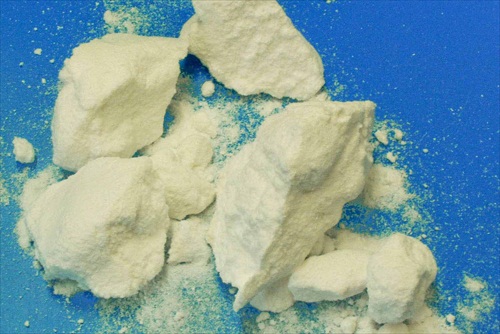 The presentation, entitled ‘The influence of ambient moisture on powder flow’, will be the first opportunity to learn about the company’s latest study highlighting how the FT4 Powder Rheometer® can be used to quantify the impact of humidity in a process relevant way. The team will also present two posters entitled “Investigation of the influence of atomic layer deposition coatings on powder rheology” and “Quantifying the effect of caking by powder rheometry”...
 In contrast, animal bioassays, though they are sensitive enough, are more expensive and much slower—they can take years to complete. RT-QuIC is a sensitive, fast, and high throughput improvement on the previously employed methods of quaking-induced conversion (QuIC) (Atarashi 2008) and amyloid seeding assay (ASA) (Colby 2007)...
 As an established supplier to the industry, Bibby Scientific offers proven products from the Techne, Electrothermal, Stuart and Jenway brands that provide laboratories with a choice of instrumentation and equipment to support rapid testing and the delivery of consistent, reliable results. Techne Prime thermal cyclers, Stuart homogenisers and microcentrifuges, and Jenway pH probes and meters are all popular choices in the food testing environment...
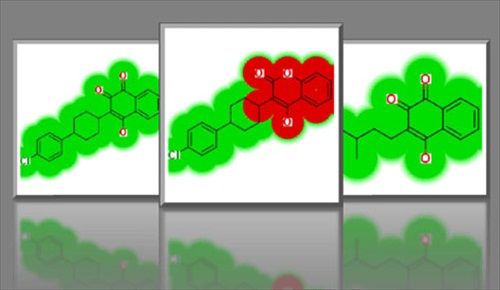 Optibrium and Lhasa Limited, providers of software for compound design, selection and property prediction,today announce a technology collaboration agreement. Lhasa’s Derek Nexus™ platform for knowledge-based prediction of compound toxicity will be integratedas an optional plug-in module for Optibrium’s StarDrop software, that guides the design and selection of high quality compounds in drug discovery...
 BioCellChallenge SAS, a biotechnology firm specialized in the creation and development of delivery systems for introducing active principles into live cells, today announces the launch of a new delivery system, ImmunoCellin, which is designed to transport antibodies into live cells even in the presence of additives. The company has recently filed a patent for this pioneering technology...
 The European Lead Factory, a novel platform for innovative drug discovery, was launched today by an international consortium of 30 partners. This partnership, the first of its kind, is supported by the Innovative Medicines Initiative (IMI) and creates unprecedented opportunities for the discovery of new medicines by providing public partners with an ‘industry-like’ discovery platform to translate cutting-edge academic research into high-quality drug lead molecules on a scale and speed that was not possible previously...
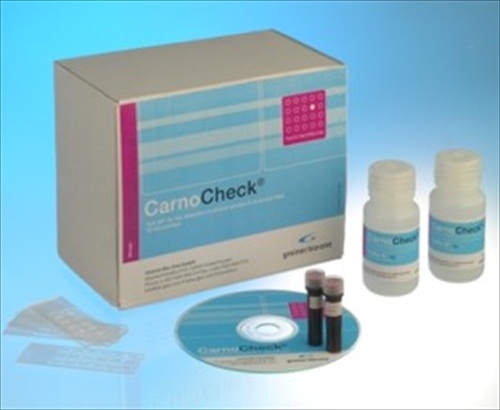 Using the CarnoCheck DNA test, hundreds of samples are currently being tested at various European laboratories as part of efforts to find answers in the horsemeat labelling fraud. Greiner Bio-One has been offering the CarnoCheck DNA test kit since 2004, enabling eight animal species to be detected in foodstuffs quickly and reliably. As well as horses, the kit covers pigs, donkeys, sheep, cattle, chickens, turkeys and goats...
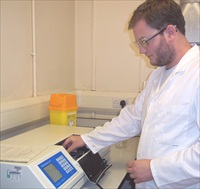 Professor Andrew J Wilson is Professor of Organic Chemistry in The School of Chemistry at the University of Leeds and current Deputy Director of the Astbury Centre for Structural Molecular Biology. His interests include the application of synthetic chemistry to problems in chemical biology and nanotechnology...
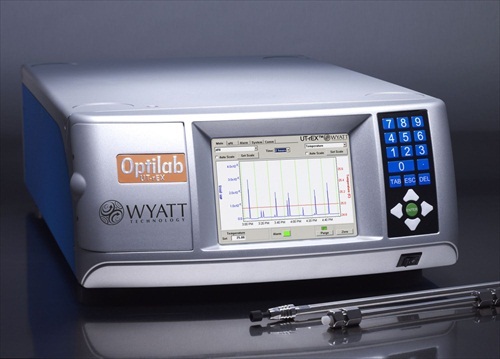 The Optilab UT-rEX is the first RI detector of its kind, specifically designed for use with UHPLC systems using columns packed with small beads. Wyatt Technology will exhibit the Optilab UT-rEX on booth #2133 at PITTCON 2013, Philadelphia, PA, March 17- 21, 2013...