Twelve-strong array of ground-based telescopes equipped with specially built red-sensitive cameras to survey the sky to find transiting Neptunes and super-Earths
As the worldwide race to discover Earth-like exoplanets accelerates, Andor's expertise in high-performance digital camera design and manufacture is proving crucial for many of the leading groups in the field. SuperWASP (Wide Angle Search for Planets) has proven to be one of the most successful projects, finding more than a third of all confirmed transiting planetary systems through its two telescopes, each equipped with eight Andor iKon-L cameras. Its successor, the Next Generation Transit Survey (NGTS), aims to build on those successes through a twelve-strong array of telescopes at the European Southern Observatory in Chile, equipped with custom-designed, red-sensitive CCD cameras from Andor...
Placement student, David Blaney achieves UK Life Sciences Placement of the Year award
Oxford Gene Technology (OGT), provider of innovative genetics research and biomarker solutions to advance molecular medicine, is proud to announce the achievements of placement student David Blaney. Following a nomination by the company, David earned this year’s BBSRC-sponsored Placement of the Year award. The award was part of the inaugural Cogent UK Life Science Skills Awards event, which took place on the 16th May and saw winners take to the stage to receive awards across ten categories...
3P Biopharmaceuticals will participate in the European research project FLUTCORE, financed by the European Union 7th Framework Programme (FP7). The consortium is comprised of several prestigious companies and research centers specialized in influenza virus research.
The European consortium will be led by iQur Ltd., which is a biotech company based in London, whose research into the tandem core™ vaccine platform forms the basis of the science behind the project. Their vaccine platform has been shown to generate powerful immune responses to several pathogens and this consortium will optimize their influenza candidate vaccine for use in the clinical setting.
A robust platform for label-free biomolecular assays
SAW Instruments, developer of the innovative sam® family of biosensors for real-time, label-free biomolecular interaction assays, is continuing to advance acoustic wave biosensor technology with the sam®X platform. Based on SAW’s Surface Acoustic Wave technology, the biosensors measure changes in mass and viscoelasticity at the chip surface based on changes in the high frequency acoustic oscillations running across the chip surface. This innovative approach is complementary to other biophysical techniques, such as SPR and QCM for measuring protein interactions, and can also be used for samples and applications that are difficult to analyse by these other methods, thus providing additional information and insights...
Researchers in Denmark have measured the quantities of greenhouse gases in the breath of dairy cows and demonstrated a heritable variability between individual animals.
“This means that we have an opportunity to select for breeding those individuals which will produce offspring that generate less methane,” says Dr Jan Lassen who led the research project on individual methane measurements from dairy cows at Aarhus University. Over the last 60 years, dairy cattle have been selectively bred to maximise milk production and as a result, cows have become extremely efficient at converting food such as grass, silage, hay and concentrates into agricultural products such as milk and meat. At the same time, feed quality, ration formulation and herd management have all contributed to the overall increase on productivity...
Neogen’s ANSR™ for Salmonella has been validated and approved in accordance with the current and stringent criteria of a NF Validation study carried out according to the EN ISO 16140 standard.
This new validation (NF Validation by AFNOR certification NEO 35/02-0513) follows the kit’s initial approval by AOAC International and testifies to Neogen’s dedication to increasing its line of accredited pathogen test kits for accurate and rapid results with minimal steps for users. The ANSR system uses an innovative isothermal DNA amplification process and fluorescent molecular beacon technology for detection of the pathogen target...
A series of new application notes posted on the Malvern Instruments website describes the quick and easy measurement of surface zeta potential using the zeta potential planar cell for the Zetasizer Nano particle characterization system.
Widely used as an indicator of the stability of particle suspensions and colloidal samples, surface zeta potential is traditionally measured using the specialist technique of streaming potential. Malvern’s Surface Zeta Potential Cell eliminates the need for a dedicated solution, allowing users to measure the zeta potential of surfaces in an aqueous medium on a standard instrument....
Dolomite expertise brings microfluidic product to market
Fledgling spin-out company Drop-Tech has turned to microfluidics specialist Dolomite for its product development and fabrication skills to help productize the advanced and innovative RoboDrop™ technology into the Mitos Dropix, a droplet-on-demand sampler that is set to make it easy to produce extremely miniaturized droplet compartments with excellent control over their contents. Access to this new high-throughput screening format will prove invaluable in basic research, drug discovery and diagnostics applications...
The Animal free recombinant proteins from Creative Biomart are produced in non-transgenic plants and antibodies against those plant-produced proteins for the R&D market with the exclusive technological platform (expression vectors) and purification technologies.
Why choose plants? Because plants are able to produce recombinant proteins the same way mammalian cell cultures do, including post-translational modifications like disulfide bonds among others. Even when glycosilation in plants is different in some proteins from mammalian.
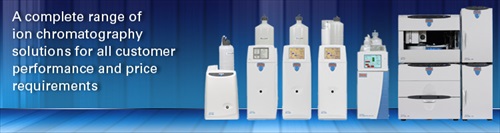
Thermo Fisher Scientific has developed an ion chromatography method for nuclear power plants (NPPs) that determines trace concentrations (less than 1 µg/L) of fluoride, chloride, and sulfate in simulated secondary feed water that contains ethanolamine, hydrazine, and polyacrylic acid in just 20 minutes.
Application Brief (AB) 151: Determination of Trace Anions in Nuclear Power Plant Secondary Feed Water Containing Polyacrylic Acid demonstrates excellent retention time and peak area reproducibilities from 69 consecutive injections of a spiked simulated sample...
Scientists at F Cubed have developed a novel molecular analyzer which relies on Tecan’s Cavro® Centris Pump and Cavro Smart Valve to offer straightforward identification of pathogens in a matter of minutes.
The NESDEP IU Molecular Diagnostic System is designed to detect a wide range of pathogens, offering femtomolar specificity from ultrasmall sample sizes. F Cubed technical manager Chris Chanelli explained: “The NESDEP analyzer is an integrated unit that enables the user to perform sample preparation and DNA analysis on a biochip. Accurate, precise control of liquid dispensing is required, and this was one of the reasons we chose the Cavro Centris Pump and Cavro Smart Valve.”...
Analytik Jena AG's company museum presents the exciting history of analytical measuring technology in Jena to visitors, customers, business partners and interested guests over 70 square meters, and showcases the successful continuation of instrument development at Analytik Jena up to the present day.
More than 40 exhibits are on display from the three business units of Analytical Instrumentation, Life Science, and Optics, including many historical instruments from the time before Analytik Jena was founded in 1990 - starting in the 1960s and 1970s, and stretching into the 1990s. A variety of instruments ranging from spectrophotometers, atomic absorption spectrometers, thermal cyclers, automatic pipetters, and refractometers to small reflex sights from the Optics unit are on display...
The potential prevalence of deadly moulds in ethnic shops such as Chinese supermarkets is being investigated by Glasgow Caledonian University, backed by R-Biopharm Rhône, the manufacturer and Scotland's biggest exporter of diagnostic test kits.
Professor Kofi Aidoo, of the food bioscience division of the department of life sciences at the university, is leading a specialist team collecting samples from foods such as cereals, nuts, pulses, spices and dried fruits. Professor Aidoo and his researchers - he has had 24 working with him over the period of his research - are looking for evidence of mycotoxins, produced by fungi growing in food, which can have a devastating impact on the human body...
NanoSight reports on how Nanoparticle Tracking Analysis, NTA, is being used in the research project "Engineering of Biomolecules" at the Lorraine University, based in Nancy.
Dr Jordane Jasniewski works at the Laboratory of Biomolecules Engineering (LIBio) at Lorraine University, Nancy, and teaches in Food Chemistry at ENSAIA, an engineering school. He is a member of the research team working on the engineering of biomolecules to understand their structure and function to help develop new molecular architectures, to be applied in the areas of foods & agrichemicals, nutrition, pharmacology and cosmetics...
JPK Instruments, a world-leading manufacturer of nanoanalytic instrumentation for research in life sciences and soft matter, reports on the Yan Jie single molecule biophysics research group at the Mechanobiology Institute of NUS and their use of optical tweezers.
The Mechanobiology Institute (MBI) of the National University of Singapore (NUS) was created through joint funding by the National Research Foundation and the Ministry of Education with the goal of creating a new research center in mechanobiology to benefit both the discipline and Singapore. Its' primary focus is to identify, measure and describe how the forces for motility and morphogenesis are expressed at the molecular, cellular and tissue level...
Endecotts calibration samples are microspheres formed of soda-lime glass that range from 3.35 mm down to 20 microns. Because of the precise nature and extent of the range of spheres, samples can be supplied to enable the accurate calibration of individual sieves to an accuracy of approx 1µm. The microspheres pass over, almost, the total surface of the sieve enabling more apertures to be examined than with any other method...
Thermo Fisher Scientific has developed an efficient high-performance liquid chromatography (HPLC) method using ultraviolet detection for the simultaneous determination in drinking water of all 19 phthalate compounds listed in key environmental regulatory documents.
Application Note 1045: Determination of Phthalates in Drinking Water by UHPLC with UV Detection demonstrates that the phthalates listed in European Union Directive 2005/84/EC, U.S. Environmental Protection Agency Methods 606 and 8061A, the Chinese HJ/T 72-2001, and the Standardization Administration of China GB/T 20388-2006 and GB/T 21911-2008 are well separated on a reversed-phase HPLC column in less than 25 minutes...
Pfizer Asia Pacific Pte. Ltd, Glaxo Wellcome Manufacturing Pte. Ltd. and Siemens Pte. Ltd, have signed on as founding members of a new A*STAR R&D Consortium Programme
Innovative Processing of Specialties and Pharmaceuticals (iPSP). Launched by A*STAR’s Institute of Chemical and Engineering Sciences (ICES), the consortium offers a platform for pharmaceutical and specialty chemicals industry players to address various challenges such as costs, regulatory compliance and responsiveness in production and processes to bring drugs from trials to markets...
Market leaders in temperature controlled microscopy, Linkam Scientific Instruments, report on the use of their popular THMSG600 and TS1500 heating stages which are being used for geological research at the Institute of Earth Sciences, Taiwan.
Founded in 1982, the Institute of Earth Sciences (IES) conducts research in two major disciplines: geophysics and geochemistry. The mineral and rock physics laboratory in the IES is one of the most prominent labs in mineral physics in Taiwan. It is one of nearly 30 institutes and centres that form the Academia Sinica (AS), the main governmental organization for basic research in all academic disciplines in Taiwan. Recent research has included mantle dynamics modelling, heat flow and space remote sensing...
Technology gains momentum through collaborations and licensing deals
Molecular farming is poised to address the huge demand for fully functional protein therapeutics and low-cost vaccines. This plant production technology is deployable for applications in basic life sciences research, veterinary applications, personal care, and healthcare to meet the clinical needs of chronic and orphan diseases unmet by the current supply...
Expert Potato Breeder uses SDI’s Syngene G:BOX Image Analysis System to Help Efficiently Identify Unknown Varieties
Scientific Digital Imaging (SDI’s) Syngene division, a world-leading manufacturer of image analysis solutions is delighted to announce that the G:BOX imaging system is being used at a specialist European potato breeding company, Agrico Research BV in the Netherlands to make it easier to visualise and analyse DNA markers as part of their diagnostics programme to identify unknown potato varieties...
New contracts include usage of ThinPrep Pap Test and Imaging System in all NHS cytology laboratories in Scotland
Hologic, Inc. (Hologic or the Company), a leading developer, manufacturer and supplier of premium diagnostic products, medical imaging systems and surgical products, with an emphasis on serving the healthcare needs of women, today announced that it had entered into five-year managed service contracts for its ThinPrep Pap Test with eight Health Boards in Scotland...

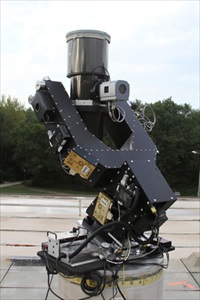 As the worldwide race to discover Earth-like exoplanets accelerates, Andor's expertise in high-performance digital camera design and manufacture is proving crucial for many of the leading groups in the field. SuperWASP (Wide Angle Search for Planets) has proven to be one of the most successful projects, finding more than a third of all confirmed transiting planetary systems through its two telescopes, each equipped with eight Andor iKon-L cameras.
  Oxford Gene Technology (OGT), provider of innovative genetics research and biomarker solutions to advance molecular medicine, is proud to announce the achievements of placement student David Blaney. Following a nomination by the company, David earned this year’s BBSRC-sponsored Placement of the Year award. The award was part of the inaugural Cogent UK Life Science Skills Awards event, which took place on the 16th May and saw winners take to the stage to receive awards across ten categories...
 The European consortium will be led by iQur Ltd., which is a biotech company based in London, whose research into the tandem core™ vaccine platform forms the basis of the science behind the project. Their vaccine platform has been shown to generate powerful immune responses to several pathogens and this consortium will optimize their influenza candidate vaccine for use in the clinical setting.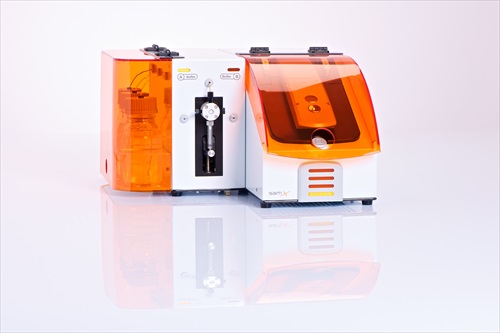
 “This means that we have an opportunity to select for breeding those individuals which will produce offspring that generate less methane,” says Dr Jan Lassen who led the research project on individual methane measurements from dairy cows at Aarhus University. Over the last 60 years, dairy cattle have been selectively bred to maximise milk production and as a result, cows have become extremely efficient at converting food such as grass, silage, hay and concentrates into agricultural products such as milk and meat. At the same time, feed quality, ration formulation and herd management have all contributed to the overall increase on productivity...
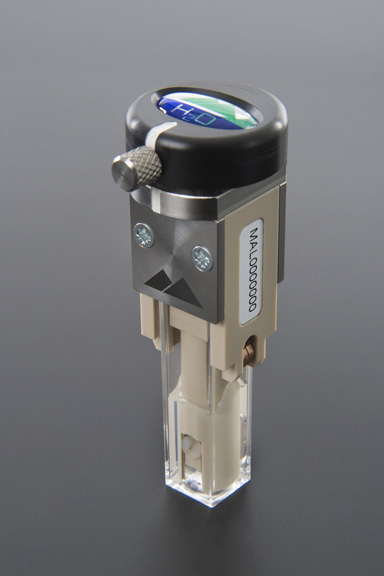 Widely used as an indicator of the stability of particle suspensions and colloidal samples, surface zeta potential is traditionally measured using the specialist technique of streaming potential. Malvern’s Surface Zeta Potential Cell eliminates the need for a dedicated solution, allowing users to measure the zeta potential of surfaces in an aqueous medium on a standard instrument....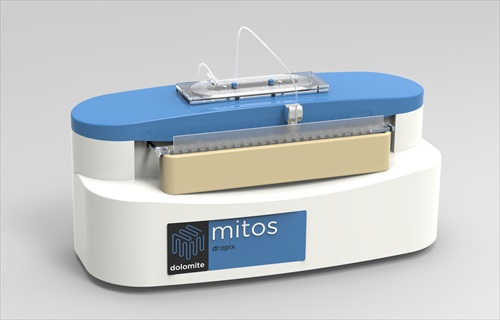

 The NESDEP IU Molecular Diagnostic System is designed to detect a wide range of pathogens, offering femtomolar specificity from ultrasmall sample sizes. F Cubed technical manager Chris Chanelli explained: “The NESDEP analyzer is an integrated unit that enables the user to perform sample preparation and DNA analysis on a biochip. Accurate, precise control of liquid dispensing is required, and this was one of the reasons we chose the Cavro Centris Pump and Cavro Smart Valve.”...

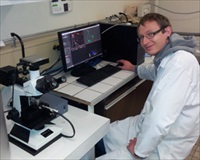 Dr Jordane Jasniewski works at the Laboratory of Biomolecules Engineering (LIBio) at Lorraine University, Nancy, and teaches in Food Chemistry at ENSAIA, an engineering school. He is a member of the research team working on the engineering of biomolecules to understand their structure and function to help develop new molecular architectures, to be applied in the areas of foods & agrichemicals, nutrition, pharmacology and cosmetics...
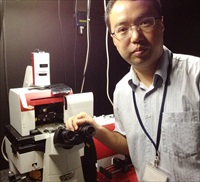 The Mechanobiology Institute (MBI) of the National University of Singapore (NUS) was created through joint funding by the National Research Foundation and the Ministry of Education with the goal of creating a new research center in mechanobiology to benefit both the discipline and Singapore. Its' primary focus is to identify, measure and describe how the forces for motility and morphogenesis are expressed at the molecular, cellular and tissue level...
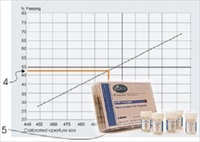 Endecotts calibration samples are microspheres formed of soda-lime glass that range from 3.35 mm down to 20 microns. Because of the precise nature and extent of the range of spheres, samples can be supplied to enable the accurate calibration of individual sieves to an accuracy of approx 1µm.
 Innovative Processing of Specialties and Pharmaceuticals (iPSP). Launched by A*STAR’s Institute of Chemical and Engineering Sciences (ICES), the consortium offers a platform for pharmaceutical and specialty chemicals industry players to address various challenges such as costs, regulatory compliance and responsiveness in production and processes to bring drugs from trials to markets...
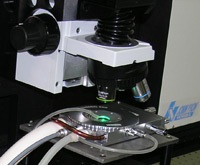 Founded in 1982, the Institute of Earth Sciences (IES) conducts research in two major disciplines: geophysics and geochemistry. The mineral and rock physics laboratory in the IES is one of the most prominent labs in mineral physics in Taiwan. It is one of nearly 30 institutes and centres that form the Academia Sinica (AS), the main governmental organization for basic research in all academic disciplines in Taiwan. Recent research has included mantle dynamics modelling, heat flow and space remote sensing...
 Molecular farming is poised to address the huge demand for fully functional protein therapeutics and low-cost vaccines. This plant production technology is deployable for applications in basic life sciences research, veterinary applications, personal care, and healthcare to meet the clinical needs of chronic and orphan diseases unmet by the current supply...
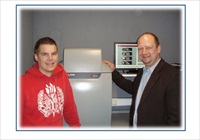 Scientific Digital Imaging (SDI’s) Syngene division, a world-leading manufacturer of image analysis solutions is delighted to announce that the G:BOX imaging system is being used at a specialist European potato breeding company, Agrico Research BV in the Netherlands to make it easier to visualise and analyse DNA markers as part of their diagnostics programme to identify unknown potato varieties...