Children’s Liver Disease Foundation (CLDF) and Core, the national charity fighting gut and liver disease are collaborating for the first time in order to launch a joint research funding opportunity.
The charities have joined forces to seek applications for a research project covering scientific, clinical and medical aspects of liver disease diagnosed in the paediatric/ adolescent age group (up to the age of 18) for a total award of £200,000. The grant will be for an established researcher rather than for fellowship applications and funding is restricted to use atUKinstitutions...
The ‘Mother Earth’ table decoration by Wenzel Jamnitzer, dating from 1549 and owned by the Rijksmuseum in Amsterdam, has been restored to its former glory with help from a Metrohm Autolab potentiostat.
Wenzel Jamnitzer was a German goldsmith whose work was strongly influenced by Italian Renaissance style. As well as using precious metals, he sometimes incorporated sea shells, coral, snail shells and tiny birds' eggs into his pieces. The replication of miniature plants and animals became a distinctive feature of his oeuvre. And it was these delicate objects that made it impossible to restore his table decoration using the traditional wet chemistry method....
Topline results for olesoxime as add–on therapy to Interferon beta are expected in early 2014
Trophos SA, a clinical stage pharmaceutical company developing innovative therapeutics from discovery to clinical validation for indications with under-served needs in neurology and cardiology, announces today that they have completed enrollment in the Translate MS-Repair Phase Ib multiple sclerosis (MS) trial. The trial is a randomized, placebo controlled, Phase Ib study in multiple sclerosis (MS) patients treated with Trophos’ olesoxime as an add-on therapy to Interferon beta. In three months, 44 patients have been recruited in three investigational sites in France. The first subject was enrolled on April 2 and the last subject on July 11, 2013...
The role of women in science and their historic under-representation in the field are explored in a new short documentary film and book.
The book tells the story of how the University of Edinburgh's female scientists have fought for equality, beginning with street riots in the 1870s. Today, an Edinburgh professor is the first female president of the Royal Society of Chemistry. The film celebrates how much has been achieved, but warns that unconscious bias against women still persists, and that more needs to be done to achieve parity. The initiative, entitled A Chemical Imbalance, was funded by the Royal Society Rosalind Franklin Prize awarded to Professor Polly Arnold, Crum Brown Chair of Chemistry and Director of Research in chemistry at the University of Edinburgh...
Anasys Instruments reports on three user groups who have published peer reviewed papers where nanoIR is being applied to look at characterization challenges in semiconductors, polymers and healthcare.
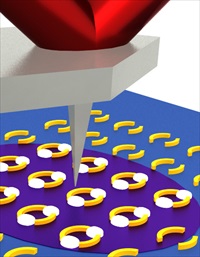
There have been several recent exciting publications by nanoIR users in a number of growing applications areas. These include plasmonics, health care, fuel cell membranes and polymer nanostructures. Three of these publications are reported here. Nanoscale Imaging of Plasmonic Hot Spots and Dark Modes with the Photothermal-Induced Resonance Technique. The lead author is Dr Andrea Centrone from NIST, USA. In this publication from NIST, the AFM-IR technique is applied for the first time to image the dark plasmonic resonance of gold asymmetric split ring resonators (A-SRRs) in the mid-infrared (IR) spectral region with nanoscale resolution...
Liposofast extruders are simple devices for the creation of unilamellar populations of liposomes.
Extrusion is a simple process to produce liposomes of a particular size. A multilamellar sample is forced repeatedly through polycarbonate filters with a defined pore size. Extrusion is a simple and nondamaging method of ensuring a homogenous sample. It is a gentle process which does not require addition of any solvents and only moderate pressures and takes only a few minutes to complete....
ELGA Process Water has supplied a laboratory water system to Dalton Cumbrian Facility, the state-of-the-art nuclear research complex on the Westlakes Science & Technology Park in West Cumbria.
The facility forms part of the nuclear research facilities of The University of Manchester’s Dalton Nuclear Institute, and provides a suite of equipment for use by academia and industry from all over the world to collaborate in radiation science and nuclear plant decommissioning R&D. Like all laboratories, the facility requires different water qualities for different uses: ultrapure water for analytical work and lower quality for general applications like media preparation, pH buffers and glassware washing...
SCID screening improves medical outcomes with early detection, intervention
PerkinElmer, Inc., a global leader in improving the health and safety of people and the environment, today introduced the first commercially available screening test for Severe Combined Immunodeficiency (SCID). The EnLite™ Neonatal TREC System expands the newborn screening portfolio of commercially available tests and will be introduced under CE marking, for sale in select countries in Europe and the Middle East. SCID impacts an estimated 1 in 50,000 to 1 in 100,000 newborns globally every year...
AMSBIO has announced addition of new biotinylated histones and nucleosomes to its expanding range of recombinant nucleosomes, purified nucleosomes and full length histone proteins.
A nucleosome is the basic unit of DNA packaging. It consists of a segment of DNA wound around a core (“octamer”) of 8 histone proteins (two each of histones H2A, H2B, H3, and H4). The “tails” of these histone proteins stick out, where they can be modified by a number of different histone acetyltransferases, methyltransferases, PARPs, and other epigenetic enzymes. Many of these enzymes modify very specific sites e.g. EZH2, specifically tri-methylates the lysine at position 27 in the H3 histone...
Production of the first stem cell burger, which recently hit the headlines throughout the world, also owes its success to high-quality laboratory products from Greiner Bio-One.
For the first time, scientists from Maastricht University in the Netherlands have succeeded in cultivating a hamburger in a laboratory from the stem cells of cattle. The stem cells can be extracted from muscle cells, for example. The stem cells from a single cow can be used to produce around 200 million burgers. Industrial production, it is hoped, could act as a significant brake on intensive livestock farming and thus also curb environmental pollution...
The global reaching partnership aims to provide clinical researchers with new biomarkers and validated image analysis protocols, ensuring a continuum from preclinical to clinical phase in the development of anticancer therapies
Oncodesign,a contract research laboratory dedicated to the discovery of new anticancer therapies, and Banook Central Imaging, a company specializing in the centralized reading of medical images, today announce the start of a partnership to expand the use of new approaches in pharmaco-imaging. The partners expect to share expertise, co-promote joint activities and jointly engage in scientific collaboration to standardize image acquisition and analysis protocols in early clinical phases. The financial details of the agreement were not disclosed...
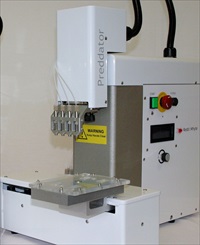
Redd&Whyte, an expert supplier of liquid handling automation for drug discovery and life science research applications, today announced its Preddator system has been integrated in an assay workcell by AstraZeneca, to meet a generic high throughput nano-litre dispensing application.
Using the Preddator system, the assay run time has been significantly reduced, while maintaining the dispensing consistency and flexibility of the original workcell. Scientists in the Oncology Group at AstraZeneca (Alderley Park, UK) integrated the Preddator system as an additional dispensing module to complement a Labcyte ECHO 555 acoustic reformatter in a high throughput cell-based screening workcell. The system is routinely used to perform 2-dimensional dose response dispensing for drug combination screening. It uses the nano-litre dispensing platform across over 250 plates in 384-well format to DMSO backfill volumes ranging between 20 and 100nL over ~36 hrs per batch in each run...
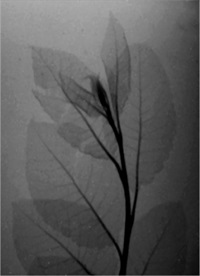
Artemis CCD Limited, a leading manufacturer of cooled CCD cameras is delighted to announce the supply of OEM grade cooled CCD cameras to NeutronOptics for the application of Neutron imaging. Neutron imaging compliments x-ray radiography, especially for materials opaque to x-rays or where damage may occur. In both cases a "scintillator" film is used to convert the radiation to visible light that can then be imaged with a camera. But unlike x-rays, neutrons penetrate heavy metals, and even lead, to reveal structural details that are otherwise invisible, yet they are strongly scattered by light atoms such as hydrogen...
Scientists have discovered that a drug which increases the risk of sudden cardiac death interacts with mistranslated proteincoding genes present in heart muscle.
The cardiac drug flecainide was developed to prevent and treat serious arrhythmias in the ventricles - the main pumps of the heart. These cause very rapid heart rates which can be lethal if unchecked. However in clinical trials, flecainide, and its sister molecule encainide, were reported to more than double the risk of sudden cardiac death. Joint work by researchers in the Department of Chemistry and Warwick Medical School at the University of Warwick, and at the SEEK drug discovery group through subsidiary Tangent Reprofiling Limited, is now allowing insight into how cardiac death risk might be increased by these drugs...
Thermo Fisher Scientific has developed an ion chromatography(IC)-based method for the accurate determination of ammonia in tobacco smoke.
Ammonia is on the U.S. Food and Drug Administration’s (FDA) list of toxic compounds in tobacco smoke. Application Note 1054: Determination of Ammonia in Tobacco Smoke describes an approach that achieves better resolution of ammonium from other analytes present in tobacco smoke when compared to other IC methods and therefore is not subject to interference from small amines. The method has high precisions, a low detection limit (0.01 mg/L), and good recoveries (86–115%)...
New Process Reduces Waiting Period from Twenty-one Days to Two Days
Environmental Resource Associates (ERA), a Waters® Business, recently completed a nine-month project to significantly reduce the turnaround time for reporting laboratory proficiency testing (PT) results. Beginning August 1, ERA’s innovative new process will allow customers to know within two business days of a study close if they pass or fail a proficiency test – nineteen days faster than before...
NanoSight reports on how Nanoparticle Tracking Analysis, NTA, is being used in the Faculty of Chemistry of the Jagiellonian University for the characterization of catalytic materials used in environmental applications such as N2O decomposition and soot oxidation.
Dr Pawel Stelmachowski is an assistant professor in the Materials and Surface Chemistry Group at the Jagiellonian University in Krakow. "UJ," as it is known, is Poland's oldest university having been founded in the mid-fourteenth century. The Group's research goals are the design, development and optimisation of catalytic materials. These are used mainly for environmental applications such as N2O decomposition and soot oxidation. The phase cooperation of crystallites of different sizes and deposition of active phase on monolithic supports requires sizing and characterization measurements and this is why NTA was chosen...
Scientific Digital Imaging’s [AIM-SDI] Synoptics Health Division, a manufacturer of innovative digital imaging systems for healthcare applications.
Dr Julian Huppert, Member of Parliament for Cambridge, visited Synoptics Health at 2.00 p.m. on Friday 30th August to see the company’s ProReveal Sensitive Protein Detection Test and to discuss how implementing this technology could help save money by reducing the numbers of post-operative hospital acquired infections (HAIs) from dirty surgical instruments...
Market leaders in temperature controlled microscopy, Linkam Scientific Instruments, report on the use of their LTS420 heating/cooling stage which is being used to help understand electronic packaging in the Opto-Mechanics and Physical Reliability Laboratory of the State University of New York, Binghamton.
The Opto-Mechanics and Physical Reliability Laboratory at SUNY Binghamton is seeking to understand the electronic packaging and reliability using numerical and experimental methods. They use Digital Image Correlation (DIC), a non-contact optical deformation measurement technique which provides full field in plane and out of plane deformation with subpixel accuracy. This enables recognition of distinct features on the test surface based on the gray scale variation in an image and assigns coordinates to these features...Read MoreProviding cost-effective capture of defined genomic regionsSep 26, 2013
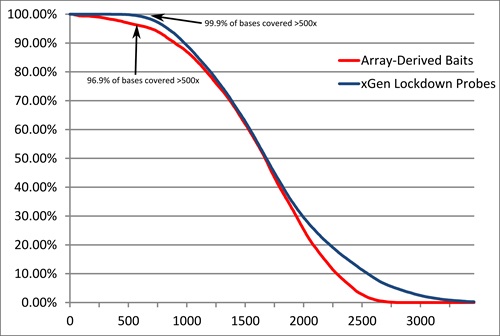
IDT xGEN® Lockdown® Probes advance research at the University of Texas at Austin, USA
Integrated DNA Technologies (IDT), the world leader in oligonucleotide synthesis, provides researchers in Prof Jeffrey Barrick’s laboratory (University of Texas at Austin, USA) with its xGEN® Lockdown® Probes for target enrichment of specific gene regions. Detailed in the DECODED quarterly newsletter from IDT, Prof Barrick’s research team is developing methods to track rare mutations in evolving populations to assess effects on fitness from sequence alone...
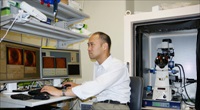
JPK Instruments, a world-leading manufacturer of nanoanalytic instrumentation for research in life sciences and soft matter, reports on how researchers from Kanazawa University in Japan have used the NanoWizard®3 AFM to push the boundaries of high resolution imaging on large objects.
Professor Takeshi Fukuma runs a research group in the Division of Electronic Engineering and Computer Science at Kanazawa University in Japan. The Fukuma Laboratory focuses on molecular-scale analysis and measurements of biological phenomena using atomic force microscopy, AFM. Describing his work, Professor Fukuma said "I work on the development of atomic-scale AFM instruments and techniques. While some of the state-of-the-art AFMs exhibit very high spatial resolution, their application range has been limited to simple materials of small sample size...
Volunteers are being sought for a study investigating whether food products containing lupin, buckwheat, broad beans and peas could be an alternative source of protein in our everyday diets. Products made with these plants could also provide the body with fibre and other compounds which may help prevent cancer and cardiovascular disease. Dr Alexandra Johnstone from the University of Aberdeen Rowett Institute of Nutrition and Health, who is leading the research, said: “Protein is an important component of a healthy, balanced diet and is found in many of the foods that we eat...


 The charities have joined forces to seek applications for a research project covering scientific, clinical and medical aspects of liver disease diagnosed in the paediatric/ adolescent age group (up to the age of 18) for a total award of £200,000. The grant will be for an established researcher rather than for fellowship applications and funding is restricted to use atUKinstitutions...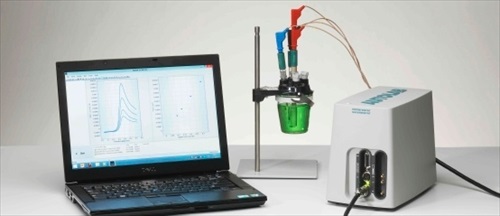


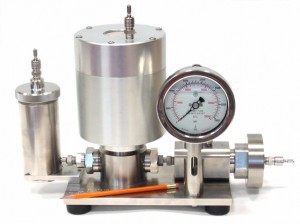 Extrusion is a simple process to produce liposomes of a particular size. A multilamellar sample is forced repeatedly through polycarbonate filters with a defined pore size. Extrusion is a simple and nondamaging method of ensuring a homogenous sample. It is a gentle process which does not require addition of any solvents and only moderate pressures and takes only a few minutes to complete....
 PerkinElmer, Inc., a global leader in improving the health and safety of people and the environment, today introduced the first commercially available screening test for Severe Combined Immunodeficiency (SCID). The EnLite™ Neonatal TREC System expands the newborn screening portfolio of commercially available tests and will be introduced under CE marking, for sale in select countries in Europe and the Middle East. SCID impacts an estimated 1 in 50,000 to 1 in 100,000 newborns globally every year...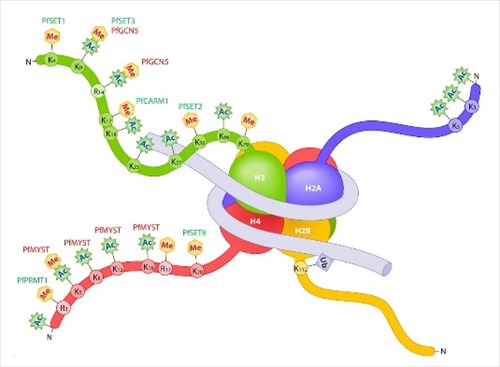



 Ammonia is on the U.S. Food and Drug Administration’s (FDA) list of toxic compounds in tobacco smoke. Application Note 1054: Determination of Ammonia in Tobacco Smoke describes an approach that achieves better resolution of ammonium from other analytes present in tobacco smoke when compared to other IC methods and therefore is not subject to interference from small amines. The method has high precisions, a low detection limit (0.01 mg/L), and good recoveries (86–115%)...
 Environmental Resource Associates (ERA), a Waters® Business, recently completed a nine-month project to significantly reduce the turnaround time for reporting laboratory proficiency testing (PT) results. Beginning August 1, ERA’s innovative new process will allow customers to know within two business days of a study close if they pass or fail a proficiency test – nineteen days faster than before...
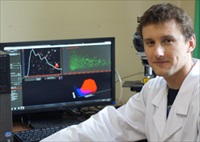 Dr Pawel Stelmachowski is an assistant professor in the Materials and Surface Chemistry Group at the Jagiellonian University in Krakow. "UJ," as it is known, is Poland's oldest university having been founded in the mid-fourteenth century. The Group's research goals are the design, development and optimisation of catalytic materials. These are used mainly for environmental applications such as N2O decomposition and soot oxidation. The phase cooperation of crystallites of different sizes and deposition of active phase on monolithic supports requires sizing and characterization measurements and this is why NTA was chosen...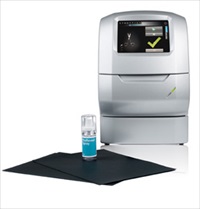
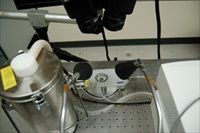 The Opto-Mechanics and Physical Reliability Laboratory at SUNY Binghamton is seeking to understand the electronic packaging and reliability using numerical and experimental methods. They use Digital Image Correlation (DIC), a non-contact optical deformation measurement technique which provides full field in plane and out of plane deformation with subpixel accuracy. This enables recognition of distinct features on the test surface based on the gray scale variation in an image and assigns coordinates to these features...