
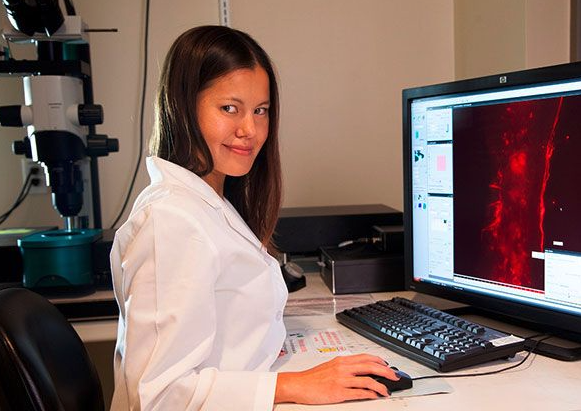
 In 2003, Professor Vance Lemmon accepted a position at The Miami Project to Cure Paralysis at the University of Miami. This centre has taken the philosophy that by promoting interactions between basic and clinical scientists, it will be possible to speed the finding of a cure for a devastating clinical problem. This research has focused on answering questions that help define human spinal cord injury and reveal strategies for the repair of damaged spinal tissue...
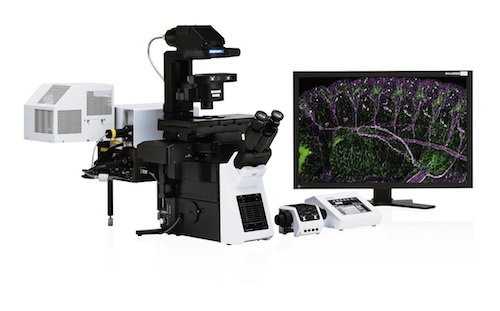 With the new Olympus FV-OSR software, the FluoView FV1200 is transformed into a powerful system for confocal Super Resolution microscopy. Introducing a smart route to Super Resolution microscopy, the Olympus FV-OSR software module enables users of the FluoView FV1200 easy access to what was previously the domain of only specialised microscopy systems. The extra detail offered by Super Resolution technology facilitates researchers in...
 This work is contributing to speeding up throughput of research on novel methods of processing toxic metals from contaminated soil. Researchers in the Horsfall Laboratory at the University of Edinburgh in Scotland are using a G:BOX Chemi XT4 multi-application imager to analyse agarose gels of bacterial DNA stained with the green fluorescent dye SafeView™. They are also utilising the G:BOX Chemi XT4 to image SDS-PAGE gels and...
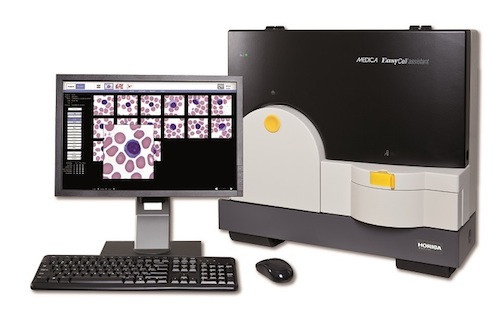 This affordable, high-throughput system can improve laboratory productivity by automatically scanning and locating up to 200 white blood cells on a smear slide and pre-classifying them on a display, grouped by cell type. Red blood cells and platelets are also displayed for morphology comments and platelet estimates provided to verify the Full Blood Count (FBC) result. The new system simplifies manual differentials by pre-classifying normal cells, enabling...
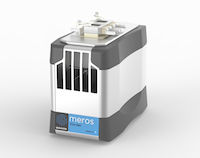 The first module in the new Meros range of plug-and-play microfluidic products, the compact TCU-100 offers advanced temperature control from 1 to 100°C for microfluidic chips, microscope slides and other third party devices. Just 11cm (4 ¼ inches) wide, the chemically resistant, robust and reliable TCU-100 combines ultimate ease of use and affordability for a wide range of biological and chemical applications, including cell analysis...
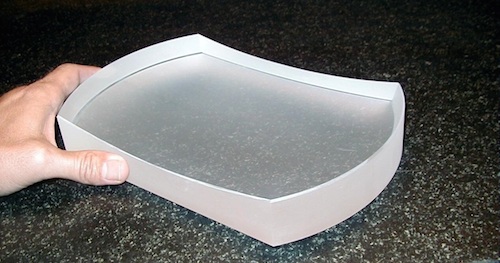 Toroidal mirrors are normally used where a beam needs to be focused or folded. The design of toroidal mirrors eliminates astigmatism normally caused by concave spherical mirrors. Toroidal mirrors are widely used for correction of aberration in a range of applications served by spectroscopic instruments, monochromators and imaging devices that require pinpoint focusing. With workshops and test facilities deep underground where...
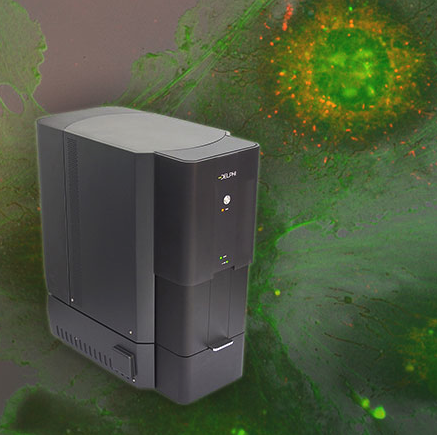 In a collaborative development with electron microscope provider Phenom-World, both companies announce the launch of Delphi, the world’s first integrated correlative tabletop fluorescence and electron microscope at the 18th IMC in Prague. DELMIC and Phenom-World announce Delphi™, the world’s first integrated correlative tabletop fluorescence and electron microscope. DELMIC produces high-performance, user-friendly integrated microscopy solutions while...
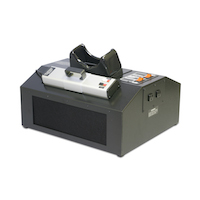 The CC-80 and CC-81 are ideal for use in chromatography, electrophoresis, genetic research, photoresist coating inspection, forensic science and much more. Researchers can custom design their own fluorescence analysis systems by choosing from a wide range of Spectroline UV lamps that are available in 254, 312 and 365nm wavelengths. For even higher UV intensity and greater fluorescent contrast, users can select from 29 Spectroline UV transilluminators...
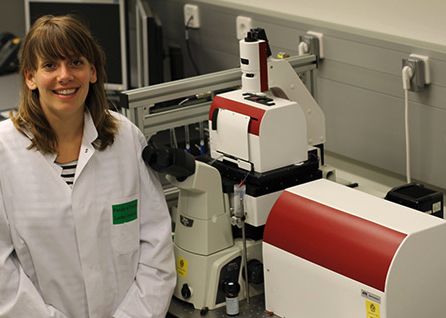 Dr Rosalie Driessen is a post-doctoral researcher in the Laboratory of Molecular Genetics, a part of the Leiden Institute of Chemistry at Leiden University. She is studying the organization and dynamics of bacterial chromatin having received her doctorate from the University for her thesis entitled “The architects of crenarchaeal chromatin.” Dr Driessen describes her research and talks about the “hows and whys” of choosing to...
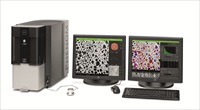 The visualization and analysis of pores is easier than ever before with the Phenom desktop SEM and the PoroMetric software. The combination of speed, ease of use and superb imaging quality of the Phenom and image pore analysis software of PoroMetric creates a powerful tool for inspecting wide range of samples like filters and membranes...
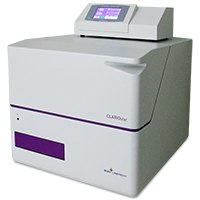 The new Atmospheric Control Unit (ACU) allows independent, simultaneous control of both O2 and CO2 within the microplate reader chamber. Assays which can now be performed on the CLARIOstar range from standard cell growth assays to cytotoxicity assays. The ACU provides the optimal environment for any live cell-based assay.
 The fluorescence imaging method was invented by Dr. Eric Betzig, group leader at the Janelia Research Campus in Ashburn, Virginia, USA. Bessel beam plane illumination microscopy allows high-speed 3D fluorescence imaging of living cellular and multicellular specimens with nearly isotropic spatial resolution, low photobleaching and low photodamage. The technology uses special beam conditioning of the light sheet illumination. Enabling...
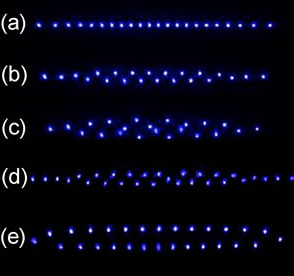 The Andor iXon Ultra 897 EMCCD camera has been used by an international team of scientists to probe the nature of the symmetry-breaking phase transitions that began the process of creating our universe – the Kibble-Zurek mechanism. Most cosmological scientists agree that within less than a billionth of a second of the Big Bang, the young universe had to ‘decide’ which new state to adopt and, everywhere that individual areas could not...
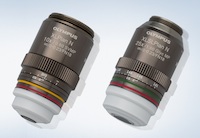 Designed to vastly accelerate data collection from live-cell and clarified samples with high-resolution imaging, the new lenses are the clear choice for MPE and light sheet applications. Dedicated to multiphoton excitation microscopy, Olympus introduces its XLPLN10XSVMP and XLSLPLN25XGMP objective lenses with an 8 mm working distance and support for a large range of refractive indices (RI). The objectives enable super-deep imaging of...
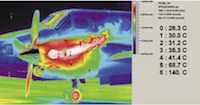 Although most thermal cameras can produce high-contrast images showing small temperature differences, they can only do so within a defined temperature range. However when extreme temperatures appear within a scene, the hottest parts of the image will be saturated and the coldest parts will appear black or noisy, resulting in a loss of image detail and invalid temperature measurements. This is a particular problem in...