A prophylactic vaccine candidate against Chikungunya fever, developed by the Austrian biotech company Themis Bioscience GmbH induces a significant neutralizing immune response and was also confirmed as safe.
These are the major interim results of a phase 1 clinical study of the company's Chikungunya vaccine candidate that uses a standard anti-measles vaccine as a vector. The Chikungunya epidemic, currently raging through the Caribbean, illustrates the urgent necessity to develop an effective vaccine against the rapid spread of the disease in tropical regions, now also threatening the North American continent...
The Clinical and Laboratory Standards Institute (CLSI) released an updated edition of its standard Protection of Laboratory Workers From Occupationally Acquired Infections; Approved Guideline—Fourth Edition (M29-A4).
This standard is based on US regulations and provides guidance on reducing or eliminating the risk of transmission of infectious agents in a laboratory setting. This edition of M29 includes specific precautions for preventing the laboratory transmission of microbial infections from patient specimens and contaminated laboratory instruments during all stages of the laboratory path of workflow and updated recommendations for the management of the...
Transfer of a few immune cells can protect immunodeficient patients
When patients have to undergo a bone marrow transplant, the procedure weakens their immune system. Viruses that are usually kept in check in a healthy immune system may then cause potentially fatal infections. Scientists at Technische Universität München (TUM), together with colleagues from Frankfurt, Würzburg and Göttingen, have now developed a method which could offer patients conservative protection against such infections after a transplant. The method has already been used to treat several patients successfully...
Commercial Control Materials Provide Accuracy and Consistency
Laboratories looking to implement the new ISO 15189 standards for UKAS accreditation will have to demonstrate that their testing service follows defined quality assurance levels, performing with competence and consistency. That means removing risks of variability wherever possible. Control materials that follow the patient pathway can assist with this by providing greater confidence in test system results, over controls that...
Five years of hard work on the part of three Tanzanian laboratories as well as Clinical and Laboratory Standards Institute (CLSI) staff and volunteers have led to accreditation by the Southern African Development Community Accreditation Services (SADCAS).
After a year-long process, the National Health Laboratory Quality Assurance and Training Centre in Dar es Salaam, the Bugando Medical Centre Laboratory in Mwanza City, and the Mbeya Referral Hospital Laboratory in Mbeya received accreditation aligned to International Organization for Standardization (ISO) 15189 (Medical laboratories – Requirements for quality and competence). The Muhimbili National Hospital Laboratory has also been recommended for SADCAS accreditation...
A justified question: for half a century, AAS users had to put up with abstract numerical values.
How they come about and whether they are actually accurate remains a secret. The High-Resolution Continuum Source (HR-CS) AAS used in the contrAA® series from Analytik Jena provides the AAS user with significantly more information. Thanks to the combination of a xenon lamp covering the entire relevant wavelength range, a high-resolution spectrometer and a CCD-detector, it has become possible to visually represent the absorption spectra of samples...
CHN microanalysis is a key analytical technique for determining whether or not a sample is pure by providing a precise and accurate analysis of its percentage Carbon, Hydrogen and Nitrogen content and comparing the result versus theoretical figures.
Drawing upon over 25 years experience in the technique, Exeter Analytical Inc. has produced a video that provides an informed and easy-to-understand introduction to accurate determination of Carbon, Hydrogen and Nitrogen by CHN microanalysis....
Representatives will set up a local presence in Boston.
Global Care Initiative (GCI), a consortium of five leading non-profit French research institutes, today announces that it will have a representative in the US, in Boston, Massachusetts. This new presence in Boston will provide better accessibility to American partners. Global Care combines strong skillsets, recognized IP and unique technology platforms in their offering. The consortium functions as a one-stop shop to life sciences companies and research organizations that seek effective R&D partnerships.....
Nano-Raman performed with tip-enhanced Raman spectroscopy (TERS), and especially nano-Raman imaging, still has the reputation of being a difficult measurement.
Last week, to demonstrate that this can now be performed under regular conditions, the HORIBA team has set up a “XploRA nano” system on a standard optical table running without air damping. TERS imaging was perform without any trouble even when visitors were stopping by to discuss the technique with the team. “Thanks to our unique integrated solution with AIST-NT (Novato, CA, USA), using tuning fork TERS probes manufactured by HORIBA and...
VolitionRx Limited (OTCQB: VNRX), a life sciences company, today announces its first wholesale order of NuQ® Research Use Only kits to Active Motif. Each kit allows epigenetics researchers to identify and analyze a different nucleosome structure.
Active Motif will distribute the kits in its key markets of Europe, the United States and Japan. These assays allow researchers – in areas as diverse as stem cells, apoptosis and epigenetic regulation – to study nucleosome based epigenetic features in animal or human cell culture samples. The four different types of kits which will be available through Active Motif are...
QImaging's optiMOS Scientific CMOS (sCMOS) camera for fluorescence microscopy has won aLaboratory Equipment Readers' Choice Award in the "Optics & Image Analyzers" category. Award entries were evaluated and voted on by a panel of Laboratory Equipment readers and selected by the magazine's editors.
"The optiMOS sCMOS camera is a budget-friendly CCD alternative that gives cell biologists the performance they need to capture rapid cellular dynamics without the data management hassles typically associated with digital microscopy," said Chris Ryan, QImaging's product manager. "We are honored to have Laboratory Equipment'sreaders recognize our product's achievements."
TAP Biosystems (now part of the Sartorius Stedim Biotech Group), a leading supplier of innovative cell culture and fermentation systems for life science applications, today announced that it will be presenting a new process development webinar on Wednesday July 2nd 2014 at 9am and 4pm BST.
The live event will detail how to use the ambr250 high-throughput, fully automated bioreactor system to speed up upstream fermentation and bioprocess development of protein-based therapeutics, vaccines and industrial enzymes. Bioprocessing expert, Mwai Ngibuini, ambr250 Product Manager at TAP Biosystems, will present technical results from researchers using ambr250 to show how the system can be used at high-throughput to develop and...
Analytik, leading suppliers of innovative analytical instrumentation, report on how the LabSpec Vis-NIR portable spectrometer from PANalytical Boulder (formerly ASD Inc) is being used to study historic materials.
Analytik have supplied LabSpec Vis-NIR spectrometers in the world of heritage research where non-destructive identification of materials is vital both in terms of preservation and restoration. Systems are in use in museums, galleries, libraries and historic properties where applications include the dating of historic parchments and the analysis of pigments on manuscripts. Dr Craig Kennedy is a senior lecturer in the School of the...
Delivering highly diverse coverage of drug-like chemical space in a single library
A new highly diverse library of screening compounds is designed to maximize efficiency and productivity for researchers in early phase small molecule drug discovery. By delivering exceptionally diverse coverage of the space spanned by all possible drug-like molecules and associated characteristics, the Maybridge HitCreator library provides a greater hit probability than larger, but less diverse, screening libraries...
As protein-based drugs become more important in treating major diseases, producers face the critical challenge of deeply characterizing these highly-complex molecules for efficacy and safety, as well as to meet quality requirements.
Now there’s a new software tool designed to increase the speed, quality and confidence in comprehensive biotherapeutic protein characterization useful for drug development and production quality control. Thermo Scientific PepFinder software is making its debut at the 62nd ASMS Conference on Mass Spectrometry and Allied Topics, booth 127, and at the company’s hospitality suite: Holiday, Baltimore Hilton. PepFinder software is designed to...
The UK’s University of Leeds Electron Microscopy and Spectrocopy Centre (LEMAS), internationally renowned as a leading research centre in microscopic and spectroscopic characterisation, has extended its electron microscopy capability by installing the first of a new generation of high performance cold field emission SEMs.
The Hitachi SU8230 at Leeds is the first SEM in Europe to utilise the latest high stability CFE technology and will be used for nanomaterial characterisation in pharmaceutical, catalysis and energy applications. Ultra-low voltage capabilities, including low-loss BSE imaging, will provide information on the true-surface and electrical properties of materials at nanoscale resolution. Being equipped with angle-selective BF and DF STEM, the SU8230 will enable correlative studies with TEM, especially on...
Better Buildings Alliance Laboratories Team Demonstrates Stirling Ultracold Energy Savings of 66% over Average Ultra-Low Freezer Power Consumption
The United States Department of Energy (DOE) has released preliminary results of an independent study of comparative ultra-low temperature freezer performance confirming significant energy reduction of the Stirling Ultracold ultra-low freezer in side-by-side evaluations with top competitors. The study was commissioned by the Better Buildings Alliance Laboratories and performed for the DOE by Navigant Consulting...
Laboratories analyzing food, the environment, and biological samples for compounds like dioxins, PCBs, pesticides, steroids and other challenging analytes now have access to a new generation of GC-MS/MS from Thermo Fisher Scientific, designed to deliver more sensitivity at faster speeds than its predecessor.
The new Thermo Scientific TSQ 8000 Evo triple quadrupole GC-MS is making its debut at the 62nd ASMS Conference on Mass Spectrometry and Allied Topics at the company’s hospitality suite: Holiday, Baltimore Hilton. The TSQ 8000 Evo system improves on the features of its predecessor, the TSQ 8000, with new EvoCell technology, demonstrated in company-run experiments to triple selected reaction monitoring (SRM) transition rates without compromising sensitivity...
GENALICE has announced that the National Institute for Health Research (NIHR) Oxford Biomedical Research Centre’s Molecular Diagnostics Centre has signed a contract for a larger model of the GENALICE VAULT, GENALICE’s Next-Generation Sequencing (NGS) data processing appliance.
This all-in-one bioinformatics appliance is preloaded with the ultra-fast and highly accurate NGS data processing software, GENALICE MAP. GENALICE recently announced the upgrade of its groundbreaking DNA processing solution to include Variant Calling. This upgrade makes GENALICE MAP a complete processing workflow. The product is specifically designed to support high volume DNA sequencing centers that require high throughput at high quality...
Scientists at Thermo Fisher Scientific and BioAnalytix, Inc., of Cambridge, MA, are combining their expertise to develop advanced analytical profiling platforms and applications to characterize biologic and biosimilar drugs.
Biologic drugs, such as therapeutic monoclonal antibodies, are extremely large and complex biomolecules, and represent one of the most significant areas in the pharmaceutical industry today. Minor differences in biologic structure from drug to drug, or from manufacturing lot to manufacturing lot, however, can profoundly affect these drugs’ safety and efficacy profiles...
The advent of nonwoven nanofibers is enabling the development of a new generation of highly sensitive filters. Surging global demand is creating a compelling need for improved production and quality control methods.
Currently, much of the industry is using old technology for process monitoring and control, yielding limited data. As a result, critical details that affect a filter’s performance are often overlooked because accurate performance data cannot be easily and quickly verified. Without SEM imaging, it is not possible to discern the important features during nanofiber filter design. The Fibermetric software supported on the Phenom desktop SEM is the first integrated system designed for submicron fiber development....
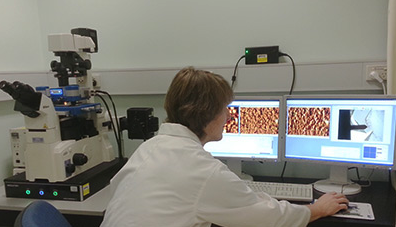
Dr Rico Tabor leads the Soft Materials and Colloids Group in the School of Chemistry at Monash University.
Research focuses on several areas. At a fundamental level, the group is interested in exploring the interactions that cause aggregation and assembly, in everything from nanoparticles, droplets and graphene to proteins and cells. This ranges from quite fundamental studies of things like the van der Waals force (of quantum origin) and electrical double-layer interactions, right through to unwinding protein molecules and the forces experienced by...

 These are the major interim results of a phase 1 clinical study of the company's Chikungunya vaccine candidate that uses a standard anti-measles vaccine as a vector. The Chikungunya epidemic, currently raging through the Caribbean, illustrates the urgent necessity to develop an effective vaccine against the rapid spread of the disease in tropical regions, now also threatening the North American continent...
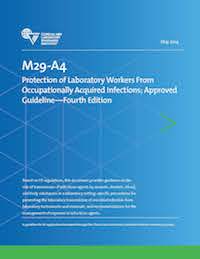 This standard is based on US regulations and provides guidance on reducing or eliminating the risk of transmission of infectious agents in a laboratory setting. This edition of M29 includes specific precautions for preventing the laboratory transmission of microbial infections from patient specimens and contaminated laboratory instruments during all stages of the laboratory path of workflow and updated recommendations for the management of the...
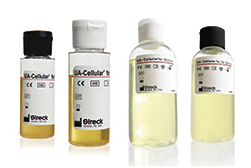 Laboratories looking to implement the new ISO 15189 standards for UKAS accreditation will have to demonstrate that their testing service follows defined quality assurance levels, performing with competence and consistency. That means removing risks of variability wherever possible. Control materials that follow the patient pathway can assist with this by providing greater confidence in test system results, over controls that...
 After a year-long process, the National Health Laboratory Quality Assurance and Training Centre in Dar es Salaam, the Bugando Medical Centre Laboratory in Mwanza City, and the Mbeya Referral Hospital Laboratory in Mbeya received accreditation aligned to International Organization for Standardization (ISO) 15189 (Medical laboratories – Requirements for quality and competence). The Muhimbili National Hospital Laboratory has also been recommended for SADCAS accreditation...
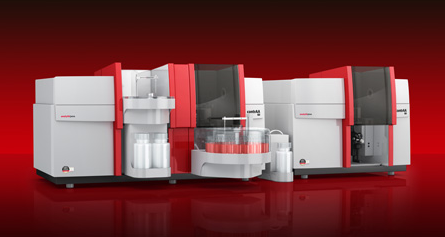 How they come about and whether they are actually accurate remains a secret. The High-Resolution Continuum Source (HR-CS) AAS used in the contrAA® series from Analytik Jena provides the AAS user with significantly more information. Thanks to the combination of a xenon lamp covering the entire relevant wavelength range, a high-resolution spectrometer and a CCD-detector, it has become possible to visually represent the absorption spectra of samples...
 Global Care Initiative (GCI), a consortium of five leading non-profit French research institutes, today announces that it will have a representative in the US, in Boston, Massachusetts. This new presence in Boston will provide better accessibility to American partners. Global Care combines strong skillsets, recognized IP and unique technology platforms in their offering. The consortium functions as a one-stop shop to life sciences companies and research organizations that seek effective R&D partnerships.....
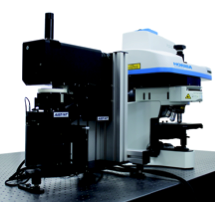 Last week, to demonstrate that this can now be performed under regular conditions, the HORIBA team has set up a “XploRA nano” system on a standard optical table running without air damping. TERS imaging was perform without any trouble even when visitors were stopping by to discuss the technique with the team. “Thanks to our unique integrated solution with AIST-NT (Novato, CA, USA), using tuning fork TERS probes manufactured by HORIBA and...
 Active Motif will distribute the kits in its key markets of Europe, the United States and Japan. These assays allow researchers – in areas as diverse as stem cells, apoptosis and epigenetic regulation – to study nucleosome based epigenetic features in animal or human cell culture samples. The four different types of kits which will be available through Active Motif are...
 "The optiMOS sCMOS camera is a budget-friendly CCD alternative that gives cell biologists the performance they need to capture rapid cellular dynamics without the data management hassles typically associated with digital microscopy," said Chris Ryan, QImaging's product manager. "We are honored to have Laboratory Equipment'sreaders recognize our product's achievements."
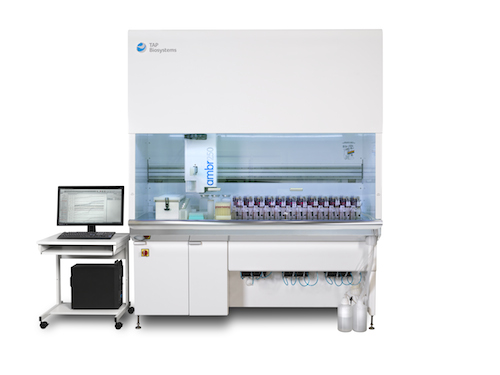 The live event will detail how to use the ambr250 high-throughput, fully automated bioreactor system to speed up upstream fermentation and bioprocess development of protein-based therapeutics, vaccines and industrial enzymes. Bioprocessing expert, Mwai Ngibuini, ambr250 Product Manager at TAP Biosystems, will present technical results from researchers using ambr250 to show how the system can be used at high-throughput to develop and...
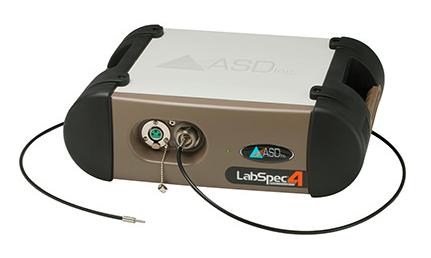 Analytik have supplied LabSpec Vis-NIR spectrometers in the world of heritage research where non-destructive identification of materials is vital both in terms of preservation and restoration. Systems are in use in museums, galleries, libraries and historic properties where applications include the dating of historic parchments and the analysis of pigments on manuscripts. Dr Craig Kennedy is a senior lecturer in the School of the...
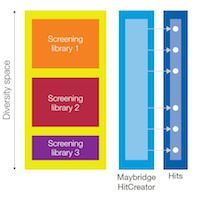 A new highly diverse library of screening compounds is designed to maximize efficiency and productivity for researchers in early phase small molecule drug discovery. By delivering exceptionally diverse coverage of the space spanned by all possible drug-like molecules and associated characteristics, the Maybridge HitCreator library provides a greater hit probability than larger, but less diverse, screening libraries...
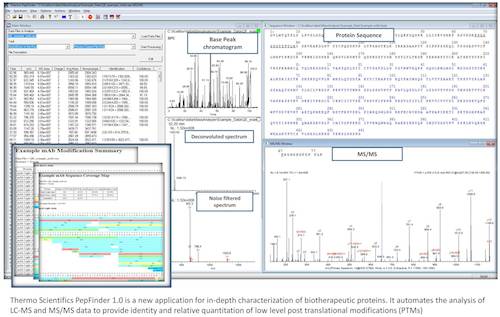 Now there’s a new software tool designed to increase the speed, quality and confidence in comprehensive biotherapeutic protein characterization useful for drug development and production quality control. Thermo Scientific PepFinder software is making its debut at the 62nd ASMS Conference on Mass Spectrometry and Allied Topics, booth 127, and at the company’s hospitality suite: Holiday, Baltimore Hilton. PepFinder software is designed to...
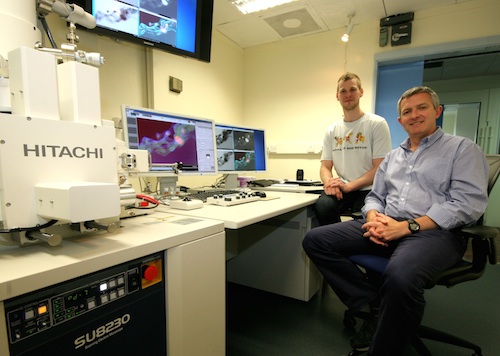 The Hitachi SU8230 at Leeds is the first SEM in Europe to utilise the latest high stability CFE technology and will be used for nanomaterial characterisation in pharmaceutical, catalysis and energy applications. Ultra-low voltage capabilities, including low-loss BSE imaging, will provide information on the true-surface and electrical properties of materials at nanoscale resolution. Being equipped with angle-selective BF and DF STEM, the SU8230 will enable correlative studies with TEM, especially on...
 The United States Department of Energy (DOE) has released preliminary results of an independent study of comparative ultra-low temperature freezer performance confirming significant energy reduction of the Stirling Ultracold ultra-low freezer in side-by-side evaluations with top competitors. The study was commissioned by the Better Buildings Alliance Laboratories and performed for the DOE by Navigant Consulting...
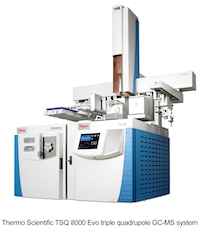 The new Thermo Scientific TSQ 8000 Evo triple quadrupole GC-MS is making its debut at the 62nd ASMS Conference on Mass Spectrometry and Allied Topics at the company’s hospitality suite: Holiday, Baltimore Hilton. The TSQ 8000 Evo system improves on the features of its predecessor, the TSQ 8000, with new EvoCell technology, demonstrated in company-run experiments to triple selected reaction monitoring (SRM) transition rates without compromising sensitivity...
 This all-in-one bioinformatics appliance is preloaded with the ultra-fast and highly accurate NGS data processing software, GENALICE MAP. GENALICE recently announced the upgrade of its groundbreaking DNA processing solution to include Variant Calling. This upgrade makes GENALICE MAP a complete processing workflow. The product is specifically designed to support high volume DNA sequencing centers that require high throughput at high quality...
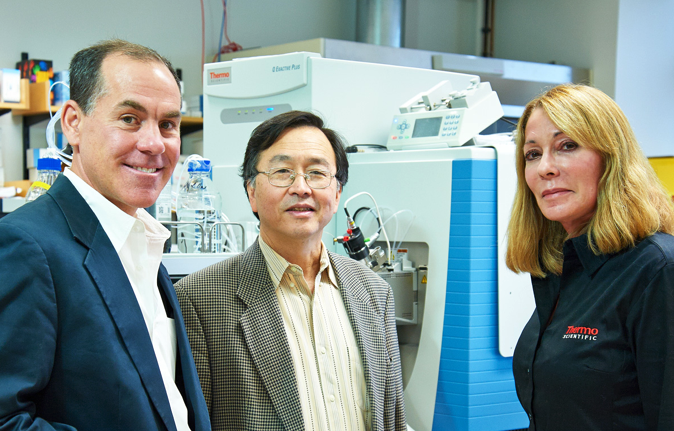 Biologic drugs, such as therapeutic monoclonal antibodies, are extremely large and complex biomolecules, and represent one of the most significant areas in the pharmaceutical industry today. Minor differences in biologic structure from drug to drug, or from manufacturing lot to manufacturing lot, however, can profoundly affect these drugs’ safety and efficacy profiles...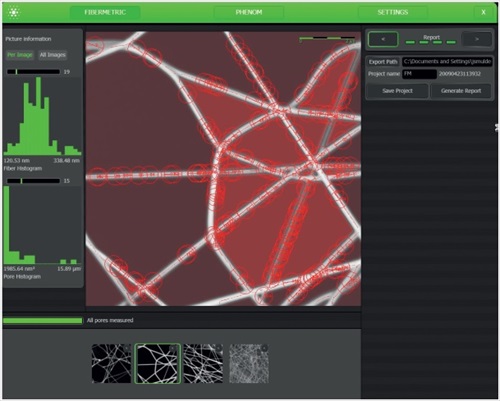
 Research focuses on several areas. At a fundamental level, the group is interested in exploring the interactions that cause aggregation and assembly, in everything from nanoparticles, droplets and graphene to proteins and cells. This ranges from quite fundamental studies of things like the van der Waals force (of quantum origin) and electrical double-layer interactions, right through to unwinding protein molecules and the forces experienced by...