West Park Hospital in Cody, Wyoming, has adopted the Bioquell robotic technology used to decontaminate rooms and ambulances that have had contact with Ebola patients.
Featured by KULR News on Thursday 23d October, the hospital purchased the equipment long before the Ebola outbreak in Dallas. The system is used in hospitals around the world to kill more common pathogens such as CPE, C.difficile or norovirus Gerri Ackley Infection Preventionist at Cody’s West Park Hospital, who’s concerned about multi-drug resistant bugs and other infectious agents, says, "We're going into flu season. And, frankly that's one of...
TAP Biosystems announces that a top ten pharma company is using the fill-it™ automated cryovial processing system in its biomanufacturing to reduce costs by up to fifty percent, while ensuring consistent end to end quality of cell banks and reference standards distributed globally for biologics production.
The fill-it system is being used at this major pharmaceutical company at the beginning of biomanufacturing to routinely decap 1500, 2mL cryovials, automatically dispense 2mL from 3L of cell banks into these cryovials and then recap each vial. With fill-it this task takes two scientists three hours to produce a single batch of 1500 processed cryovials. The system has significantly reduced the company’s production and QC costs as previously...
Thermo Fisher Scientific has developed an efficient high-performance liquid chromatography (HPLC) method using a mixed-mode column, the Thermo Scientific™Acclaim™ Mixed-Mode WAX-1 column, with ultraviolet detection for a rapid and sensitive determination of acesulfame in vinegar.
Application Note 1104: Rapid and Sensitive Determination of Acesulfame in Vinegar demonstrates that this approach offers the advantages of simple sample preparation, good method reproducibility, and a wide linear calibration range. This new method also achieves a detection limit much lower than that specified by the Standardization Administration of China. Acesulfame is extensively used as a sugar substitute in foods and...
MicroMatrices, a service provider specialised in high resolution cell type-specific analysis to characterise toxicological responses in different cell types in tissue, today announced a preferred partnership agreement with Advanced Cell Diagnostics, Inc. (ACD), a leader in the field of molecular pathology and developer of cell and tissue-based analysis tools.
MicroMatrices solves molecular toxicological problems using unique visualisation and localisation technologies, adding resolving power to standard methodologies. Consisting of a highly skilled core of scientists networked to facilities of excellence across the United Kingdom, MicroMatrices is scalable, efficient and flexible. MicroMatrices offers innovative, collaborative, state of the art solutions for unique efficacy and safety requirements...
Cepheid has been awarded a grant of up to $3.3 million co-financed by the Paul G. Allen Family Foundation and the Bill & Melinda Gates Foundation to develop Xpert® Ebola, a rapid test that could be run on Cepheid’s installed base of more than 3,500 GeneXpert® Systems in developing countries, including more than 1,000 in Africa. The test is expected to be offered on an emergency use only basis.
“While we are all hopeful that the Ebola epidemic dissipates quickly, we welcome the opportunity to develop an accurate, rapid and easy-to-use test with the potential to strengthen the arsenal of tools being deployed to address the current situation,“ said John Bishop, Cepheid’s Chairman and CEO. "Cepheid has historically played a leading role in developing molecular diagnostics...
Read MoreImaging Companies in Europe Shoulder-to-Shoulder with Life ScientistsNov 26, 2014
Imaging companies in Europe get closer to scientists by founding an open Board linked to the upcoming European research infrastructure Euro-BioImaging
Leading imaging companies Leica, Nikon, Zeiss, FEI, Olympus, SVI and Photometrics announced last week that for the first time they jointly founded an open Industry Board linked to the upcoming European research infrastructure for imaging “Euro-BioImaging”. The mission of the Board is to facilitate interaction between imaging industry and its academic users, enabling timely understanding of the users’ needs. This has potential to...
The Structure and Biophysics department at AstraZeneca R&D Mölndal, Sweden, is reaping the benefits of a recently acquired HP D300 Digital Dispenser for surface plasmon resonance (SPR) studies, saving time, enhancing consistency and using significantly less compound for dose-response experiments.
Principal Scientist Stefan Geschwindner explained: “The need for the HP D300 Digital Dispenser was largely driven by a demand for more effective SPR studies and increased flexibility. We already had an acoustic dispenser, but this was not ideal, as there are peaks and troughs in our work, and we needed an economical solution that could accommodate these changing demands. Tecan provided an instrument for us to try, and people immediately saw the benefits, realizing that the HP D300 could really change our way of working, helping to generate data more rapidly and shorten lead times.”
Hichrom's 2015 training programme is now available, featuring courses covering every area of HPLC, UHPLC, GC and sample preparation and delivered by world-renowned experts including John Dolan, Mel Euerby, Mark Powell, Diane Turner, Alan McKeown, Geoff Pickerell, Brian Montgomery, Helen Poole, Gemma Lo and Annette Larder.
Largest available collection of PDX cell lines, faithfully modelling human breast cancers
Horizon Discovery Group plc (Horizon), a leading provider of products, services and technologies in the field of genome engineering, today announced the launch of its Patient-Derived Xenograft (PDX) models of breast cancer under its SAGE Labs brand. The new panel is the largest available collection of highly characterized PDX models, and is licensed from Washington University. The collection comprises a broad range of PDX lines, which...
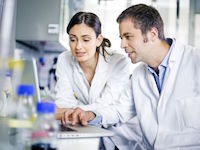
The new Bioreactor Cultivation Video Guide from INFORS HT illustrates the operational steps using the Minifors and Labfors bench-top bioreactors as examples.
The video instructions allow students and newcomers to fermentation to run laboratory experiments on their own. These instructions were compiled in co-operation with the University of Applied Sciences, Esslingen, (Germany) and are now available from INFORS HT. The Cultivation Video Guide takes the user through the bioprocess step-by-step through short video clips and numerous photographs and diagrams. The guide accompanies the...
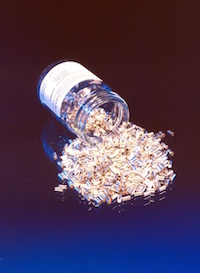
Exeter Analytical reports on how the consistency and quality of routine microanalysis consumables can have a significant effect on the variability of determined percentage carbon, hydrogen and nitrogen (CHN) results.
An existing user of an Exeter Analytical Model 440 CHN analyser, driven by tight budgetary considerations, elected to try to save some money by buying consumables from a non-certified supplier. However after a few weeks they noticed that blank carbon and hydrogen readings from CHN analyses performed with these new tin capsules and quartz reaction tubes had become higher and inconsistent. In addition due to this new inconsistency the consumption of consumables had also...
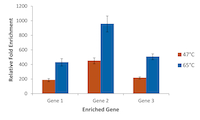
In a recent DECODED Online article, scientists at Geneseeq Technology, Inc., a cancer diagnostics company, demonstrate improved target capture methods for increasing reliability of next generation sequencing data, particularly important for clinical diagnostics.
The scientists’ insights cover use of blocking oligos, optimizing hybridization conditions, and getting the most out of formalin-fixed and paraffin embedded (FFPE) samples. Geneseeq provides clinicians with guided treatment solutions for cancer, based on comprehensive, systematic analysis of patients’ genomic mutations. The company was an early adopter of IDT’s xGen® Lockdown® Probes and uses these with xGen® Blocking Oligos to...
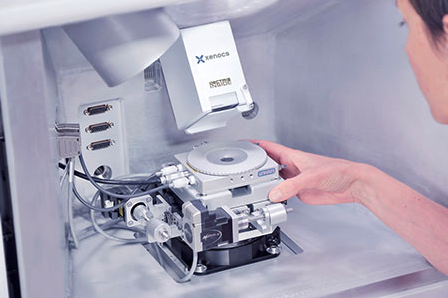
Market leaders in temperature controlled microscopy, Linkam Scientific Instruments, are working with French instrument company, Xenocs, to provide the facility to perform X-ray experiments under changing temperature and/or tensile conditions.
Linkam is pleased to announce that their temperature stages have been chosen by Xenocs to incorporate in their recently launched Nano-inXider X-ray characterisation system opening new perspectives in many research fields. Xenocs is a French instrument company formed as a spinout from the Laue Langevin Institute. The company provides solutions for nanomaterial characterisation using Small and Wide Angle X-ray Scattering technique...
The University of Glasgow and AstraZeneca have officially launched the GLAZgo Discovery Centre which will focus on understanding more about immunological disease processes.
Following an agreement to develop the Centre, signed just under a year ago, the launch highlighted what can be achieved when two parties share a common philosophy on how academic medicine and a pharmaceutical company should combine forces to drive forward the creation of future medicines. The partnership is based on an agile and highly-integrated collaborative model. This has helped to create a dynamic and flexible environment bringing together...
Until 15 January 2015, young researchers working in Europe who are not older than 35 years are invited to apply for the Eppendorf Award for Young European Investigators.
This highly prestigious prize acknowledges outstanding contributions to biomedical research in Europe based on methods of molecular biology, including novel analytical concepts. In 2015 the Eppendorf Award for Young European Investigators celebrates 20 years. To mark this milestone, Eppendorf has increased the prize money to 20,000 euros. The winner is selected by an independent expert committee chaired by...
A novel super-resolution fluorescence microscope equipped with a low-noise, high-speed 5.5 Megapixel Andor Neo sCMOS camera has enabled the real-time nanoscopic imaging of large fields of living cells for the first time.
Researchers from the Max Planck Institute in Goettingen, Germany, adopted massive parallelisation techniques to create 116,000 simultaneous scanning points and super-resolve 120 µm × 100 µm fields in less than a second. The research was led by Professor Stefan Hell, who first advanced STED (Stimulated Emission Depletion) and RESOLFT (Reversible Saturable/Switchable Optical Fluorescence Transitions) far-field, super-resolution microscopy...
Polyplus-transfection SA, a privately-held company developing innovative technologies for molecular and cellular biology, and Blue Sky BioServices, a contract research organization (CRO) providing Gene Through Screen services for the pharmaceutical and biotechnology R&D market, today announce a non-exclusive, research and commercial license agreement.
Polyplus has granted Blue Sky BioServices a licence to use Polyethylenimine (PEI) for in vitro transfection applications. Blue Sky BioServices, has become the 17th sub-licensee, and the 4th CRO to acquire rights from Polyplus to use its PEI-mediated transfection applications for research and commercial purposes. Of the other international Polyplus sub-licensees, five are big pharma companies. Six are in located in North America, and 11 in Europe. The license provides Blue Sky BioServices with freedom to use this globally recognized high performance technology from...
Telstar has successfully completed the construction and installation of a modular R+D laboratory and Kilo lab at the Medichem production centre in Hal Far (Malta) for manufacturing HPAPIs (Highly Potent Active Pharmaceutical Ingredients).
The facility consists of a production room and a laboratory, both under negative pressure relative to adjacent rooms and the exterior to ensure user protection. Telstar carried out the project management of this facility under an EPC (Engineering, Procurement and Construction) arrangement. The architecture, HVAC system, distribution of utilities and services, the provision of heating and cooling water, and the inside furnishings were included in...
FRAME is calling for increased investment in cell-based and computer methods of drug testing following new research that demonstrates serious flaws in an animal model.
Cynomolgus monkeys are considered a valuable species for drug testing because of their size and their relatively close genetic parallels with humans. Now new experiments to investigate how the liver handles the commonly-used painkiller paracetamol have revealed that cynomolgus monkeys are resistant to doses that would be fatal in humans. The findings cast serious doubt on the use of these monkeys as an animal model for drug testing. The ability of...
JPK Instruments reports on the use of the JPK NanoWizard® AFM system at ITAV, the Institut des Technologies Avancées en science du Vivant, in Toulouse in the South of France.
Dr Childérick Severac manages the Bionanotechnologies Platform at ITAV (Institut des Technologies Avancées en science du Vivant) on the site of the new Oncopole campus dedicated to cancer research. His research activities may be divided into two parts: his own research and the research activity he does for others in the form of providing a collaborative imaging service. Dr Severac's research focuses on the development of...
UK-Based Aquila-Histoplex to provide ACD’s industry-leading RNA ISH
Aquila-Histoplex, a contract research organisation specialised in histological and multiplex staining technologies, was today announced as the first accredited RNAscope® Certified Service Provider in Europe by Advanced Cell Diagnostics, Inc. (ACD), a technology and market leader in the field of molecular pathology and developer of cell and tissue-based analysis tools. Aquila-Histoplex focuses on multiplex molecular tissue probing using techniques such as...
A new application note from Olympus explores how, moving into the future of cultural heritage research, the latest high-resolution light microscopy is rapidly advancing our knowledge of the past.
Discovering and understanding novel strategies for historic conservation, Dr Olivier Schalm’s research at the Department of Conservation Studies, University of Antwerp (Belgium), has benefited from the latest in high-resolution light microscopy with the Olympus DSX500 Opto-digital system. Introducing cutting-edge digital imaging technologies and retaining true colour information at magnifications of up to 4,000x, this approach has even...

 Featured by KULR News on Thursday 23d October, the hospital purchased the equipment long before the Ebola outbreak in Dallas. The system is used in hospitals around the world to kill more common pathogens such as CPE, C.difficile or norovirus Gerri Ackley Infection Preventionist at Cody’s West Park Hospital, who’s concerned about multi-drug resistant bugs and other infectious agents, says, "We're going into flu season. And, frankly that's one of...
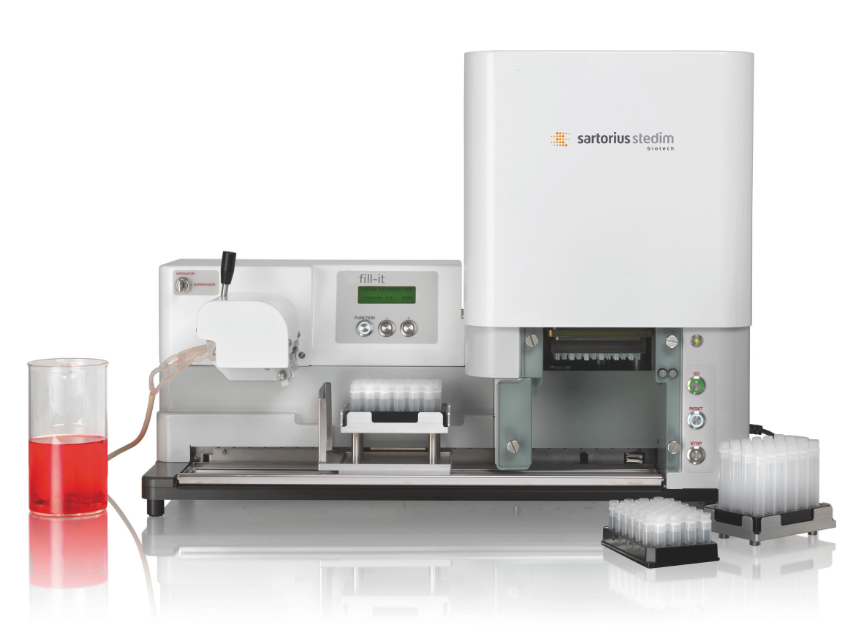 The fill-it system is being used at this major pharmaceutical company at the beginning of biomanufacturing to routinely decap 1500, 2mL cryovials, automatically dispense 2mL from 3L of cell banks into these cryovials and then recap each vial. With fill-it this task takes two scientists three hours to produce a single batch of 1500 processed cryovials. The system has significantly reduced the company’s production and QC costs as previously...
 Application Note 1104: Rapid and Sensitive Determination of Acesulfame in Vinegar demonstrates that this approach offers the advantages of simple sample preparation, good method reproducibility, and a wide linear calibration range. This new method also achieves a detection limit much lower than that specified by the Standardization Administration of China. Acesulfame is extensively used as a sugar substitute in foods and...
 MicroMatrices solves molecular toxicological problems using unique visualisation and localisation technologies, adding resolving power to standard methodologies. Consisting of a highly skilled core of scientists networked to facilities of excellence across the United Kingdom, MicroMatrices is scalable, efficient and flexible. MicroMatrices offers innovative, collaborative, state of the art solutions for unique efficacy and safety requirements...
 “While we are all hopeful that the Ebola epidemic dissipates quickly, we welcome the opportunity to develop an accurate, rapid and easy-to-use test with the potential to strengthen the arsenal of tools being deployed to address the current situation,“ said John Bishop, Cepheid’s Chairman and CEO. "Cepheid has historically played a leading role in developing molecular diagnostics...
 Leading imaging companies Leica, Nikon, Zeiss, FEI, Olympus, SVI and Photometrics announced last week that for the first time they jointly founded an open Industry Board linked to the upcoming European research infrastructure for imaging “Euro-BioImaging”. The mission of the Board is to facilitate interaction between imaging industry and its academic users, enabling timely understanding of the users’ needs. This has potential to...
 Whether you are a relative newcomer to chromatography or a seasoned veteran, you can benefit from one of our courses. In addition to the well-established and well received theoretical courses (which are available as full day training courses or short 1-2 hour seminars), a wide range of practical ‘Hands-On’ courses covering all aspects of LC, LC/MS, GC, GC/MS and sample preparation is now also available.
 Horizon Discovery Group plc (Horizon), a leading provider of products, services and technologies in the field of genome engineering, today announced the launch of its Patient-Derived Xenograft (PDX) models of breast cancer under its SAGE Labs brand. The new panel is the largest available collection of highly characterized PDX models, and is licensed from Washington University. The collection comprises a broad range of PDX lines, which...
 The video instructions allow students and newcomers to fermentation to run laboratory experiments on their own. These instructions were compiled in co-operation with the University of Applied Sciences, Esslingen, (Germany) and are now available from INFORS HT. The Cultivation Video Guide takes the user through the bioprocess step-by-step through short video clips and numerous photographs and diagrams. The guide accompanies the...
 An existing user of an Exeter Analytical Model 440 CHN analyser, driven by tight budgetary considerations, elected to try to save some money by buying consumables from a non-certified supplier. However after a few weeks they noticed that blank carbon and hydrogen readings from CHN analyses performed with these new tin capsules and quartz reaction tubes had become higher and inconsistent. In addition due to this new inconsistency the consumption of consumables had also...
 The scientists’ insights cover use of blocking oligos, optimizing hybridization conditions, and getting the most out of formalin-fixed and paraffin embedded (FFPE) samples. Geneseeq provides clinicians with guided treatment solutions for cancer, based on comprehensive, systematic analysis of patients’ genomic mutations. The company was an early adopter of IDT’s xGen® Lockdown® Probes and uses these with xGen® Blocking Oligos to...
 Linkam is pleased to announce that their temperature stages have been chosen by Xenocs to incorporate in their recently launched Nano-inXider X-ray characterisation system opening new perspectives in many research fields. Xenocs is a French instrument company formed as a spinout from the Laue Langevin Institute. The company provides solutions for nanomaterial characterisation using Small and Wide Angle X-ray Scattering technique...
 Following an agreement to develop the Centre, signed just under a year ago, the launch highlighted what can be achieved when two parties share a common philosophy on how academic medicine and a pharmaceutical company should combine forces to drive forward the creation of future medicines. The partnership is based on an agile and highly-integrated collaborative model. This has helped to create a dynamic and flexible environment bringing together...
 This highly prestigious prize acknowledges outstanding contributions to biomedical research in Europe based on methods of molecular biology, including novel analytical concepts. In 2015 the Eppendorf Award for Young European Investigators celebrates 20 years. To mark this milestone, Eppendorf has increased the prize money to 20,000 euros. The winner is selected by an independent expert committee chaired by...
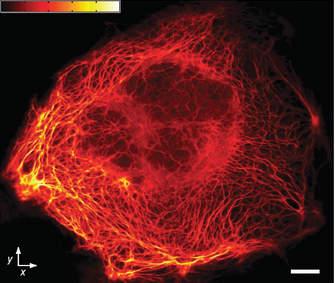 Researchers from the Max Planck Institute in Goettingen, Germany, adopted massive parallelisation techniques to create 116,000 simultaneous scanning points and super-resolve 120 µm × 100 µm fields in less than a second. The research was led by Professor Stefan Hell, who first advanced STED (Stimulated Emission Depletion) and RESOLFT (Reversible Saturable/Switchable Optical Fluorescence Transitions) far-field, super-resolution microscopy...
 Polyplus has granted Blue Sky BioServices a licence to use Polyethylenimine (PEI) for in vitro transfection applications. Blue Sky BioServices, has become the 17th sub-licensee, and the 4th CRO to acquire rights from Polyplus to use its PEI-mediated transfection applications for research and commercial purposes. Of the other international Polyplus sub-licensees, five are big pharma companies. Six are in located in North America, and 11 in Europe. The license provides Blue Sky BioServices with freedom to use this globally recognized high performance technology from...
 The facility consists of a production room and a laboratory, both under negative pressure relative to adjacent rooms and the exterior to ensure user protection. Telstar carried out the project management of this facility under an EPC (Engineering, Procurement and Construction) arrangement. The architecture, HVAC system, distribution of utilities and services, the provision of heating and cooling water, and the inside furnishings were included in...
 Cynomolgus monkeys are considered a valuable species for drug testing because of their size and their relatively close genetic parallels with humans. Now new experiments to investigate how the liver handles the commonly-used painkiller paracetamol have revealed that cynomolgus monkeys are resistant to doses that would be fatal in humans. The findings cast serious doubt on the use of these monkeys as an animal model for drug testing. The ability of...
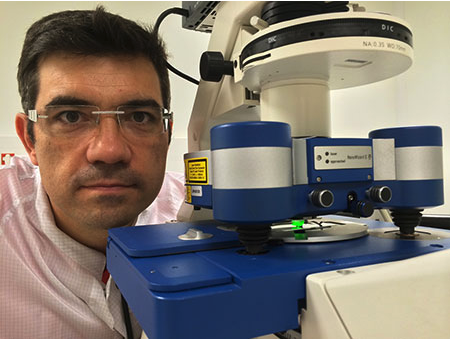 Dr Childérick Severac manages the Bionanotechnologies Platform at ITAV (Institut des Technologies Avancées en science du Vivant) on the site of the new Oncopole campus dedicated to cancer research. His research activities may be divided into two parts: his own research and the research activity he does for others in the form of providing a collaborative imaging service. Dr Severac's research focuses on the development of...
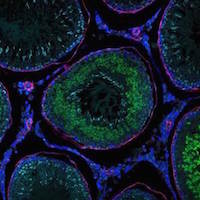 Aquila-Histoplex, a contract research organisation specialised in histological and multiplex staining technologies, was today announced as the first accredited RNAscope® Certified Service Provider in Europe by Advanced Cell Diagnostics, Inc. (ACD), a technology and market leader in the field of molecular pathology and developer of cell and tissue-based analysis tools. Aquila-Histoplex focuses on multiplex molecular tissue probing using techniques such as...
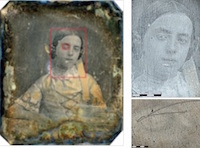 Discovering and understanding novel strategies for historic conservation, Dr Olivier Schalm’s research at the Department of Conservation Studies, University of Antwerp (Belgium), has benefited from the latest in high-resolution light microscopy with the Olympus DSX500 Opto-digital system. Introducing cutting-edge digital imaging technologies and retaining true colour information at magnifications of up to 4,000x, this approach has even...