Asynt reports on an increasing demand for bespoke glass laboratory reactor systems, optimised to meet the exact demands of an application or project.
As a respected supplier of off-the-shelf laboratory reactor systems, Asynt has the in-depth knowledge and glassware manufacturing expertise to also offer customised glass reactor vessels ranging from tens of millilitres to 50 litres in capacity. A polymer resin manufacturer commissioned Asynt to develop a 20-litre jacketed glass laboratory reactor...
Innovative and relevant models for understanding alpha-synuclein biology and Parkinson’s disease pathogenesis in vivo
Horizon Discovery (LSE: HZD), a global leader in gene editing and gene modulation technologies, in partnership with The Michael J. Fox Foundation for Parkinson's Research (MJFF), today introduced two new gene knock-out and knock-in rat models for investigating the role of alpha-synuclein in brain function and Parkinson’s disease...
The Translational Research Institute (TRI), Brisbane has become the first centre in Australia and the Asia Pacific region to adopt the Livecyte™ Cell Imaging and Analysis system.
TRI was formed to enhance collaboration between science, healthcare and industry with the purpose of accelerating the application of innovative scientific research to improve healthcare outcomes. The Institute, derived from a partnership between Queensland Health....
Quorum Technologies report on how the Laboratory of Food Technology & Engineering at the University of Ghent, Belgium, applies cryo techniques to prepare food samples for study by scanning electron microscopy.
Ir Davy Van de Walle is a senior researcher in the Laboratory of Food Technology & Engineering at the University of Ghent. He works for the head of the laboratory, Professor Koen Dewettinck. Their mission is to design foods on the nano- and microscale which provide the answer to the consumer demand for new products....
Weizmann Institute completes installation of system following start of EU grant funding for multicolor MR imaging
The Weizmann Institute of Science in Rehovot, Israel, has announced the installation of the Biospec® 15.2 Tesla USR™ preclinical ultra-high field magnetic resonance imaging (MRI) instrument from Bruker. The new instrument is installed in the Daniel Wolf building of the Department of Chemical Research....
INTEGRA has released an application guide highlighting the importance of choosing the right disposable tips for the liquid you’re pipetting.
The recently published Performance of Low Retention GripTips from INTEGRA demonstrates how these high quality consumables can improve pipetting performance for viscous and low surface tension liquids. High quality pipettes and correct techniques are essential to ensure reliable and reproducible results....
JPK Instruments reports on the Schwille Research Group at the Max Planck Institute of Biochemistry near Munich using JPK's NanoWizard® ULTRA Speed AFM to study living membrane systems.
Dr Henri Franquelim is a Post Doc researcher at the Max Planck Institute of Biochemistry situated near Munich. He is a member of Professor Petra Schwille's research team whose goal is to quantitatively understand the essence and core principles of living systems...
Ingenza has reached a major technical milestone with Syngenta in their collaboration to develop efficient manufacturing technologies for innovative crop protection products.
Ingenza’s leadership in industrial biotechnology and synthetic biology has been validated by this application of key microbial gene maintenance and expression technologies which will now be further developed by Syngenta. The collaboration capitalises on Ingenza’s proprietary inABLE suite of capabilities in gene expression....
Finding of lung fibrosis gene highlights a potential new avenue for treatment
Health scientists at the University of Leicester and University of Nottingham have heralded the discovery of a gene associated with lung fibrosis as ‘a potential new avenue of treatment for further research into this terrible disease.’ The breakthrough is announced in a paper published in The Lancet Respiratory Medicine....
Greiner Bio-One, technology partner for the diagnostic and pharmaceutical industry, unveiled two new instrument platforms for the automated use of PapilloCheck at this year′s EUROGIN in Amsterdam, the international conference for education and research on the human papillomavirus (HPV).
The compact sized CX NIMBUS fits easily in any laboratory setting and incorporates liquid handling of DNA extraction and pre-PCR for an easy and fast processing of 48 samples. CX STARlet is used for automated processing of 96 samples with its integrated devices such as thermal cycler and sealer....
For many years Alpha Laboratories and Sartorius have delivered a popular training programme covering correct pipetting techniques, the ergonomic use of pipettes, plus basic service and maintenance of pipettes in everyday laboratory use.
User feedback has now led to the development of the Advanced Pipetting Academy™ to address the unique requirements of individual laboratories. The new Advanced Pipetting Academy™ is an ISO9001 and ISO 13485 accredited training programme....
Porvair Sciences reports on the revolutionary “FlowerPlate” microplate developed and manufactured as an OEM product with and for m2p-labs in Germany.
Based in Baesweiler, Germany, m2p-labs was founded in 2005 as a spin-off of RWTH Aachen University. The company focuses on development and supply of systems for microreaction and automated solutions for screening and bioprocess development.....
DESKGEN Series Libraries are designed and manufactured using the latest CRISPR gene editing techniques and artificial intelligence to deliver a tailored end-to-end solution
Desktop Genetics Ltd (“the Company”), a company revolutionizing the way biologists use CRISPR genome editing technology, has announced the launch of its DESKGEN Series CRISPR Libraries to support gene editing efforts in academic and biopharma settings....
Syngene has announced its G:BOX Chemi XRQ multi-application imager is being used in the School of Biochemistry at the University of Bristol to rapidly generate more accurate images of extracellular matrix (ECM) proteins associated with fibrosis, angiogenesis and wound healing.
Researchers in the School of Biochemistry are using a G:BOX Chemi XRQ multi-application system for imaging ECL-based chemiluminescent Western blots to accurately detect changes in thrombospondins, secreted glycoproteins of the extracellular matrix. The data produced are providing information which the scientists at the University of Bristol....
Support and recognition for biodiversity research with potential for global impact
Demonstrating its ongoing commitment to science advocacy and sustainability, Integrated DNA Technologies (IDT), is inviting applications for its 2017 Sustainability Award program. Open to researchers working on biodiversity projects in academic, non-profit, and government labs, this year IDT has extended the program to...
Quorum Technologies, market and technology leaders in electron microscopy coating and cryogenic preparation products, continue to expand their network of customer support facilities worldwide.
The latest laboratory is located at Nanjing Agricultural University, China, in association with distributors, Nanjing Tansi Technology Company. Quorum's dedication to support of their users is further emphasised as they announce new expanded demonstration and support facilities in China and the USA...
Inlabtec has published a short article that discusses the benefits gained from use of application specific sterile plastic bags in microbiological food testing.
The article compares the now standard protocol of using sample preparation bags for stomaching** with how the Inlabtec Serial Diluter makes it possible to now perform serial dilutions in dedicated serial dilution bags expanding the use of bags as a cost and resource saving alternative to test tubes or cups prefilled....
The antibiotic tigecycline, when used in combination with current treatment, may hold the key to eradicating chronic myeloid leukaemia (CML) cells, according to new research.
The University of Glasgow led study, published today in Nature Medicine, demonstrates the effectiveness of combining tigecycline with the drug imatinib – a tyrosine kinase inhibitor (TKI) and standard first-line treatment of patients with CML....
The Department of Sport and Exercise Science at Portsmouth University, UK reports on the advantages of using FLIR Systems thermal imaging cameras for measuring skin temperature at rest, during exercise, and recovery.
Skin temperature is an important physiological measure that can reflect the presence of illness and injury as well as provide insight into the localised interactions between the body and the environment. Historically, human skin temperature has been assessed using contact measurement devices....
Collaboration to assess the benefits of combining Affimer technology with FIT Biotech’s gtGTU platform
Avacta Group plc (AIM: AVCT), the developer of Affimer® biotherapeutics and reagents, is pleased to announce it has initiated a research collaboration with FIT Biotech Oy (FITBIO:FN Finland) to assess the effectiveness of developing gene therapies using Avacta’s Affimer technology combined....
Cancer cells use immune response to boost their growth - Immunotherapy could get body’s response back on track - Early data suggests existing immunotherapies could prevent relapse
Cancer cells that survive after treatment may use the body’s own immune system to wake themselves up and fuel their growth, a new study shows. The research sheds new light on how the immune system loses its ability to keep cancer in check, leading to the patient relapsing....
A Prior stage has been used in a ground-breaking study comparing traditional fluorescent tags to Surface Enhanced Raman Scattering Nanoparticles (SERS NPs), which found there were significant differences between the two imaging methods.
Prior Scientific's H117 Motorized Precision Stage was used in a study comparing the characteristics of traditional fluorescent probes with SERS NPs, in which the two methods were used to fluorescently image both live and fixed cells. Interest in using SERS NPs rather than traditional fluorescent tags in biological imaging is growing....

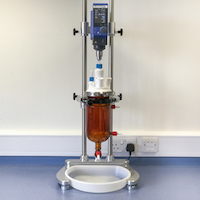 As a respected supplier of off-the-shelf laboratory reactor systems, Asynt has the in-depth knowledge and glassware manufacturing expertise to also offer customised glass reactor vessels ranging from tens of millilitres to 50 litres in capacity. A polymer resin manufacturer commissioned Asynt to develop a 20-litre jacketed glass laboratory reactor...
 Horizon Discovery (LSE: HZD), a global leader in gene editing and gene modulation technologies, in partnership with The Michael J. Fox Foundation for Parkinson's Research (MJFF), today introduced two new gene knock-out and knock-in rat models for investigating the role of alpha-synuclein in brain function and Parkinson’s disease...
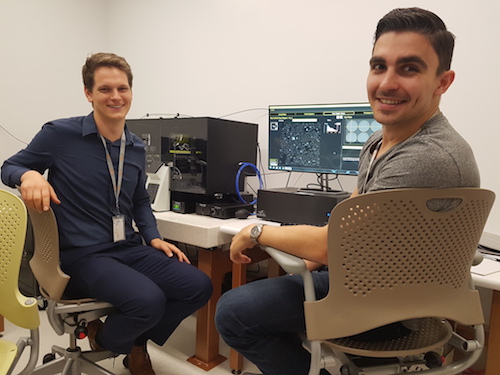 TRI was formed to enhance collaboration between science, healthcare and industry with the purpose of accelerating the application of innovative scientific research to improve healthcare outcomes. The Institute, derived from a partnership between Queensland Health....
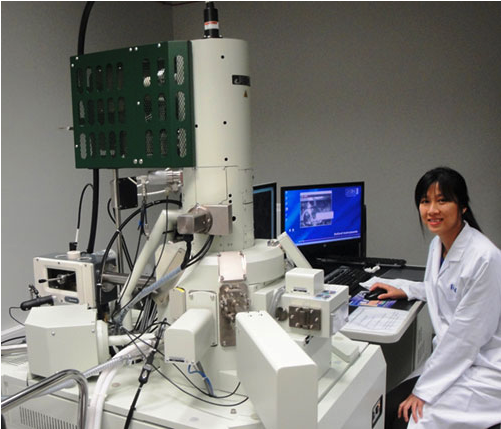 Ir Davy Van de Walle is a senior researcher in the Laboratory of Food Technology & Engineering at the University of Ghent. He works for the head of the laboratory, Professor Koen Dewettinck. Their mission is to design foods on the nano- and microscale which provide the answer to the consumer demand for new products....
 The Weizmann Institute of Science in Rehovot, Israel, has announced the installation of the Biospec® 15.2 Tesla USR™ preclinical ultra-high field magnetic resonance imaging (MRI) instrument from Bruker. The new instrument is installed in the Daniel Wolf building of the Department of Chemical Research....
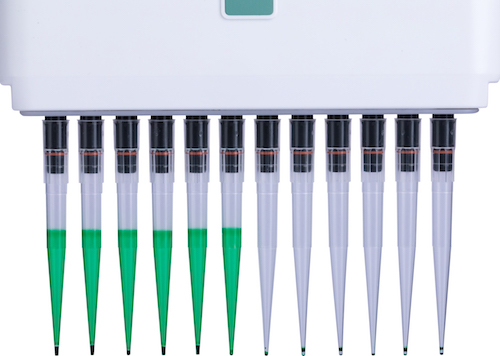 The recently published Performance of Low Retention GripTips from INTEGRA demonstrates how these high quality consumables can improve pipetting performance for viscous and low surface tension liquids. High quality pipettes and correct techniques are essential to ensure reliable and reproducible results....
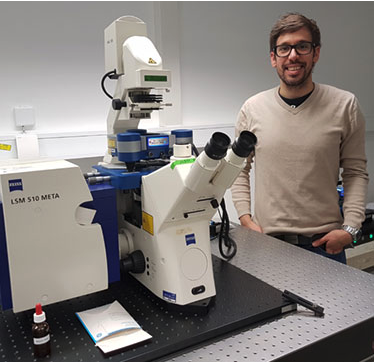 Dr Henri Franquelim is a Post Doc researcher at the Max Planck Institute of Biochemistry situated near Munich. He is a member of Professor Petra Schwille's research team whose goal is to quantitatively understand the essence and core principles of living systems...
 Ingenza’s leadership in industrial biotechnology and synthetic biology has been validated by this application of key microbial gene maintenance and expression technologies which will now be further developed by Syngenta. The collaboration capitalises on Ingenza’s proprietary inABLE suite of capabilities in gene expression....
 Health scientists at the University of Leicester and University of Nottingham have heralded the discovery of a gene associated with lung fibrosis as ‘a potential new avenue of treatment for further research into this terrible disease.’ The breakthrough is announced in a paper published in The Lancet Respiratory Medicine....
 The compact sized CX NIMBUS fits easily in any laboratory setting and incorporates liquid handling of DNA extraction and pre-PCR for an easy and fast processing of 48 samples. CX STARlet is used for automated processing of 96 samples with its integrated devices such as thermal cycler and sealer....
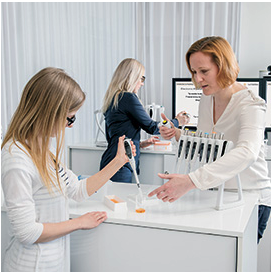 User feedback has now led to the development of the Advanced Pipetting Academy™ to address the unique requirements of individual laboratories. The new Advanced Pipetting Academy™ is an ISO9001 and ISO 13485 accredited training programme....
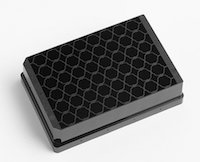 Based in Baesweiler, Germany, m2p-labs was founded in 2005 as a spin-off of RWTH Aachen University. The company focuses on development and supply of systems for microreaction and automated solutions for screening and bioprocess development.....
 Desktop Genetics Ltd (“the Company”), a company revolutionizing the way biologists use CRISPR genome editing technology, has announced the launch of its DESKGEN Series CRISPR Libraries to support gene editing efforts in academic and biopharma settings....
 Researchers in the School of Biochemistry are using a G:BOX Chemi XRQ multi-application system for imaging ECL-based chemiluminescent Western blots to accurately detect changes in thrombospondins, secreted glycoproteins of the extracellular matrix. The data produced are providing information which the scientists at the University of Bristol....
 Demonstrating its ongoing commitment to science advocacy and sustainability, Integrated DNA Technologies (IDT), is inviting applications for its 2017 Sustainability Award program. Open to researchers working on biodiversity projects in academic, non-profit, and government labs, this year IDT has extended the program to...
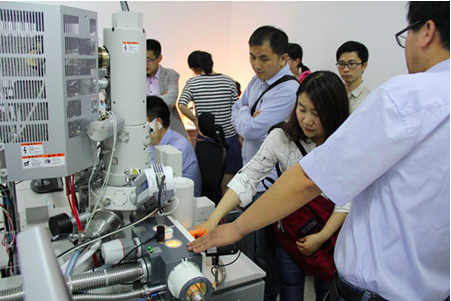 The latest laboratory is located at Nanjing Agricultural University, China, in association with distributors, Nanjing Tansi Technology Company. Quorum's dedication to support of their users is further emphasised as they announce new expanded demonstration and support facilities in China and the USA...
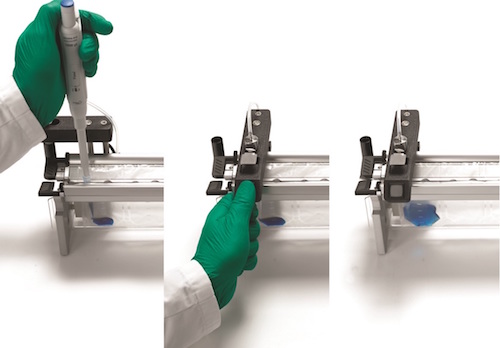 The article compares the now standard protocol of using sample preparation bags for stomaching** with how the Inlabtec Serial Diluter makes it possible to now perform serial dilutions in dedicated serial dilution bags expanding the use of bags as a cost and resource saving alternative to test tubes or cups prefilled....
 The University of Glasgow led study, published today in Nature Medicine, demonstrates the effectiveness of combining tigecycline with the drug imatinib – a tyrosine kinase inhibitor (TKI) and standard first-line treatment of patients with CML....
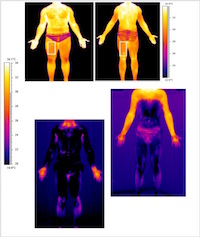 Skin temperature is an important physiological measure that can reflect the presence of illness and injury as well as provide insight into the localised interactions between the body and the environment. Historically, human skin temperature has been assessed using contact measurement devices....
 Avacta Group plc (AIM: AVCT), the developer of Affimer® biotherapeutics and reagents, is pleased to announce it has initiated a research collaboration with FIT Biotech Oy (FITBIO:FN Finland) to assess the effectiveness of developing gene therapies using Avacta’s Affimer technology combined....
 Cancer cells that survive after treatment may use the body’s own immune system to wake themselves up and fuel their growth, a new study shows. The research sheds new light on how the immune system loses its ability to keep cancer in check, leading to the patient relapsing....
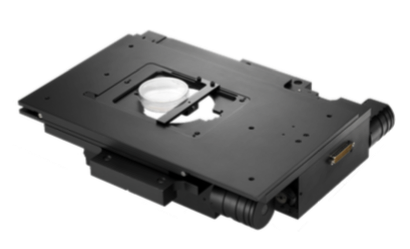 Prior Scientific's H117 Motorized Precision Stage was used in a study comparing the characteristics of traditional fluorescent probes with SERS NPs, in which the two methods were used to fluorescently image both live and fixed cells. Interest in using SERS NPs rather than traditional fluorescent tags in biological imaging is growing....