Syngene, a world-leading manufacturer of image analysis solutions is delighted to announce that the G:BOX XR5 imaging system is being used at the University of Cambridge to visualise and analyse DNA as part of a research programme to understand the molecular mechanisms behind why the remyelination process fails in diseases such as Multiple Sclerosis (MS)
Scientists in the Neurosciences Group at the Department of Veterinary Medicine, part of the University of Cambridge are using a G:BOX XR5 system to accurately image gels of fluorescent dye stained PCR products derived from genes involved in the remyelination process. By studying these genes, the scientists hope to find a means of enhancing the repair of normally non-repairable clinical conditions such as MS.
Read MoreWaters Selects Metabolomics Laboratory at University of North Texas for Center of Innovation Program HonorsOct 4, 2012
New Laboratory Directed by Prof. Vladimir Shulaev Recognized for Metabolomics and Metabolic Signaling Pathway Research and Teaching
At a ceremony officiated by University of North Texas (UNT) Provost Warren Burggren, Waters Corporation (NYSE:WAT) welcomed UNT’s Metabolomics and Metabolic Signaling Pathway Research Laboratory into the Waters Centers of Innovation Program. The laboratory directed by Professor Vladimir Shulaev is known worldwide for research in the field of metabolomics, the study of all cellular metabolites produced by living organisms. His laboratory is part of UNT's Plant Signaling Cluster, a team of researchers who collaborate to improve the understanding of cellular communication in plants to find solutions related to energy, agriculture, nutrition and medicine...
Read MoreNon-invasive cytometric technique could eliminate need for blood samplesOct 3, 2012
Andor Newton camera powers novel non-invasive probe capable of providing cell concentration and morphological data for blood in vivo
An Israeli team has demonstrated a non-invasive technique for imaging blood cells in vivo that could eliminate the need to extract blood from many patients. Powered by the Andor Newton Electron Multiplying EMCCD camera, their high-resolution Spectrally Encoded Flow Cytometry (SEFC) probe offers primary care physicians the capability to detect directly a wide range of common medical disorders, such as anaemia and bacterial infection, and potentially life threatening conditions, including sepsis, thrombosis and sickle cell crisis...
Read MoreFuturistic technology Oct 2, 2012
A new generation of software that will allow computers and robots to ‘converse’ with a person is being developed by University of Aberdeen scientists
The technology could be used in industry sectors including aerospace, aviation, defence and energy generation and supply, to perform tasks as wide-ranging as:
Unmanned exploratory missions in hostile environments including other planets – such as Mars - and deep sea

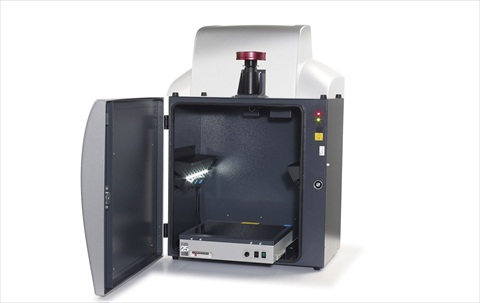 Scientists in the Neurosciences Group at the Department of Veterinary Medicine, part of the University of Cambridge are using a G:BOX XR5 system to accurately image gels of fluorescent dye stained PCR products derived from genes involved in the remyelination process. By studying these genes, the scientists hope to find a means of enhancing the repair of normally non-repairable clinical conditions such as MS.
 At a ceremony officiated by University of North Texas (UNT) Provost Warren Burggren, Waters Corporation (NYSE:WAT) welcomed UNT’s Metabolomics and Metabolic Signaling Pathway Research Laboratory into the Waters Centers of Innovation Program. The laboratory directed by Professor Vladimir Shulaev is known worldwide for research in the field of metabolomics, the study of all cellular metabolites produced by living organisms. His laboratory is part of UNT's Plant Signaling Cluster, a team of researchers who collaborate to improve the understanding of cellular communication in plants to find solutions related to energy, agriculture, nutrition and medicine...
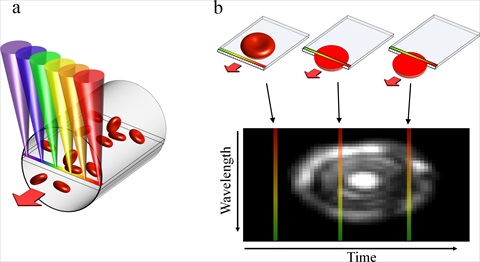 An Israeli team has demonstrated a non-invasive technique for imaging blood cells in vivo that could eliminate the need to extract blood from many patients. Powered by the Andor Newton Electron Multiplying EMCCD camera, their high-resolution Spectrally Encoded Flow Cytometry (SEFC) probe offers primary care physicians the capability to detect directly a wide range of common medical disorders, such as anaemia and bacterial infection, and potentially life threatening conditions, including sepsis, thrombosis and sickle cell crisis...
 The technology could be used in industry sectors including aerospace, aviation, defence and energy generation and supply, to perform tasks as wide-ranging as: