Synthetic Biotechnology enables sustainable production of bioactive natural substances
Nature provides humans with a wide variety of valuable bioactive agents ranging from vitamins over vital fatty acids to cancer inhibiting substances. Many of these substances are difficult to obtain directly from the environment or can not be produced effectively by chemical total synthesis. Scientists of the Technical University of Munich (TUM) are taking a new approach: Using synthetic biotechnology methodologies they...
Private equity firm Holland Venture and the Brabant Development Agency (BOM) are together investing in CytoSMART Technologies.
Founded in 2012 under the name CytoMATE, CytoSMART is a spin-off of Eindhoven University of Technology (TU/e). The company develops smart devices for use in laboratories around the world. The first product, CytoSMARTTM Lux, is a small digital microscope that can be used to continually monitor cell cultures in a CO2 incubator and send the images straight to the cloud, where they can then be examined by...
Postnova Analytics reports on exciting advances in the analysis of plasma proteins using a hyphenated system that couples asymmetric flow Field-Flow Fractionation (AF4) and inductively coupled plasma-mass spectrometry (ICP-MS).
In a new application study researchers show how an AF4-ICP-MS system is able to obtain valuable information on the multi-element speciation and absolute molecular mass of human plasma proteins such as Albumin and Transferrin. Human Serum Albumin (HSA) and Transferrin are the two main plasma proteins that are known to bind and transfer metal ions in biological fluids. Metal-protein complexes are involved...
SUEZ Water Purification Systems Ltd has supplied and commissioned an innovative, high quality water purification system featuring remote monitoring functionality at the Rondebosch Medical Centre in Cape Town, South Africa.
The SUEZ Elite MediQA 1000 is a double pass reverse osmosis water purification system, capable of providing up to 1,000 litres of purified water per hour to a quality that meets the ISO 13959:2014 standard. The system is extremely easy to use and features advanced data logging, as well as semi automated chemical cleaning and disinfection of the reverse osmosis membranes, to minimise the potential for...
Avacta’s Affimer technology will be used to develop rapid lateral flow diagnostics for clinical applications
Avacta Group plc (AIM: AVCT) the developer of Affimer® biotherapeutics and research reagents, and Mologic, a specialist diagnostic development company, today announced they have formed a collaborative partnership to develop diagnostic tests against multiple targets of clinical interest for point of care (POC) testing, using Avacta’s Affimer technology. As stated at the time of Avacta’s interim results, establishing commercial relationships in the POC testing market is one of the Company’s key strategic objectives....
With the impending legal requirements about to affect the life science and healthcare sectors, a leading decontamination expert has developed a quick overview to help explain the impact from the next phase of the Biocidal Products Regulation (BPR).
This new white paper written by John Chewins, director of the scientific & regulatory affairs at Bioquell, highlights that the introduction of the second phase of the BPR will mean some biocidal products currently legally placed on the market may no longer be legal....
Edinburgh Instruments have recently collaborated with the Departments of Physics in the Universities of Trento, Italy and Mumbai, India to work on the recombination dynamics of copper-nitrogen doped titanium oxide for use in water splitting applications.
Thin-films of copper-nitrogen-doped titanium oxide deposited by radio frequency magnetron sputtering were investigated by X-ray and photoluminescence spectroscopic techniques. In this work, time-resolved photoluminescence experiments clearly demonstrated that incorporation of copper and nitrogen inhibits the exciton radiative recombination of pure titanium oxide. This also resulted in increased mean lifetimes which...
Trajan Scientific and Medical (Trajan) announces two advancements in the development of devices and components for nano-electrospray ionization mass spectrometry (nanoESI-MS), in collaboration with the University of Adelaide in Australia, and with Queen’s University and Université Laval in Canada.
Trajan and the University of Adelaide’s Institute for Photonics and Advanced Sensing (IPAS) have been awarded an A$0.5 million Australian Research Council (ARC) Linkage grant to create glass capillaries and tubes with advanced geometries to enhance the sensitivity of mass spectrometry....
Protagen AG, a leading specialist in the development of novel diagnostic tests and companion diagnostics in the autoimmune field, today announced the launch of its first CE marked diagnostic assays Multilisa® CENP-B and Multilisa® Scl-70 ELISA to aid in the diagnosis of Systemic Sclerosis (SSc).
The Protagen Multilisa® SSc program combines novel and proprietary markers with existing diagnostic standards to help understand the condition at a molecular level. Multilisa® CENP-B and Multilisa® Scl-70 are intended for the semi-quantitative determination of IgG antibodies specific for the CENP-B and Scl-70 proteins. Analysis of autoantibodies against both proteins is part of the guidelines for the diagnosis and...
Glycosylation is one of the most prevalent co- and post-translational modifications of human proteins and is known to affect the protein properties.
Glycosylation is known to be involved in many different diseases. The sialic acids at the end of the glycan chain serve as a binding site for toxins, pathogens and human lectins in a linkage-specific manner having great biomarker potential. During the development and production of biopharmaceuticals glycosylation is a critical quality attribute and therefore has to be monitored. It is known that different cell culture conditions can lead to different...
New research, by the Universities of Glasgow and Manchester, has revealed an ‘Achilles heel’ of Chronic Myeloid Leukaemia (CML) and found drugs to successfully target this weakness and eradicate the disease in mice.
The study, which is published in Nature today, analysed both CML and normal blood stem cells and found two proteins that were key to the survival of CML stem cells. The group, which has been working on this research for more than six years, then developed a drug combination to simultaneously target these critical proteins and kill the cancer stem cells, while largely sparing normal cells...
Tecan and CellSpring, a biotech spin-out from ETH Zurich, have announced a co-marketing agreement to automate the 3D Bloom® platform on a Freedom EVO® workstation.
This latest collaboration will further extend Tecan’s automated 3D cell culture portfolio, allowing scientists to take advantage of a high throughput technology with an extended cell viability period of at least seven days in the assay matrix. The adaptive 3D Bloom Biopolymer Platform is compatible with all cell types and is ideal for...
For a limited time NanoHybrids is accepting applications for a chance to win a supply of their top Gold Nanoparticles to enhance imaging project results.
NanoHybrids has launched a contest to give promising research free premium gold nanoparticles. Targetingbiomedical imaging applications, the contest offers free nanoparticles as well as various services to winning study or research proposals. Called the NanoHybrids Imaging Research Contest, applications are being accepted now until July 31st through the NanoHybrids website....
Precision medicine requires success in two intertwined aspects: precision therapy and personalized medicine.
Precision therapy is being able to effectively treat the right disease; to have therapies that target for the correct pathological pathways. Personalized medicine requires diagnosing a specific individual’s disease based on accurate assessment their complex health and pathological status. Our underlying premise is that an individual’s baseline proteome reflects their past and present and thus, will dictate their future health and...
Horizon’s X-MAN cell lines to be made available in conjunction with Ubiquigent’s ubiquitin-related Drug Discovery Services
Horizon Discovery Group plc (LSE: HZD) ("Horizon"), the world leader in the application of gene editing technologies including cell models, today announced it has entered into a Collaboration Agreement with Ubiquigent Ltd (“Ubiquigent”). Under the terms of the agreement, Ubiquigent will be able to utilize Horizon’s X-MAN® cell lines as part of its ubiquitin system focused Drug Discovery Services...
Chromatrap reports on 3 further customer papers published in different prestigious peer reviewed journals, which cite how its proprietary solid state Chromatin Immunoprecipitation (ChIP) technology has enabled ground breaking research.
A recent study published in Drug Metabolism & Deposition [1] looks at " The role of Chromatin structural changes in regulating human CYP3A ontogeny. Variability in drug metabolizing enzyme developmental trajectories contributes to inter-individual differences in susceptibility to chemical toxicity and adverse drug reactions, particularly in the first years of life. Factors linked to these inter-individual differences are largely unknown...
JPK Instruments, a world-leading manufacturer of nanoanalytic instrumentation for research in life sciences and soft matter, reports on the use of their NanoWizard® AFM system at the Jagiellonian University in Krakow where it is applied to make simultaneous imaging, mechanical and spectroscopy measurements.
Dr Marek Szymonski is a Professor at the Research Centre for Nanometer-Scale Science and Advanced Materials (NANOSAM) located at the Jagiellonian University in Krakow, Poland. The aim of his research is to understand the signals that govern intracellular communication between hepatocytes and liver sinusoidal endothelial cells (LSECs) and between cardiomyocytes and cardiac microvascular endothelial cells...
This new high stability amino phase from Advanced Chromatography Technologies is ideal for the analysis of sugars.
ACE Amino is one of a wide range of carefully engineered ACE UHPLC/HPLC phases. These phases incorporate the latest developments in stationary phase technology in order to provide chromatographers with more choices for alternative selectivity but without compromising stability or robustness. Phases include the ACE C18-AR which combines the hydrophobic characteristics of a C18 phase with the aromatic selectivity of a phenyl phase, the ACE C18-PFP...
Broadens Access to Critical Diagnostic Results for Infants Born with HIV
Cepheid today announced that its Xpert® HIV-1 Qual (Qualitative) test has been awarded World Health Organization (WHO) prequalification, making it one of the first molecular point of care tests designed for HIV to be given this designation. The test can detect HIV-1 in whole blood and dried blood spots from individuals suspected of HIV infection, including infants.
Read MoreThermo Fisher Scientific Extends Technology Collaboration with University of Birmingham, UKJun 27, 2016
New Phenome Centre Birmingham to use Thermo Scientific mass spectrometry instruments to advance metabolic phenotyping and metabolomics studies
Thermo Fisher Scientific, Inc, the world leader in serving science, is pleased to announce plans to extend its technology collaboration with the University of Birmingham in the UK at the University’s new Phenome Centre. Thermo Fisher will supply a range of advanced mass spectrometry instruments to be used for the centre’s research in metabolic phenotyping and metabolomics studies...
A European shortage of scientists who can use special imaging techniques that could speed up and reduce the cost of life-saving drug development is to be tackled by a new £3.1million (Euro 4m) training scheme led by the University of Aberdeen.
The 4-year Marie Curie European Networks project, funded by the European Commission will train 15 PhD students in world class, innovative research using a technique called Positron Emission Tomography (PET) imaging....
Experts from Nanopharm, supported by Malvern instruments and with funding from the Food and Drug Administration (FDA), have carried out experimental studies to identify analytical strategies that can help bring generic nasal sprays to market faster.
The findings, presented at Respiratory Drug Delivery (RDD) 2016, describe the benefits of applying component-specific particle size measurement and rheological characterization to determine the Critical Material and Process Attributes of suspension nasal sprays. By supporting fast and robust bioequivalence testing, these techniques add value in the development of abbreviated new drug applications...

 Nature provides humans with a wide variety of valuable bioactive agents ranging from vitamins over vital fatty acids to cancer inhibiting substances. Many of these substances are difficult to obtain directly from the environment or can not be produced effectively by chemical total synthesis. Scientists of the Technical University of Munich (TUM) are taking a new approach: Using synthetic biotechnology methodologies they...
 Founded in 2012 under the name CytoMATE, CytoSMART is a spin-off of Eindhoven University of Technology (TU/e). The company develops smart devices for use in laboratories around the world. The first product, CytoSMARTTM Lux, is a small digital microscope that can be used to continually monitor cell cultures in a CO2 incubator and send the images straight to the cloud, where they can then be examined by...
 In a new application study researchers show how an AF4-ICP-MS system is able to obtain valuable information on the multi-element speciation and absolute molecular mass of human plasma proteins such as Albumin and Transferrin. Human Serum Albumin (HSA) and Transferrin are the two main plasma proteins that are known to bind and transfer metal ions in biological fluids. Metal-protein complexes are involved...
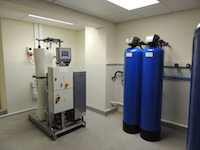 The SUEZ Elite MediQA 1000 is a double pass reverse osmosis water purification system, capable of providing up to 1,000 litres of purified water per hour to a quality that meets the ISO 13959:2014 standard. The system is extremely easy to use and features advanced data logging, as well as semi automated chemical cleaning and disinfection of the reverse osmosis membranes, to minimise the potential for...
 Avacta Group plc (AIM: AVCT) the developer of Affimer® biotherapeutics and research reagents, and Mologic, a specialist diagnostic development company, today announced they have formed a collaborative partnership to develop diagnostic tests against multiple targets of clinical interest for point of care (POC) testing, using Avacta’s Affimer technology. As stated at the time of Avacta’s interim results, establishing commercial relationships in the POC testing market is one of the Company’s key strategic objectives....
 This new white paper written by John Chewins, director of the scientific & regulatory affairs at Bioquell, highlights that the introduction of the second phase of the BPR will mean some biocidal products currently legally placed on the market may no longer be legal....
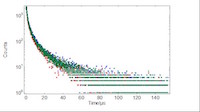 Thin-films of copper-nitrogen-doped titanium oxide deposited by radio frequency magnetron sputtering were investigated by X-ray and photoluminescence spectroscopic techniques. In this work, time-resolved photoluminescence experiments clearly demonstrated that incorporation of copper and nitrogen inhibits the exciton radiative recombination of pure titanium oxide. This also resulted in increased mean lifetimes which...
 Trajan and the University of Adelaide’s Institute for Photonics and Advanced Sensing (IPAS) have been awarded an A$0.5 million Australian Research Council (ARC) Linkage grant to create glass capillaries and tubes with advanced geometries to enhance the sensitivity of mass spectrometry....
 The Protagen Multilisa® SSc program combines novel and proprietary markers with existing diagnostic standards to help understand the condition at a molecular level. Multilisa® CENP-B and Multilisa® Scl-70 are intended for the semi-quantitative determination of IgG antibodies specific for the CENP-B and Scl-70 proteins. Analysis of autoantibodies against both proteins is part of the guidelines for the diagnosis and...
 Glycosylation is known to be involved in many different diseases. The sialic acids at the end of the glycan chain serve as a binding site for toxins, pathogens and human lectins in a linkage-specific manner having great biomarker potential. During the development and production of biopharmaceuticals glycosylation is a critical quality attribute and therefore has to be monitored. It is known that different cell culture conditions can lead to different...
 The study, which is published in Nature today, analysed both CML and normal blood stem cells and found two proteins that were key to the survival of CML stem cells. The group, which has been working on this research for more than six years, then developed a drug combination to simultaneously target these critical proteins and kill the cancer stem cells, while largely sparing normal cells...
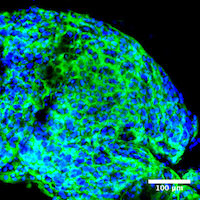 This latest collaboration will further extend Tecan’s automated 3D cell culture portfolio, allowing scientists to take advantage of a high throughput technology with an extended cell viability period of at least seven days in the assay matrix. The adaptive 3D Bloom Biopolymer Platform is compatible with all cell types and is ideal for...
 Precision therapy is being able to effectively treat the right disease; to have therapies that target for the correct pathological pathways. Personalized medicine requires diagnosing a specific individual’s disease based on accurate assessment their complex health and pathological status. Our underlying premise is that an individual’s baseline proteome reflects their past and present and thus, will dictate their future health and...
 Horizon Discovery Group plc (LSE: HZD) ("Horizon"), the world leader in the application of gene editing technologies including cell models, today announced it has entered into a Collaboration Agreement with Ubiquigent Ltd (“Ubiquigent”). Under the terms of the agreement, Ubiquigent will be able to utilize Horizon’s X-MAN® cell lines as part of its ubiquitin system focused Drug Discovery Services...
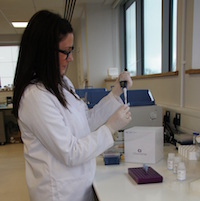 A recent study published in Drug Metabolism & Deposition [1] looks at " The role of Chromatin structural changes in regulating human CYP3A ontogeny. Variability in drug metabolizing enzyme developmental trajectories contributes to inter-individual differences in susceptibility to chemical toxicity and adverse drug reactions, particularly in the first years of life. Factors linked to these inter-individual differences are largely unknown...
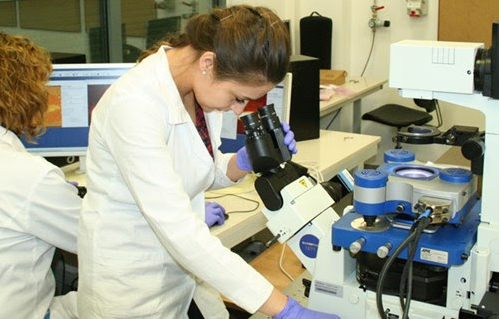 Dr Marek Szymonski is a Professor at the Research Centre for Nanometer-Scale Science and Advanced Materials (NANOSAM) located at the Jagiellonian University in Krakow, Poland. The aim of his research is to understand the signals that govern intracellular communication between hepatocytes and liver sinusoidal endothelial cells (LSECs) and between cardiomyocytes and cardiac microvascular endothelial cells...
 ACE Amino is one of a wide range of carefully engineered ACE UHPLC/HPLC phases. These phases incorporate the latest developments in stationary phase technology in order to provide chromatographers with more choices for alternative selectivity but without compromising stability or robustness. Phases include the ACE C18-AR which combines the hydrophobic characteristics of a C18 phase with the aromatic selectivity of a phenyl phase, the ACE C18-PFP...
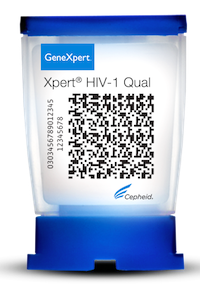 Cepheid today announced that its Xpert® HIV-1 Qual (Qualitative) test has been awarded World Health Organization (WHO) prequalification, making it one of the first molecular point of care tests designed for HIV to be given this designation. The test can detect HIV-1 in whole blood and dried blood spots from individuals suspected of HIV infection, including infants.
 Thermo Fisher Scientific, Inc, the world leader in serving science, is pleased to announce plans to extend its technology collaboration with the University of Birmingham in the UK at the University’s new Phenome Centre. Thermo Fisher will supply a range of advanced mass spectrometry instruments to be used for the centre’s research in metabolic phenotyping and metabolomics studies...
 The 4-year Marie Curie European Networks project, funded by the European Commission will train 15 PhD students in world class, innovative research using a technique called Positron Emission Tomography (PET) imaging....
 The findings, presented at Respiratory Drug Delivery (RDD) 2016, describe the benefits of applying component-specific particle size measurement and rheological characterization to determine the Critical Material and Process Attributes of suspension nasal sprays. By supporting fast and robust bioequivalence testing, these techniques add value in the development of abbreviated new drug applications...