Sixth Annual Competition Recognizes Videos Capturing Hidden Details of Microscopic World
Nikon Instruments Inc. today unveiled the winners of the sixth annual Nikon Small World in Motion Photomicrography Competition, awarding First Place to William Gilpin of Stanford University for his video depicting an eight-week-old starfish larva churning the water around its body as it searches for food....
Multidrug-resistant tuberculosis (MDR-TB) is widespread globally with almost half a million cases documented in 2014.
Although rare in European countries, the risks posed by the current migrant crisis makes MDR-TB an important and urgent public health priority. A study just published in Clinical Microbiology and Infection documents that the rate of infection with MDR-TBis higher among migrants than in the general population, particularly in those born outside Europe and in those forced to leave their home country as asylum seekers and refugees...
Contract development and manufacturing organisation (CDMO) Saneca Pharma is driving forward with new research and development initiatives for the manufacture of active pharmaceutical ingredients (APIs) following a €1.5 million grant from the Slovak Ministry of Education, Science, Research and Sport.
The funding has enabled the central-Europe based company to strengthen its pharmaceutical development services and establish a new R&D department, with 25 employees now based at its facility in Hlohovec, Slovakia. Saneca Pharma received the four-year grant in partnership with organic synthesis specialist, TAU-CHEM Ltd....
Postnova Analytics reports on the recent investment by the Department of Chemistry at University College London (UCL) in an AF2000 Field Flow Fractionation System to assist them in their development of novel nanoscale vehicles for drug delivery.
UCL has pioneered the engineering of novel nanoscale drug delivery vehicles which can be tuned to release a range of cargos. The drug delivery system is based upon the synthesis of self-assembled spherical polymer vesicles known as polymersomes. Polymersomes are biocompatible and stable making them ideal for the development of drug delivery systems....
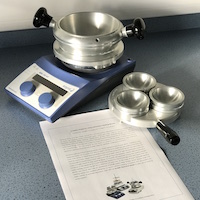
Asynt announces an updated version of its best practice guide developed to enable laboratory personnel to more safely use heating block systems.
Written in conjunction with the Department of Chemistry, University of St Andrews (UK) and Advanced Chemical Safety Inc. (USA) the illustrated guide leads you through best practices for glassware inspection, setting up your reaction, heating your reaction and the post-reaction cool down phase....
“Early detection is key to this condition which, if left untreated, can become a ticking time bomb for patients” – Professor Matt Bown, University of Leicester
Thousands of lives could be saved every year after it was discovered a fatal cardiovascular condition could be linked to four genes, research has found. A 10-year project, led by a Leicester surgeon, looked at 10,000 people worldwide and found those who had suffered an abdominal aortic aneurysm (AAA) had four genes in common.....
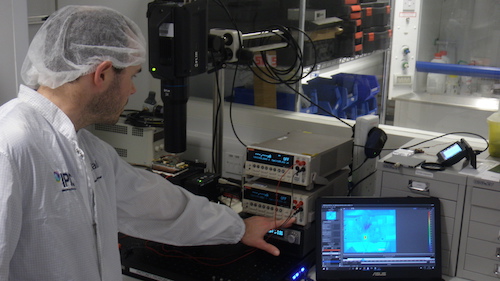
FLIR Systems X6540sc thermal imaging camera is being used by the Photonics Packaging Group at the Tyndall National Institute (Cork, Ireland) as part of a thermal microscope system to image the silicon photonic optical network unit (ONU) for next generation passive optical networks (NG-PONs) developed in the European FP7-Project "FABULOUS”.
Researchers at Tyndall are developing a next generation passive optical network (PON) demonstration module for high-speed fibre-to-home internet connectivity. At the heart of the PON is a silicon photonic integrated circuit (Si-PIC) that receives information on an incoming optical-signal (downloading), before reflecting the optical signal back, after encoding extra information (uploading)....
As regulatory pressure increases companies are saving time and money with effective extractables and leachables programmes
LGC, the international life sciences and measurement company, is successfully preventing pitfalls which can increase drug products time to market. There is increasing regulatory pressure on pharmaceutical companies to investigate the potential interaction between a dosage form and the primary closure and transfer system employed. A thorough scientifically sound extractables and leachables (E&L) programme is, therefore, an essential regulatory requirement...
Demonstrates potential forwide-scale whole-genome sequencing in humans using nanopore approaches
Oxford University’s Wellcome Trust Centre for Human Genetics (WTCHG) and the leading genome analytics company Genomics plc has announced the first sequencing and analysis of multiple human genomes using nanopore technology. The announcement, made at the Oxford Nanopore Community Meeting in New York City, marks a major breakthrough in sequencing technology in opening up the potential of wide-scale whole-genome sequencing in humans using nanopore approaches....
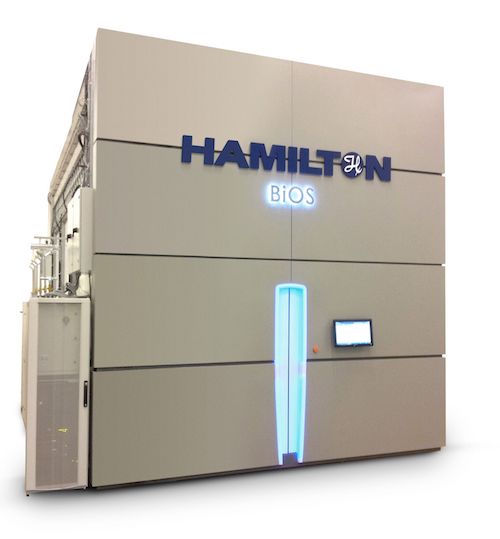
With 35 million biospecimens, cohort biobank will be one of the world’s largest
Hamilton Storage and Hamilton Robotics announced today that they will build automated sample storage and liquid handling systems to be used in the biobank infrastructure for Mayo Clinic, which was awarded funding by the National Institutes of Health (NIH) to create the All of Us Research Program (formerly the Precision Medicine Initiative’s Cohort Program)...
ZEISS will provide 1 million euros for innovative research projects at the EPFL
ZEISS will support innovative research projects at the Swiss Federal Institute of Technology in Lausanne (École polytechnique fédérale de Lausanne, abbr. EPFL). The company will make one million euros available for new research projects in key technology fields such as biomedical research, medical diagnostics and visualization as well as optical metrology and inspection...
Research report from Mind Metre presents evidence of the high value offered by pathology services, and suggests that current efficiency savings plans be reviewed
A new report from independent research organisation MindMetre has summarised the evidence for return-on-investment from pathology services in the NHS and questioned any urgent pressure to consolidate pathology laboratories - within and between NHS trusts....
Oxford Nanoimaging Limited manufacture and sell microscopes offering super-resolution and single-molecule performance to research users.
Today, the company reports on the work of early-adopters for their Nanoimager technology at the MRC Centre for Molecular Bacteriology and Infection located at Imperial College, London. The MRC Centre for Molecular Bacteriology and Infection is uniquely focused on disease-causing bacteria. Ramesh Wigneshweraraj is a Professor of Microbiology leading...
The University of Glasgow, in partnership with NHS Greater Glasgow & Clyde, has taken delivery of Scotland’s first ultra-powerful 17.5 tonne 7 Tesla (7T) MRI scanner at the new Imaging Centre of Excellence (ICE) on the site of the Queen Elizabeth University Hospital (QEUH).
The new ultra-high resolution scanner – one of the world’s most powerful magnetic resonance imaging (MRI) machines – is also the first scanner of its kind in the UK to be located in a clinical setting. It will be situated on the grounds of Glasgow’s new super hospital, the QEUH. The £10m 7T MRI scanner will be used to advance critical clinical research and will allow scientists and clinicians to study the human body...
FDA Division of Anti-Infective Products Director, Sumathi Nambair, due to Present at Superbugs & Superdrugs 2017
SMi Group are thrilled to have industry expert Sumathi Nambair, provide regulatory and compliance updates on FDA legislation in antibacterial drug development at the 19th annual 2017 Superbugs & Superdrugs show, returning to Central London on 20th and 21st March.
Researchers have identified a mechanism that may explain how a key genetic variant acts to increase the risk of developing myeloma.
It is hoped that research of this type will aid the discovery and development of effective new treatment strategies in myeloma. This is the first time that the biological consequences of a novel genetic risk variant for myeloma have been investigated and deciphered...
Unique binding modes of immunoproteasome inhibitors as basis for new drugs
The immunoproteasome dismantles proteins and the resulting fragments are displayed on the surface of cells. This helps the immune system to recognize abnormal cells. However, in chronic inflammations and autoimmune diseases this “information channel” is overactive. Now researchers at the Technical University of Munich (TUM) have determined the molecular mechanisms of inhibitors that can selectively thwart the human immunoproteasome...
AgileBio, a leading global provider of collaborative tools that enhance research productivity and traceability to scientist teams in industry and academia and Mind The graph, the leader of creative life sciences infographics, have announced a technology partnership and integration.
The partnership provides a new scientific communication plugin for the LabCollector Electronic Lab Notebook. Electronic Lab Notebook (ELN), for those who are familiar, allows researchers to document, share and search experiments. In this way, lab heads can manage and follow more efficiently the current projects in the lab, which are accessible online and shared among colleagues....
Sophia Genetics and Horizon Discovery Group plc have entered into a new partnership to improve the quality of Next Generation Sequencing (NGS) based genetic testing in oncology patient samples.
Under the terms of the agreement, Horizon’s HDx™ Reference Standards will be combined with Sophia Genetics’ artificial intelligence, providing hospitals and laboratories with more accurate and high quality NGS testing services, assays and genomic data analysis....
Reliance Precision, a specialist engineering company, is pleased to announce that a device containing Reliance’s high precision hubless spur gears and leadscrews has performed the world’s first successful robot assisted eye operation at leading medical research centre, the John Radcliffe Hospital, Oxford.
In 2009 Reliance’s Dutch office received a call from Mr Thijs Meenink at the University of Eindhoven. In a collaboration with AMC Amsterdam, his team was working on a robotic device which could assist in eye surgery. John Bazuin, catalogue products manager at Reliance visited the university to see if Reliance could be of assistance....
Quorum Technologies, market and technology leaders in electron microscopy coating and cryogenic preparation products, report on the work of the Agricultural Research Service of the US Department of Agriculture where their PP2000 Cryo-SEM preparation system is in use to prepare soft bodied organisms including mites & ticks for study using cryo-SEM
Dr Gary Bauchan is the Director of the Electron and Confocal Microscopy Unit at the Agricultural Research Service (ARS), the principal in-house research agency of the United States Department of Agriculture. The Unit is a core facility with the responsibility of providing collaborative assistance to scientists from ARS, Northeast Area and Beltsville Agricultural Research Center (BARC) who have microscopy applications that require high resolution imaging...
JPK Instruments, a world-leading manufacturer of nanoanalytic instrumentation for research in life sciences and soft matter, reports on the use of their NanoTracker™ 2 Optical Tweezers system at the Centre for Cancer Research in Marseilles, a part of CNRS and INSERM located at the Aix-Marseille Université.
The research team lead by Dr Mauro Modesti at the Centre for Cancer Research, Marseilles (CRCM), focuses on the study and understanding of the molecular mechanisms that assure DNA repair and the maintain of genome integrity in human cells. Failure to detect and/or repair of DNA genotoxic lesions, such as double-strand breaks, can lead to the appearance of mutations, genomic instability...

 Nikon Instruments Inc. today unveiled the winners of the sixth annual Nikon Small World in Motion Photomicrography Competition, awarding First Place to William Gilpin of Stanford University for his video depicting an eight-week-old starfish larva churning the water around its body as it searches for food....
 Although rare in European countries, the risks posed by the current migrant crisis makes MDR-TB an important and urgent public health priority. A study just published in Clinical Microbiology and Infection documents that the rate of infection with MDR-TB is higher among migrants than in the general population, particularly in those born outside Europe and in those forced to leave their home country as asylum seekers and refugees.
 The funding has enabled the central-Europe based company to strengthen its pharmaceutical development services and establish a new R&D department, with 25 employees now based at its facility in Hlohovec, Slovakia. Saneca Pharma received the four-year grant in partnership with organic synthesis specialist, TAU-CHEM Ltd....
 UCL has pioneered the engineering of novel nanoscale drug delivery vehicles which can be tuned to release a range of cargos. The drug delivery system is based upon the synthesis of self-assembled spherical polymer vesicles known as polymersomes. Polymersomes are biocompatible and stable making them ideal for the development of drug delivery systems....
 Written in conjunction with the Department of Chemistry, University of St Andrews (UK) and Advanced Chemical Safety Inc. (USA) the illustrated guide leads you through best practices for glassware inspection, setting up your reaction, heating your reaction and the post-reaction cool down phase....
 Thousands of lives could be saved every year after it was discovered a fatal cardiovascular condition could be linked to four genes, research has found. A 10-year project, led by a Leicester surgeon, looked at 10,000 people worldwide and found those who had suffered an abdominal aortic aneurysm (AAA) had four genes in common.....
 Researchers at Tyndall are developing a next generation passive optical network (PON) demonstration module for high-speed fibre-to-home internet connectivity. At the heart of the PON is a silicon photonic integrated circuit (Si-PIC) that receives information on an incoming optical-signal (downloading), before reflecting the optical signal back, after encoding extra information (uploading)....
 LGC, the international life sciences and measurement company, is successfully preventing pitfalls which can increase drug products time to market. There is increasing regulatory pressure on pharmaceutical companies to investigate the potential interaction between a dosage form and the primary closure and transfer system employed. A thorough scientifically sound extractables and leachables (E&L) programme is, therefore, an essential regulatory requirement...
 ZEISS will support innovative research projects at the Swiss Federal Institute of Technology in Lausanne (École polytechnique fédérale de Lausanne, abbr. EPFL). The company will make one million euros available for new research projects in key technology fields such as biomedical research, medical diagnostics and visualization as well as optical metrology and inspection...
 A new report from independent research organisation MindMetre has summarised the evidence for return-on-investment from pathology services in the NHS and questioned any urgent pressure to consolidate pathology laboratories - within and between NHS trusts....
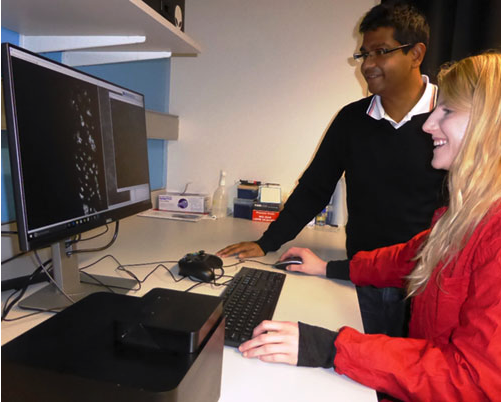 Today, the company reports on the work of early-adopters for their Nanoimager technology at the MRC Centre for Molecular Bacteriology and Infection located at Imperial College, London. The MRC Centre for Molecular Bacteriology and Infection is uniquely focused on disease-causing bacteria. Ramesh Wigneshweraraj is a Professor of Microbiology leading...
 The new ultra-high resolution scanner – one of the world’s most powerful magnetic resonance imaging (MRI) machines – is also the first scanner of its kind in the UK to be located in a clinical setting. It will be situated on the grounds of Glasgow’s new super hospital, the QEUH. The £10m 7T MRI scanner will be used to advance critical clinical research and will allow scientists and clinicians to study the human body...
 It is hoped that research of this type will aid the discovery and development of effective new treatment strategies in myeloma. This is the first time that the biological consequences of a novel genetic risk variant for myeloma have been investigated and deciphered...
 The immunoproteasome dismantles proteins and the resulting fragments are displayed on the surface of cells. This helps the immune system to recognize abnormal cells. However, in chronic inflammations and autoimmune diseases this “information channel” is overactive. Now researchers at the Technical University of Munich (TUM) have determined the molecular mechanisms of inhibitors that can selectively thwart the human immunoproteasome...
 The partnership provides a new scientific communication plugin for the LabCollector Electronic Lab Notebook. Electronic Lab Notebook (ELN), for those who are familiar, allows researchers to document, share and search experiments. In this way, lab heads can manage and follow more efficiently the current projects in the lab, which are accessible online and shared among colleagues....
 Under the terms of the agreement, Horizon’s HDx™ Reference Standards will be combined with Sophia Genetics’ artificial intelligence, providing hospitals and laboratories with more accurate and high quality NGS testing services, assays and genomic data analysis....
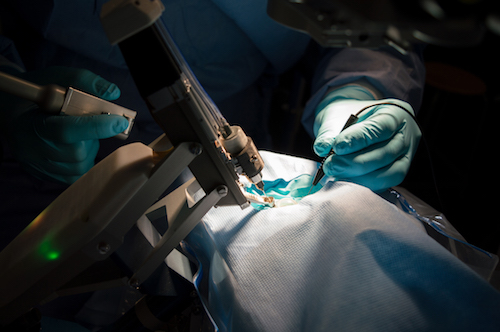 In 2009 Reliance’s Dutch office received a call from Mr Thijs Meenink at the University of Eindhoven. In a collaboration with AMC Amsterdam, his team was working on a robotic device which could assist in eye surgery. John Bazuin, catalogue products manager at Reliance visited the university to see if Reliance could be of assistance....
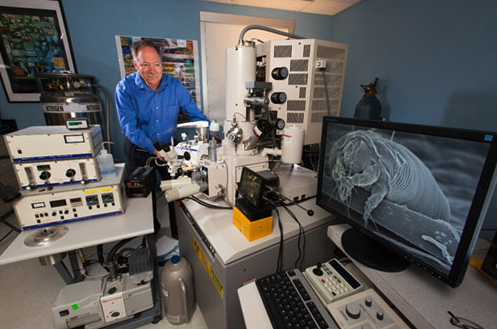 Dr Gary Bauchan is the Director of the Electron and Confocal Microscopy Unit at the Agricultural Research Service (ARS), the principal in-house research agency of the United States Department of Agriculture. The Unit is a core facility with the responsibility of providing collaborative assistance to scientists from ARS, Northeast Area and Beltsville Agricultural Research Center (BARC) who have microscopy applications that require high resolution imaging...
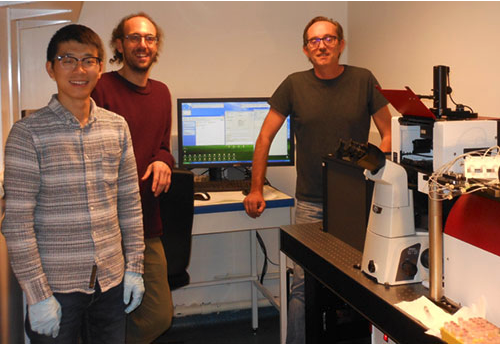 The research team lead by Dr Mauro Modesti at the Centre for Cancer Research, Marseilles (CRCM), focuses on the study and understanding of the molecular mechanisms that assure DNA repair and the maintain of genome integrity in human cells. Failure to detect and/or repair of DNA genotoxic lesions, such as double-strand breaks, can lead to the appearance of mutations, genomic instability...